



























































Shanghai Spirit and Westphalia
When the world's sole superpower declares itself a pirate, it may be time to dust off a 17th-century peace treaty.

Amidst the clamor of the Iran war, the world order is silently shifting from unipolar American dominance to a multipolar reality. As this situation transitions into a relative calm, the world should find a path that can ensure a lasting peace.
The lessons of history tell us that an arrangement similar to the 17th-century Treaty of Westphalia could be that path.
History shows that after devastating continental wars, world leaders often create major peace treaties or legal frameworks to avoid the recurrence of future conflicts.
After World War II, attempts were made to maintain global security and economic stability through the 1945 UN Charter and the Bretton Woods Agreement.
Learning from the horrors of World War I, the League of Nations was created in 1919. Before that, after the fall of Napoleon, the 1815 Congress of Vienna introduced a long-lasting system for maintaining the balance of power in Europe.
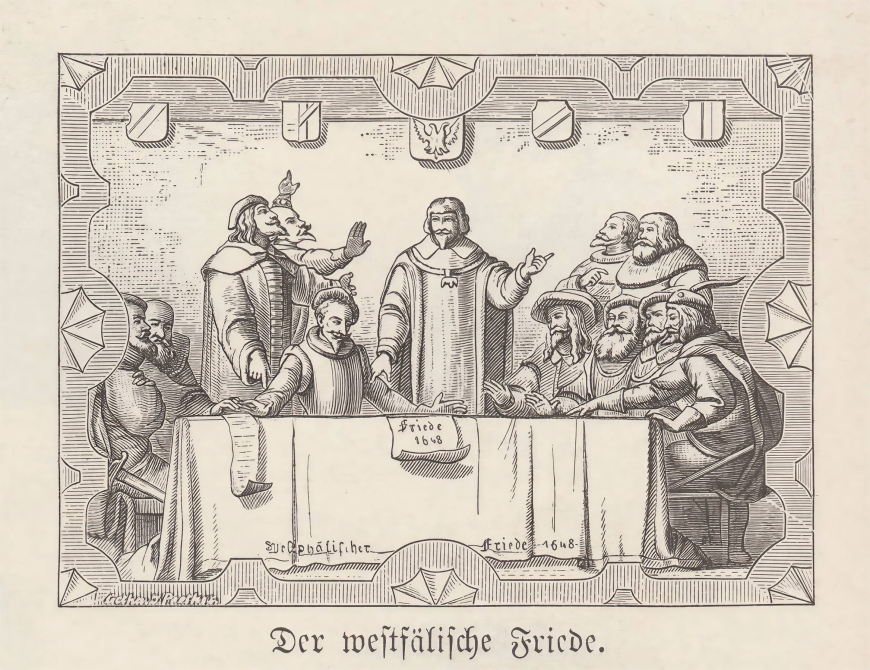
The most influential agreement however regarding such continental peace treaties was the 1648 Peace of Westphalia. As a result of this treaty, the borders of major European countries were defined for the first time, and sovereignty of each was protected.
The Westphalia treaty became necessary because a bloody war had raged across Central Europe for the preceding thirty years.
The 30 Year War and the Division of Europe
Before the start of the Thirty Year War, the state structure of Europe was extremely complex and fragmented, where nearly 300 large and small autonomous states in Central Europe functioned as a loose federation with the Holy Roman Empire at its center.
Furthermore, this Holy Roman Empire, which operated in the name of the Pope, was led by the Habsburg dynasty, who controlled Spain and Austria.
The Habsburgs were staunch followers of Catholicism and the main pillars of the Pope’s spiritual and political authority in Rome. The Hapsburgs were responsible for maintaining the Pope's absolute influence on the European balance of power.
On the other hand, France was the main rival of the Habsburgs, and to the north, Sweden and Denmark, the other combatants in the war, were engaged in trying to expand their influence in the Baltic region.
The religious division between the Protestant North and the Catholic South, along with the grievance against the Pope's undue interference, created deep fractures in the relationships between states.
At that time, the Italians did not play any part in the war because they did not have a single unified state; they consisted of several isolated city-states.
In Eastern Europe, the Ottomans, the Russians, and the Poles were also busy with their own internal problems.
The internal situation in England was also turbulent. They were being ravaged by their civil war which was raging between the aristocratic Royalists and the parliamentary Whigs.
This civil war was so intense that a few months after the Westphalia treaty, the English King was beheaded by their parliament. Due to this internal turmoil, the English also remained distant from the 30 Years' War in Central Europe.
The Horrors of War and the Essence of the Westphalia Treaty
In 1618, when Protestant leaders threw two representatives of the Catholic Emperor out of a third-floor window of the Prague Castle, this local rebellion quickly transformed into a full-scale war, which later, entangled in a complex equation of religion and politics, pushed the entire continent toward devastation.
This war brought terrible disaster to Europe, and nearly one-third of the German population perished on the battlefield or from famine and epidemics.
The Peace of Westphalia in 1648 gave birth to a revolutionary concept known as Westphalian Sovereignty, the core principle of which was that the ruler of any state is supreme within their own territory and free to practice any religion of their choice.
While this system may seem anti-people to modern eyes, for that time, this treaty ensured peace and security across central and west Europe.
This treaty defined the concept of territorial integrity and declared that every state within the agreement was sovereign, and that a state's power over its internal affairs -- including religion—would be absolute.
Additionally, the treaty introduced the principle of legal equality among states, meaning that signatory states, regardless of size, began to enjoy equal rights. Because of this step, Europe transformed from an imperial system into an international system of equals among independent states.
The immediate result of this treaty was the stabilization of Europe through a balance of power and the formal recognition of new independent states like the Dutch Republic and Switzerland.
It ended the era of large-scale religious wars in Europe by secularizing international politics and reducing the political influence of the Pope.
Although Italy, Russia, Poland, and England remained outside the treaty, this doctrine of sovereignty became the inter-state reality of Europe.
In short, the map and geopolitics of Europe were completely transformed by this treaty.
The Longevity and Eventual Breakdown of the Treaty
This peace treaty lasted for nearly a hundred and fifty years. At the end of the 18th century, when Napoleon Bonaparte -- rising to power in a France which was built on the narratives of liberty, equality, and fraternity -- took steps to establish a monarchy by occupying other European countries, the Westphalian arrangement was effectively destroyed.
Napoleon overthrew sovereign dynasties and brought about the dissolution of the Holy Roman Empire in 1806. Instead of independent and equal states, he established a tributary empire under France and subservient kingdoms ruled by family members.
French laws were imposed on French-subordinated states across the continent.
After Napoleon’s defeat, the 1815 Congress of Vienna re-established the Westphalian balance of power and the principle of legitimacy, but cracks gradually began to appear in that unity.
Events like the Spring Revolution of 1848, the Crimean War of 1853, the Franco-Prussian War of 1870, and German unification in 1871 began to break down the concept of unity from the Congress of Vienna.
Finally, with the start of World War I, the concepts of Westphalian territorial sovereignty and the balance of power collapsed completely once again.
After the war, regional sovereignty returned to Europe through the Treaty of Versailles, but before it could take a sustainable form, World War II began. Finally, the concept of state sovereignty gained global recognition through the 1945 UN Charter.
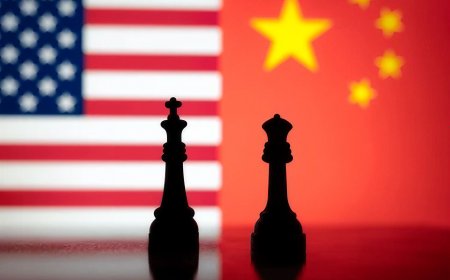
History teaches us that the unity achieved in Westphalia in 1648 remains relevant even in this era. Currently, as America becomes desperate to maintain its hegemony, the proposals of Westphalia are regaining relevance.
A worldwide peace treaty is now a demand of the time. The question is, from which direction will the proposal for that peace treaty come and how will it be implemented? Which power can force the rogue hegimon America, to the path of peace?
America’s Absolute Hegemony and the Current Crisis
World War II wiped out Europe's production capacity, allowing America to monopolize trade and quickly become the hegimon of the Western world.
Before World War II began, the world was divided into major power centers like England, France, Germany, Japan, and Russia; after the war, it was divided into only two: The Soviet Union and America.
Then, following the fall of the Soviet Union in the late eighties, the world fell into the hands of a single hegemon.
Although this powerful vendor of democracy played a key role in the fall of seventy-two governments, world politics and economy had to proceed by following their dictates.
This global control by America was accepted -- or forced to be accepted -- by all countries primarily for three reasons.
First, America's promoted mantra of democracy gave America a moral legitimacy. The world began to believe in a rules-based order and consider democracy as an inevitable decree of civilization. After the fall of Soviet Russia, many began to believe that history was dead.
Second, their military capability, their technology, and their numerous bases around the world made them the absolute ruler as a military power.
Capitalizing on this dominance, almost all European countries became accustomed to spending only token amounts on their defense budgets. This allowed them to spend more on improving the quality of lives of their population.
The world also began to think that instead of continuous conflicts between nations, having a global policeman was beneficial for all.
Third, the globalization of the dollar, the use of SWIFT as a medium for international transactions, the influence of the World Bank-IMF, and the control of the world economy through the fear of sanctions made America indispensable.
Currently, as US dominance is on the wane, these three pillars are now at risk. When the President of America himself says that America has now taken on the role of a pirate, or when America imposes unrealistic tariffs on its allies, or when they kidnap the president of a sovereign nation, their moral legitimacy no longer remains in anyone's mind.
Meanwhile the modes of war are radically transforming. Rather than heavy weapons and massive troop formations, cheaper drones and hypersonic missiles are playing the leading role on the battlefield.
Due to remotely controlled FPV drones, no soldier, tank, or troop-carrying vehicle is safe on the battlefield anymore. Because of clear battlefield intelligence provided by drones and satellites, it is no longer possible to make large troop deployments.
The opponent can instantly wipe out troop assemblies and command centers from hundreds of miles away with long-range missiles.
Everything must be hidden underground or inside caves. The days of controlling the opponent's airspace with aircraft carriers are also over, because due to hypersonic missiles, carrier groups must stay far away from the battlefield.
Since drones and missiles are now at the center of war, small countries are also able to survive in wars against superpowers. In this reality, it is no longer possible for the United States to maintain global military dominance.
Realizing that, America itself has declared a new Monroe Doctrine to limit themselves to the Western Hemisphere. As a result, we see that for the first time since World War II, Japan and Germany are entering the game of manufacturing war weapons.
Furthermore, due to the fall of the petrodollar due to the Iran war and the instability of the American bond market, the devaluation of the dollar is now only a matter of time.
Having lost production capacity and making the economy dependent on military industry, speculative stock markets, insurance companies, and housing, America will not be able to manage the burden of their colossal debt through economic growth.
As the use of the dollar in international trade decreases, printing dollars to pay off their debt will dramatically devalue the dollar as the impact of increased supply of money would no longer be able to spread across the whole world as before. The impact will primarily manifest within their own economy. Consequently, inflation will go out of control.
America has never faced a crisis this large in its history. The danger is more terrifying because both the political and economic elites of America are now controlled by Epstein-friendly oligarchs who are engaged in trying to build mountains of wealth using this crisis rather than solving it.
Altogether, the reasons for which America could maintain its dominance have broken down very quickly at this juncture. This collapse of influence and the inability to climb out of it have made America dreadfully dangerous for the world.
While America is intoxicated by its own perception of power, on the other side of the world China in just forty years has risen from a pre-industrial agrarian society to the second largest economy of the world. At one stage of this leaping rise, China signaled a new polarization in the world system in 2013 by launching its Belt and Road Initiative (BRI).
The primary objective of the BRI project was to create an environment of shared prosperity through infrastructure development, free trade, and policy coordination among Asian, European, and African countries. Now 150 countries of the world are connected with this process.
The Shanghai Cooperation Organization (SCO)
Beyond the BRI, the evolution of the world's geopolitical polarization is also advancing through the Shanghai Cooperation Organization (SCO). Although the SCO was born in 2001, its embryo was the Shanghai Five alliance formed in 1996.
Formed with China, Russia, Kazakhstan, Kyrgyzstan, and Tajikistan, the primary goal of this alliance was to settle border disputes and bring border areas under control after the fall of the Soviet Union.
Once those conflicts were resolved, the countries of the alliance realized that an institutional framework more formal and comprehensive than a military treaty was needed to tackle regional threats such as religious extremism, separatism, and organized crime.
In June 2001, by including Uzbekistan, this group officially debuted as the Shanghai Cooperation Organization (SCO) through a summit in Shanghai. This transformation was essentially a major step from defensive border management toward active regional cooperation, established on three main pillars: Security, economy, and culture.
Although newly created, the commitment to mutual trust and non-interference in each other's internal affairs from the Shanghai Spirit remained within the SCO as its core philosophy.
Along with that, the new charter included the resolve to build the legal and organizational framework necessary to solve complex issues like ensuring energy security and intercontinental trade.
Through the creation of the SCO, a permanent platform was formed to protect the mutual interests of China and Russia in Central Asia, which later served as the diplomatic foundation for China's Belt and Road Initiative (BRI).
With India, Pakistan, Iran, and Belarus joining, the number of SCO members has reached to ten countries by 2026. Along with this, there are two observer countries and fourteen dialogue partners from the Middle East, Central Asia, South Asia, and Southeast Asia.
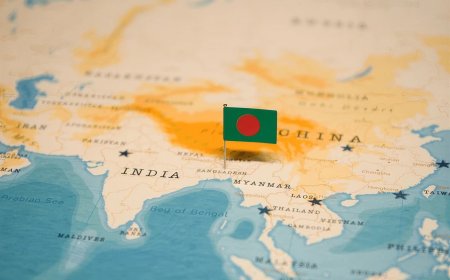
Egypt from Africa is also connected to this association. While almost all countries surrounding Bangladesh, such as India, Pakistan, Sri Lanka, Nepal, and the Maldives, are connected, for some strange reason Bangladesh is not associated with the SCO.
The presence of ten heads of state, including Putin, Modi, and Iran's Pezeshkian, at the alliance's 25th meeting last September proves which way the world's polarization is leaning.
The activities of the Shanghai Cooperation Organization (SCO) are primarily conducted based on several fundamental principles: Mutual respect for sovereignty, independence, territorial integrity of states and inviolability of state borders, non-aggression, non-interference in internal affairs, refraining from the use of force or the threat of force in international relations, and not imposing unilateral military superiority over neighbors.
These ideals have gained recognition in the international political arena as the 'Shanghai Spirit' or 'Shanghai Consciousness'.
While China continues to build infrastructure across continents with its BRI project, America is losing its legitimacy as a sole hegemon due to its incompetent leadership.
China and Russia are continuing to solidify their positions as superpowers. Even the Islamic state of Iran, which has been under blockade for decades, is showing the audacity to attack American bases.
This period of American decline as the sole superpower has become very dangerous for the world.
Civilization has bound humans by some rules regarding warfare; America has begun to break all the rules of civilization in this transition period.
It is seen that they are using missiles on children's schools, kidnapping the presidents of other countries, or destroying and seizing civilian ships of other countries in the open sea. Their President himself proudly declares themselves as pirates.
The New Path to Peace
All these signs indicate that global unity is needed to stop America before it plunges the world into further destruction. The effort to build this unity will not come from Europe because the leadership there is also in the hands of the Epstein class.
Although on paper the Iran war is being fought within a few countries, every country in the world is passing through a time of massive crisis because the Strait of Hormuz is closed.
The talk of using atomic weapons has also been discussed. Therefore, the desire for peace is now in the minds of the leadership of all countries. Except for Israel, the people of every country in the world want an end to this era of war.
In this transition, the Westphalian model can serve as a guide for all countries. Logically, the United Nations should have taken the mantle of leadership for this global peace initiative.
However, due to America's excessive influence over the UN, the UN will be considered incompetent in the role of controlling America.
On the other hand, since ASEAN, the European Union, or the African Union are limited within specific regions, they cannot also be used in this kind of global crisis.
Although BRICS or BRI have global reach, the scope of these two institutions is limited to the economy. A geopolitical crisis of this magnitude cannot be solved with them.
On the other hand, the Shanghai Cooperation Organization (SCO) has been working as a platform for conflict resolution from the beginning. The two superpowers outside America, Russia and China, are the two main pillars of this alliance. India and Iran of the second tier ppwer are also in this alliance.
In this time of crisis, this alliance can play a role in showing the world the path of peaceful coexistence. Significant philosophical similarities are seen between the tradition of Westphalia and the SCO and its core Shanghai Spirit.
Like Westphalia, the Shanghai Spirit speaks of strictly following the policy of non-interference in the borders and internal affairs of member states. In both, all states, whether large or small, are held in equal status.
There is mention of preventing large states from imposing anything. Just as the 1648 treaties sought to protect various religious identities from external pressure, the SCO similarly emphasizes the suppression of terrorism, separatism, and extremism to maintain the internal stability of member countries.
Both frameworks prioritize state sovereignty, equality, and a multipolar world order, and are vocal against the imposition of political or ideological standards by any other external power.
Most importantly, in both agreements, the stipulation is that signatory states will find solutions to conflicts only through discussion.
Just as Westphalia was able to bring peace to Europe nearly 400 years ago, the world can try for that peace again through the hands of the SCO, built on the same idea.
At the 25th meeting of the SCO last September, President Xi Jinping raised the discussion of increasing unity and strategic cooperation by removing differences among member countries.
Although he raised the discussion of linking member countries with the China-centric 'Belt and Road Initiative', he also spoke of re-activating international systems like the United Nations and the WTO.
This means China supports the path of making existing global institutions effective rather than pushing others under its own shadow.
If global unity for peace is to be achieved by making the UN and WTO effective, Western countries will also find it easier to take this path.
In his speech, while calling for building a multipolar world order in the face of new realities, President Xi declared that this multipolar world must be on the basis of equality and fairness. Altogether he was able to create a vision of a conflict-free world.
People of all countries of the world want peace and security. They want freedom from the uncertainty caused by war. Just as Westphalia once ensured peace for Europe for a century and a half, there is a possibility that the SCO, built on the Shanghai Spirit, will create a path to peace in this century. It can be hoped that this journey will begin once the cannons of the Iran war are silenced.
Syed Hasibuddin Hussain is the Secretary General of Rashtro Shongshkar Andolon.