






























































The Looming Persian Storm: Why Bangladesh Cannot Afford to Defy Economic Gravity Again
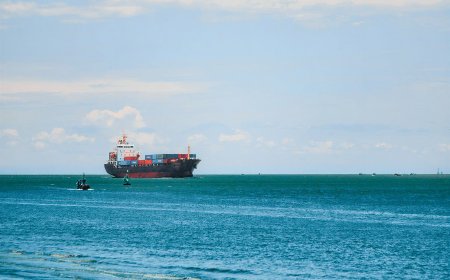
A prolonged conflict in the Middle East would likely trigger a slump in consumer demand in Western markets, leaving the RMG sector vulnerable to the dual blow of dwindling orders and the logistical nightmare of disrupted maritime routes.

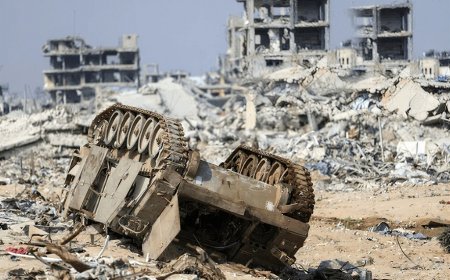
The potential for a full-scale military confrontation involving the United States, Israel, and Iran casts a long, dark shadow over the Bangladeshi economy, one that promises to be far more destabilizing than the 2022 Ukraine crisis.
This time, the threat is potentially existential because it targets the two pillars of our economic stability: Global supply chains and remittances.
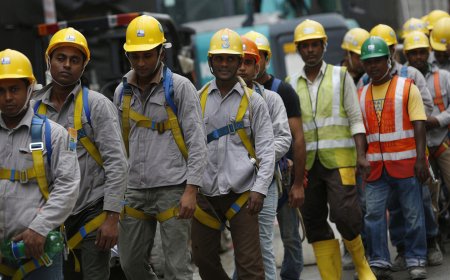
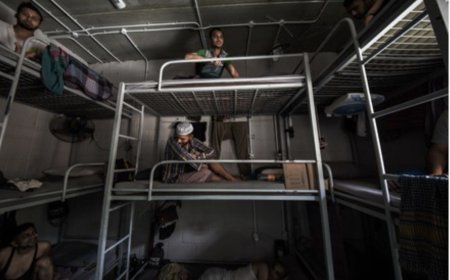
A conflict in the Middle East would not only skyrocket energy and freight costs but could also displace millions of our migrant workers, who are the primary contributors to our foreign exchange reserves.
A global recession, exacerbated by geopolitical volatility, carries the high probability of reducing exports, a vital engine of our economy, while simultaneously burdening exporters with the additional threat of soaring shipping and freight costs.
A prolonged conflict in the Middle East would likely trigger a slump in consumer demand in Western markets, leaving the RMG sector vulnerable to the dual blow of dwindling orders and the logistical nightmare of disrupted maritime routes.
As import bills for fuel and essentials explode, we face an inevitable and aggressive depletion of our reserves. In this high-stakes environment, the new administration cannot afford to repeat the populist economic fantasies of the past.
Success depends entirely on whether the new political leadership after the recently concluded national election respects the "Impossible Trinity," a fundamental rule of international macroeconomics that dictates a central bank can only choose two of three specific goals: A fixed exchange rate, free capital movement, and an independent monetary policy.
The failure to understand this trilemma was the hallmark of the previous Hasina government’s response to the Ukraine war. Rather than allowing the currency to adjust to market shocks, they attempted to defy economic gravity by maintaining an artificial fixed rate of around 90 BDT/USD.
Simultaneously, the Bangladesh Bank imposed a 9% cap on lending rates, effectively trying to keep money "cheap" even as global commodity prices and domestic inflation surged.
This infamous "9-6 rule" -- capping lending rates at 9% and deposit rates at 6% -- was not an accident of policy but a calculated maneuver by the previous regime to benefit its inner circle of business interests.
Formally implemented in April 2020 under the guise of "stimulating the economy" during the pandemic, the policy was the culmination of years of lobbying by the Bangladesh Association of Banks (BAB), an organization dominated by the owners of private commercial banks who are, in many cases, the country’s largest industrial borrowers.
By forcing a 9% ceiling on loans, the regime essentially provided a massive, subsidized transfer of wealth from the general public to a handful of "crony" industrialists. While the official justification was to lower the cost of doing business, the reality was that these low-cost funds were largely cornered by politically connected mega-corporations.
This created a perverse incentive structure: because the 6% deposit cap often sat below the actual rate of inflation, ordinary savers saw the real value of their life savings evaporate. Effectively, the struggling middle class was forced to subsidize the expansion of billionaire-owned conglomerates.
Furthermore, the 9-6 rule hollowed out the banking sector from within. It destroyed the "interest rate spread" that banks need to remain healthy, leading to a severe liquidity crisis. Since banks could no longer price risk, charging higher rates for riskier borrowers, they naturally gravitated toward the same powerful families, leaving small and medium enterprises (SMEs) and genuine entrepreneurs completely starved of credit.
This "cheap money" era fueled a capital flight, as the elites took advantage of the low interest rates to borrow in Taka and move assets into foreign currency.
In effect, Bangladesh Bank effectively fell victim to the constraints of the Impossible Trinity. In a futile attempt to maintain a fixed exchange rate, keeping the Taka artificially strong at a fixed rate, the authorities were forced to try and aggressively restrict capital flow to prevent a total "dollar drain."
They imposed several stringent measures, including high LC margin requirements (often 75% to 100%) for non-essential and luxury imports, tighter verification of travelers' foreign currency endorsements, and strict limits on outward remittances. However, these barriers were easily bypassed as capital continued to flow through both formal and informal channels.
Significant wealth was siphoned out through the Hundi system and sophisticated trade-based money laundering, particularly via the over-invoicing of imports and under-invoicing of exports. According to the Trilemma, if a country maintains a fixed exchange rate and capital continues to move, it must surrender its independent monetary policy.
This is precisely what occurred: By clinging to the politically motivated 9% lending rate cap even as global energy prices and inflation surged, the central bank lost its ability to raise interest rates to protect its reserves, leading to the catastrophic depletion of the nation's foreign exchange.
By trying to maintain both a fixed exchange rate and a controlled interest rate, they forfeited their ability to manage the economy effectively. The “Trilemma” struck back and the consequence was a catastrophic "dollar drain," as the central bank was forced to burn through nearly $28 billion in foreign exchange reserves, dropping from $48 billion to just $20 billion, in a futile attempt to defend a fake currency value.
This policy of keeping interest rates low while fiscal expenses and "imported" inflation rose was a recipe for disaster, as it incentivized capital flight and discouraged the very savings needed to stabilize the economy.
During the interim government, the Bangladesh Bank under Dr Ahsan Mansur’s tenure finally brought a much-needed correction by respecting the constraints of the Trilemma.
They made the difficult but necessary sacrifice of abandoning the fixed peg, allowing the Taka to float and find its true market value. In exchange for letting the currency adjust, the central bank regained true monetary independence, which it used to hike interest rates aggressively to combat inflation.
This shift stopped the bleeding of our reserves and brought a level of stability that had been absent for years. Interestingly, when the currency was allowed to fall, it didn’t actually depreciate much!
This experience serves as a clear blueprint for the current BNP government: The currency must be allowed to absorb external shocks through a managed float, and monetary policy must remain tight to fight the inflation that inevitably follows global energy spikes.
Under the stewardship of Ahsan Mansur, the central bank finally returned to "honoring" the trilemma by adhering to the standard protocol of inflation targeting. Mansur correctly identified that in an economy where capital mobility is a de facto reality, driven by both global trade and persistent informal leakages, the bank could only reclaim its monetary policy independence by sacrificing the fixed exchange rate.
By abandoning the artificial peg and letting the Taka adjust to its market-clearing level, he freed the central bank to aggressively use interest rates as its primary weapon against surging inflation.
This shift from "defying" the trilemma to "managing" it within its theoretical boundaries was the catalyst that halted the reserve depletion and restored a sense of equilibrium to the financial system.
Therefore, we see that the role of the Central Bank Governor is not merely administrative; it requires a basic understanding of fundamental macroeconomic principles to navigate global shocks effectively. This explains the widespread uproar within civil society following the appointment of Md Mostaqur Rahman.
His profile represents a radical departure from historical precedent. Unlike every previous governor, who were either career bankers, civil servants, or distinguished economists, Rahman is a garment entrepreneur and the active Managing Director of Hera Sweaters. Furthermore, he lacks a clean loan record, with reported reschedules, and holds overt political ties as a member of the BNP’s national election steering committee.
This creates a massive conflict of interest, particularly as the business community begins to exert immense pressure on the central bank to reduce interest rates and comes up with other demands such as export rebates.
As the former Chairman of the BGMEA Standing Committee on Bangladesh Bank and the active Managing Director of Hera Sweaters Ltd, the Governor may find it exceptionally difficult to negotiate with the very community he once led.
There are legitimate fears that as a past representative of this group, one whose own company reportedly benefited from a Tk 89 crore loan rescheduled shortly before his appointment.
He may succumb to these sectoral pressures. It must be noted that when the currency devalues, exporters already receive a massive windfall as their earnings in local currency increase; providing additional rebates on top of this would be an unjustifiable transfer of wealth.
To insulate the Governor from the singular burden of these decisions, the government should immediately form a high-powered advisory committee consisting of independent economists, seasoned financial regulators, and sectoral experts.
This body would provide a diversified, data-driven shield for policy decisions, ensuring that the central bank’s direction is balanced and not skewed toward any particular business interest.
Furthermore, in regard to price stabilization policy, which becomes a major concern in any economic crisis, the government must allow market prices to take their own course.
Market mechanisms are the most efficient way to ration scarce commodities to those who need them most. The social cost of these price increases should be mitigated not by market interference, but through targeted subsidies specifically for low-income earners.
In the past, whenever prices rose due to genuine market forces, the narrative of "Syndicate”, market collusion by sellers, was often weaponized without verification.
This led to regulatory bodies imposing heavy fines and punishments, which only served to terrify sellers into reducing supply or shutting down shops entirely, causing prices to skyrocket further.
We can only hope this government avoids that failed, populist route.
In the end, the task is clear: The new leadership in the Central Bank of Bangladesh must distance itself from the dishonest and plundering "business-first" optics of the past kleptocratic regime of Sheikh Hasina. Instead, they should adhere to the cold, hard principles of international macroeconomics to ensure economic stability.
Rough weather lies ahead. We need a cool and competent captain to steer us to safety, not a crew of political appointees who may inadvertently sink the ship by repeating the mistakes of the past.
Rushad Faridi is Assistant Professor, Department of Economics, University of Dhaka.