



































































When Elephants Fight, It is the Grass that Suffers
It is often said that there is no personal loss to the architects of war. That statement may be rhetorically exaggerated, yet it captures an essential imbalance. Decision-makers operate at a distance from the battlefield. Their families are rarely in the line of fire.

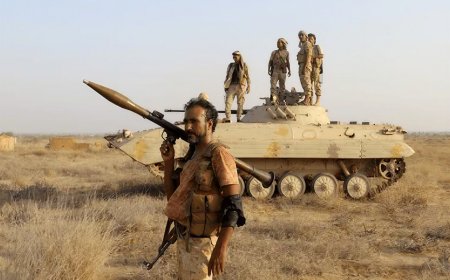
War has always lived in a paradox. It is at once condemned as humanity’s greatest failure and defended as humanity’s last refuge. Across centuries, the oppressed have often found themselves with no avenue left but resistance, and resistance has sometimes taken the form of armed struggle.
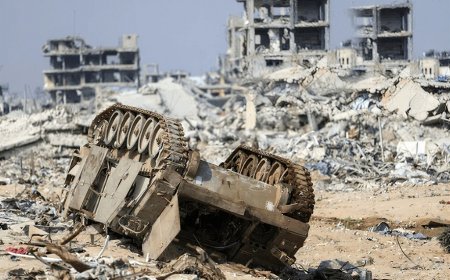
History records empires broken by revolt and tyrannies dismantled by force. Yet the same history is littered with cities reduced to ash, rivers poisoned, forests burned, and generations scarred beyond healing. War may occasionally open the door to rights, but it almost always leaves behind a corridor of ruins.
Civilization itself has been shaped by war. From the fall of ancient Mesopotamian city-states to the obliteration of Carthage and the devastation of two World Wars, entire societies have vanished under the weight of military ambition.
War does not merely redraw borders. It fractures memory, culture, ecology, and moral restraint. It teaches nations to calculate destruction with clinical precision while forgetting the cost of reconstruction. Even when victory is declared, the silence that follows is rarely peace. It is exhaustion.
Religions have long tried to discipline the brutality of conflict. Islamic jurisprudence laid down rules prohibiting harm to non-combatants, women, children, animals, and crops. The Bible cautioned against unnecessary destruction of trees during siege. Buddhism elevated non-violence as an ethical ideal.
These were early attempts to restrain humanity’s darker impulses. Yet once war begins, these injunctions often become ceremonial footnotes. In the heat of bombardment and retaliation, moral codes shrink before strategic objectives. The environment burns, civilians flee, and restraint dissolves into rhetoric.
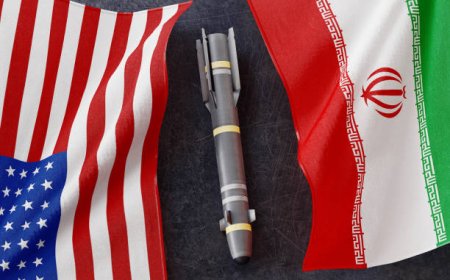
A familiar proverb says that when elephants fight, it is the grass that suffers. The metaphor remains painfully relevant. Today the Middle East once again trembles under the thunder of coordinated airstrikes by the United States and Israel on Iran.
The Pentagon has described the campaign as Operation Epic Fury, a phrase that combines grandeur with menace. It is presented as a calibrated display of strength. In reality, it is an extraordinarily expensive exercise in destruction.
The first 24 hours alone reportedly cost hundreds of millions of dollars. Preparations added hundreds of millions more. Operating a single aircraft carrier such as the USS Gerald R. Ford consumes millions of dollars each day. Multiply that by weeks of sustained air patrols, missile launches, logistical chains, intelligence operations, and naval deployment, and the numbers swell into staggering proportions.
Even if one disputes projections that the total cost could approach or exceed the trillion dollar mark over time, the immediate outlays are undeniable. These are not abstract figures. They are taxpayer money converted into smoke trails across foreign skies.
The financial architecture of this war extends beyond immediate operational costs. Since October 2023, American taxpayers have already spent tens of billions of dollars in military aid to Israel. The current campaign deploys some of the most sophisticated and expensive weaponry in the arsenal.
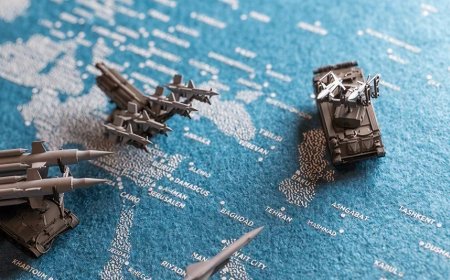
Strategic bombers such as the B-1 Lancer and B-2 Spirit, along with multirole fighters like the F-35 Lightning II, operate alongside fleets of surveillance drones and cruise missiles. Systems like the Tomahawk cruise missile and land-based rocket platforms such as the M142 HIMARS represent the cutting edge of modern warfare.
Missile defense shields including the Patriot missile system and THAAD guard against retaliation. Aircraft carriers such as the USS Abraham Lincoln patrol the seas, supported by maritime surveillance planes like the P-8 Poseidon and heavy transporters like the C-17 Globemaster III.
Each of these platforms embodies decades of research and billions of dollars in investment. Their deployment signals not only military seriousness but also fiscal magnitude. War in the 21st century is technologically dazzling and economically voracious.
It consumes resources at a pace that dwarfs social spending debates back home. Schools, healthcare systems, infrastructure, climate adaptation projects all compete for budgetary scraps, while missiles costing millions are expended in seconds.
The destruction of even a few fighter jets represents not only tactical setbacks but also enormous financial losses. Modern aircraft are floating vaults of capital. When they fall, they take with them both pilots and billions in hardware. Yet the calculus of war absorbs such losses into strategic necessity. The ledger moves on.
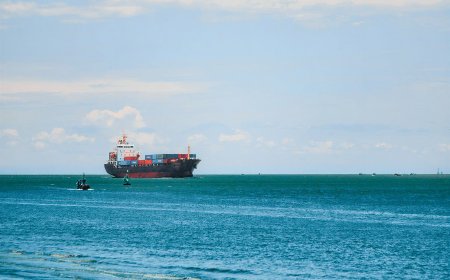
What is often overlooked is that the burden of this ledger is global. The Middle East remains central to the world’s energy supply. Instability in this region reverberates through oil markets almost instantly.
Rising crude prices ripple outward, raising transportation costs, manufacturing expenses, and electricity bills across continents. For wealthy nations, this may translate into inflationary pressure and political discomfort. For poorer countries, it can mean acute crisis.
In nations already struggling with debt, currency depreciation, and fragile import balances, a spike in energy prices can trigger cascading effects. Fuel becomes more expensive. Transportation costs rise. Food prices follow. Inflation erodes purchasing power.
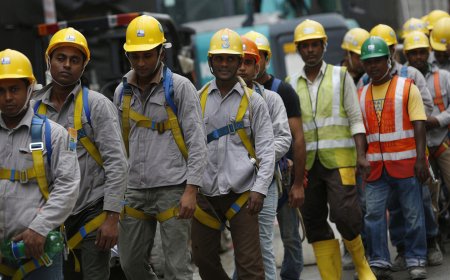
The urban poor and rural day laborers feel the squeeze first and hardest. What begins as a military confrontation between states becomes a silent economic war against millions who have no voice in the conflict.
The irony is stark. Warlords and arms manufacturers profit handsomely. Defense contracts expand. Stock prices in military industries climb. Political leaders deliver speeches about security and deterrence.
Yet the taxi driver in Dhaka, the factory worker in Nairobi, the farmer in Manila, and the nurse in Cairo pay the hidden tax of instability through higher living costs. They did not vote on the bombing campaigns. They do not attend strategic briefings. But they subsidize the consequences.
Supporters of the operation argue that deterrence sometimes requires overwhelming force. They claim that failure to respond decisively would embolden adversaries and invite greater catastrophe. This logic is not without historical precedent. Appeasement has its dangers.
Yet the danger on the other side is escalation. Military action rarely unfolds in neat, contained sequences. Retaliation begets counter-retaliation. Regional conflicts can entangle global powers. Miscalculations multiply in environments saturated with weaponry.
Moreover, the moral authority claimed in such interventions weakens when civilian suffering mounts. Even precision strikes cannot eliminate the risk of collateral damage. Infrastructure is damaged. Electricity grids fail. Hospitals strain under casualties. Environmental contamination spreads. The long-term costs of rebuilding often exceed the initial cost of destruction. And reconstruction funds, too, come from public coffers.
There is also the question of precedent. When powerful states normalize pre-emptive or expansive strikes, they create templates that others may follow. International law becomes selectively interpreted. Smaller nations observe that power, not principle, governs outcomes. This corrodes the fragile architecture of global norms painstakingly constructed after 1945.
It is often said that there is no personal loss to the architects of war. That statement may be rhetorically exaggerated, yet it captures an essential imbalance. Decision-makers operate at a distance from the battlefield. Their families are rarely in the line of fire. Their daily routines continue with minimal disruption. The true losses are borne by conscripts, civilians, displaced families, and taxpayers. Grief concentrates downward.
If war is ever to be justified as a means to secure rights, it must remain genuinely a last resort. It must be bounded by strict proportionality and clear objectives. It must be accompanied by credible diplomatic channels. Otherwise it degenerates into a spectacle of power that deepens insecurity.
For the sake of humanity and stability, de-escalation is not weakness. It is prudence. The resources of the world are finite. The patience of its people is not inexhaustible. To continue down a path of escalating destruction is to gamble with both. The time to step back is now, before the smoke of epic fury settles into the quiet, enduring ash of collective regret.
H. M. Nazmul Alam is an Academic, Journalist, and Political Analyst based in Dhaka, Bangladesh. Currently he teaches at IUBAT. He can be reached at [email protected].