


































How the Rohingya Judgment Puts the World's Genocide Politics on Trial
For Bangladesh and for the Rohingya, the conclusion is practical. The verdict is a legal victory, but its value depends on whether the world applies the same law to everyone.

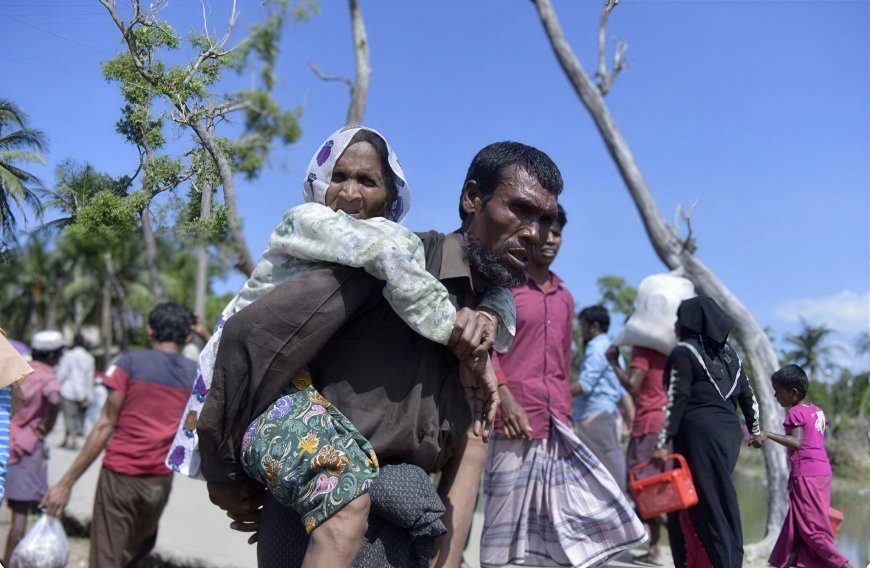
On November 19, the International Court of Justice did something it had never done in eight decades. In a 9-6 decision, the Court found that Myanmar "has committed genocide against the Rohingya group in northern Rakhine State, in violation of its obligations under the Genocide Convention."
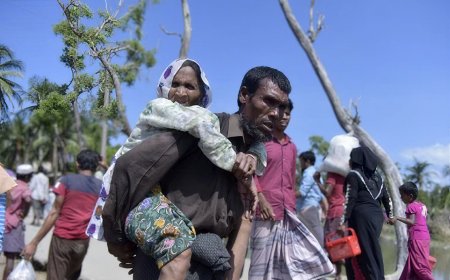
It ordered Myanmar to allow displaced Rohingya to return safely and voluntarily, to investigate and prosecute those responsible, and to pay compensation, with the amount to be set in later proceedings.
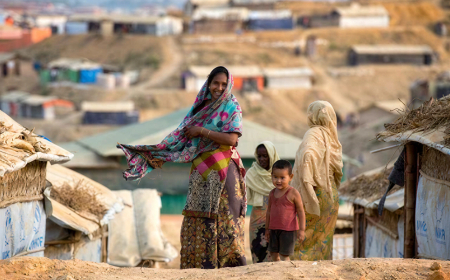
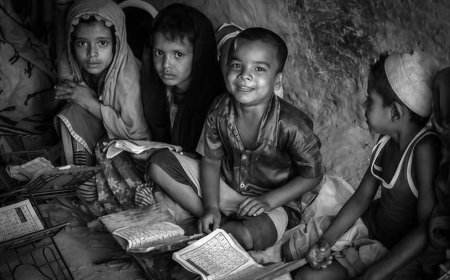
For both the Rohingya and Bangladesh, which has sheltered them for nine years, the judgment confirms the truth in law. But its reach goes far beyond Rakhine State.
A judgment of the World Court cannot be confined to the case that produced it. Once the Court states how genocidal intent is proven, how many deaths are enough, and how much weight UN fact-finding deserves, those standards become the yardstick for every other genocide case.
That is why this verdict is also a mirror, which reflects the conduct of the states that will now have to live with it. The Western governments that championed the Rohingya case while resisting the Gaza case: Washington, which called Myanmar's actions genocide before turning on the court that confirmed it.
Beijing, which shields Myanmar while invoking international law for Palestine, and Tokyo, which praises the Court while courting the generals it has just condemned.
What the Court Decided and Why It Matters
The core issue of any genocide case is intent. Killing, even on a mass scale, is not genocide unless it is carried out with intent, which will have to entail the destruction of a protected group, in whole or in part.
Because states never really write such intent down, the Court has long required that intent be "the only reasonable inference" from the evidence that is submitted.
That test defeated both Croatia and Serbia in 2015, and it kept Serbia's responsibility for Srebrenica limited, in 2007, to a failure to prevent the killings only.
The Myanmar judgment keeps the formal test but applies it differently. One analysis in the Israeli press summarises it this way. The Court moved from a strict "pattern of conduct" test towards a looser look at the broader circumstances around the killings.
It analysed in depth the act of causing serious bodily or mental harm. It held that widespread destruction of housing can support a genocide finding even without the killing of particular people. About 10,000 of 815,000 Rohingya, roughly 1.2 per cent, were killed, and the Court found this sufficient.
It used a relatively low standard to treat provocative speeches as evidence of intent, and it gave more credibility to UN reports than to Myanmar's own.
The judgment also drew limits. According to the same analysis, the Court rejected the claim that Myanmar deliberately inflicted conditions of life calculated to destroy the group.
It also held that negligence, even gross negligence, cannot establish genocide. Nor was it a narrow vote on the central finding. Six judges, including the Court's vice-president and two former presidents, opposed the central genocide finding.
Several of them still supported the rulings ordering Myanmar to investigate suspects, punish perpetrators, and compensate victims. The result is definitely a standard, and it is demanding but workable.
Once applied to Myanmar, it cannot quietly be withdrawn because the respondent is a friend.
Other Dockets
The verdict lands in a crowded, uneven field of genocide litigation.
The first lesson comes from an African state, Sudan. In 2025, Sudan accused the UAE of complicity in genocide in Darfur. The case never reached the evidence stage. When the UAE acceded to the Genocide Convention in 2005, it reserved on Article IX.
This article gives the ICJ jurisdiction to hear disputes between states. By 14 votes to 2, the Court held the claim that it lacked prima facie jurisdiction because of that reservation. The Myanmar judgment shows what the Court can do when it has jurisdiction.
Sudan shows how easily a state can opt out in advance. The Genocide Convention is universal on paper, but its main enforcement clause is optional in practice.
The second lesson comes from the case of Ukraine.
Kyiv went to the Court in 2022 to deny Moscow's claim that it was committing genocide in Donbas. In December 2025, the Court decided by 11 votes to 4 to let Russia pursue counterclaims stating that Ukraine itself committed, attempted, conspired in, and incited genocide.
This is the risk the Myanmar verdict now also amplifies. If genocide is easier to prove, it is also easier to allege, and aggressors can use the convention as a weapon. Courts must guard against that without retreating from findings the evidence supports.
The third, and politically heaviest, is South Africa v. Israel. The case is in its merits phase. The Court gave South Africa until 22 November 2027 to file its reply, and gave Israel an equal period for its rejoinder.
Analysts expect the delay to push any verdict to 2030 or later. Every legal team in that case will now study the Myanmar judgment line by line. The Israeli analysis cited above is candid. Its author concludes that the ruling makes Israel's genocide defence harder, though some findings offer protection.
Then there is a case that sits in the same shadow: Nicaragua's suit against Germany for allegedly facilitating violations in Gaza. It matters here because of what it did to German policy, discussed below.
The West's Two Faces
The most uncomfortable part of the mirror faces Western Europe and Canada.
In November 2023, Canada, Denmark, France, Germany, the Netherlands and the UK filed a joint intervention in the Myanmar case. They argued for an expansive reading of the convention.
As one scholar put it, they urged the Court to lower the high requirement of "only reasonable inference" and to assess genocidal acts and intentions more holistically.
In doing so, they relied on the findings of the UN Commission of Inquiry on Myanmar, which had concluded that Myanmar committed genocide.
That was principled law.
The problem is what came next. In September 2025, a different UN Commission of Inquiry reached a parallel conclusion about Gaza. It found that since October 2023, Israel has committed four out of the five genocidal acts defined by the 1948 Genocide Convention.
The same governments that leaned on UN fact-finding against Myanmar would not lean on it against Israel. Many Western countries, including the UK, said that only a court can rule on whether genocide has been committed.
That position has two flaws. First, the Genocide Convention requires states to prevent genocide, and that duty arises when a serious risk becomes known. It does not wait for a final judgment.
Second, the governments taking this line did not wait for a court in Myanmar's case. They argued the merits in court, built on UN findings, years before any final ruling.
Britain shows the contradiction most sharply. Today, Foreign Secretary Ed Miliband said the UK "reaffirms our full support for the Court and the international legal order".
The UK is expelling Myanmar's Defence Attaché, building on existing sanctions against the regime. It is also calling urgently for a Security Council session on the judgment. That is exactly what states should do after a genocide ruling.
Yet the same government's record on Gaza is different. Under Keir Starmer, Britain said it had not concluded that the state of Israel is committing genocide in Gaza, while criticising "utterly appalling" civilian suffering.
And in July 2026, the new British government rejected calls from dozens of parliamentarians to recognise the war as genocide and impose sanctions on Israel.
London is right to act swiftly on Myanmar. The question is why the urgency to prevent only appears after a verdict, and only for some respondents.
Germany's path is even more telling. Berlin joined the Rohingya case to help clarify and combat genocide. When South Africa sued Israel, Germany announced in January 2024 that it would intervene on Israel's behalf, saying the allegation had "no basis whatsoever".
It later dropped the plan to focus on its own defence in Nicaragua's case. A state that intervened to widen the convention's reach in one case was ready to narrow it in another.
The comparison also exposes who has chosen consistency. On 11 March 2026, the Netherlands and Iceland each filed declarations of intervention in South Africa's case.
The list now includes Ireland, Belgium and Spain, which produces a notable fault line within the West. The Netherlands, which reportedly led the joint European intervention on Myanmar, has applied its legal reasoning to Gaza as well. By contrast, Germany, France, the UK and Canada did not intervene.
The pattern repeats elsewhere. The west - Canada, the UK, Germany, Australia and France - have alleged and condemned genocide in Xinjiang while ruling out its possibility in Gaza. Norway is one of the few countries to have decried both.
It is not that these governments are indifferent to genocide. The interventions the did and offered in the Rohingya case were serious and valuable. The problem is selective universalism - the law applies in full when the respondent is distant or adversarial, and becomes a matter of waiting for courts when the respondent is an ally.
That selectivity is now harder to defend, because the standard they asked the Court to adopt has been adopted.
Washington: From Author of the Finding to adversary of the Court
The United States deserves its own section, because its turn is the sharpest.
In March 2022, the Biden administration formally determined that the Myanmar military's violence against the Rohingya amounted to genocide and crimes against humanity.
Four years later, the Court reached the same conclusion, and Washington's reaction has been hostility rather than vindication. Before the ruling, Ambassador Mike Waltz accused Gambia's ad hoc judge, Navi Pillay, of tipping the scales to lower the threshold for genocide.
The judges have reportedly taken advice on protecting their assets from possible US sanctions.
Washington's objection is not really about Myanmar. The US and Israel reportedly worry that a clear standard for proving intent in the Myanmar case could make a later genocide finding against Israel more likely.
That fear has already shaped American litigation. In March 2026, the US filed its own declaration in South Africa v. Israel, stating: "The allegations of 'genocide' against Israel are false."
The United States, which does not accept the Court's compulsory jurisdiction, is happy to argue before it when the outcome may protect an ally. It threatens the Court when the outcome may not. The companion article examines this record in detail.
China: A Shield for Naypyidaw, a Sword for Palestine
Beijing's duality runs the other way. On the bench, the sole judge from China, Xue Hanqin, found Myanmar not guilty of every charge. At the UN, China voted against the General Assembly's Rohingya resolution the day before the verdict, as it has shielded Myanmar in the Security Council since 2017.
For years, Beijing has preferred to treat the Rohingya question as a bilateral matter between Myanmar and Bangladesh, to be managed rather than judged.
Yet China is an active champion of international law where Palestine is concerned. Its 2025 appearance on humanitarian aid to Palestine was its second oral proceeding before the ICJ on a Palestine advisory opinion, after the 2024 case on the occupied territory.
At the same time, it rejects any scrutiny of its own conduct. Before the ICC's Assembly of States Parties, China called the allegation of "genocide" and "crimes against humanity" in Xinjiang "nothing but lies and defamation".
Experts say China privately has reservations about using such courts for genocide allegations, which could have awkward implications for Beijing.
China's position is consistent only in its interests. It supports international adjudication against Israel, a partner of its main rival, and resists it for Myanmar, a client state on its border with pipelines, ports and minerals at stake.
It resists it entirely for itself. The Myanmar judgment narrows Beijing's room. China cannot plausibly argue for strict legal accountability in Gaza and treat a binding genocide judgment against Myanmar as a bilateral misunderstanding.
If it blocks Security Council follow-up, it will confirm that its legal advocacy is strategic rather than principled.
Japan: The legalist that courts the generals
Japan's duality is quieter but no less real.
There is a symbolic irony: The judgment was read by the Court's Japanese president, Iwasawa Yuji. Japan presents itself as a champion of the Court. It submitted a written statement in the advisory proceedings on Israel's policies in the occupied territory and delivered an oral statement on 22 February 2024.
At the UN, its envoy said that Japan, as a country that values the rule of law, "attaches great importance to the role of the ICJ" and that Israel's settlement activity violates international law.
On the Rohingya, however, Tokyo kept its distance from the start. In 2020, asked about the case, Japan's foreign ministry said that it was "a matter concerning third-party countries" and that Japan was not in a position to comment directly.
Its ambassador in Yangon went further. He told local media he did not think the Myanmar military "committed genocide or (had the) intent of genocide". Japan never intervened in the Gambia case.
Today, Tokyo is a channel for re-engagement with the generals. In October, Japan's special envoy for national reconciliation, Yohei Sasakawa, met Min Aung Hlaing in Naypyitaw to discuss assistance to the country's "internal peace process".
Japan also hosted a second round of US-Myanmar talks. Its foreign ministry said only that it had been "communicating as necessary" with both sides. Its acting envoy met the junta's foreign minister earlier in the month.
On Palestine, Japan's legalism also stops at Washington's preferences. Japan decided not to recognise a Palestinian state in 2025. It did so, reportedly, to maintain relations with the US and to avoid a hardening of Israel's attitude.
Tokyo's pattern is therefore clear - firm statements of principle in advisory proceedings, and pragmatism when its alliance or its investments are at stake. After a binding judgment that names Myanmar's state as responsible for genocide, quiet engagement with the same military becomes much harder to justify as neutral.
The verdict leaves every major actor in a bind. For perpetrators, the cost of denial has risen. Myanmar can reject the ruling, but it cannot reverse it. Israel now faces a Court whose reasoning on intent, incitement and UN evidence is on record.
Russia, which used genocide as a pretext for invasion, faces the same standard it hoped to exploit.
For the Western interveners, the dilemma is credibility. They asked the Court to read the convention broadly, and it did. If they now treat that reading as relevant only to Myanmar, they will confirm the long-standing charge from the Global South that international law is a tool for the strong.
Ireland, Belgium, Spain, Slovenia and the Netherlands show that consistency is possible within the West. The others must explain why it is not possible for them.
For the US, the dilemma is existential for the Court.
If Washington sanctions judges over a judgment that confirms its own 2022 finding. It will signal that the problem is not the law but its potential reach to allies. That would push the Court into the same confrontation that the ICC already faces.
For China and Russia, the dilemma is the Security Council. A veto against follow-up on Myanmar would protect a client, but it would also undercut their claims to defend international law in Palestine and elsewhere.
For Japan and other "middle powers", the dilemma is whether they can keep praising the Court while normalising relations with a state it has just condemned.
What does all this add up to?
First, the Myanmar judgment is the strongest affirmation of the Genocide Convention in its history. It shows that a small state, The Gambia, can take a powerful military to court and win, and that evidence gathered by UN investigators can carry weight. That is a victory for the system.
Second, the credibility of the system depends less on judges and more on the powerful states. A genocide finding can be as strong as the political will to support it. If that will is unevenly distributed, then the unevenness follows alliances rather than the evidence, and the will to implement the verdict.
Third, consistency is now the real test of the Western states that has actually helped build this case. They do not have to prejudge South Africa v. Israel.
They do have to accept three things: The Myanmar standard applies to every respondent; UN fact-finding counts whether it implicates a rival or an ally; and the duty to prevent genocide does not wait for a final judgment in one case when it did not in another.
Fourth, China and Japan must face the same test from the other direction. Legal principles invoked for Palestine must also apply to Rakhine and, for China, to its own conduct.
For Bangladesh and for the Rohingya, the conclusion is practical. The verdict is a legal victory, but its value depends on whether the world applies the same law to everyone.
If the judgment becomes a precedent for all, it will strengthen the protection of every vulnerable people. If it becomes a precedent only for the weak, it will mark the moment the world proved, in its own highest court, that genocide law is only as universal as the politics behind it.
Simon Mohsin is a political and international affairs analyst and a Research Fellow at Bangladesh Neeti Gobeshona Kendra (Bangladesh Policy Research Center).