


























































The Hypocrisy Under the Veil of Conservatism, Religion and Tradition
Bangladesh does not need another generation that merely knows how to speak about religion, culture, patriotism, or morality. Perhaps we need a generation that knows how to live them. And perhaps that is where the real Bangladesh begins.
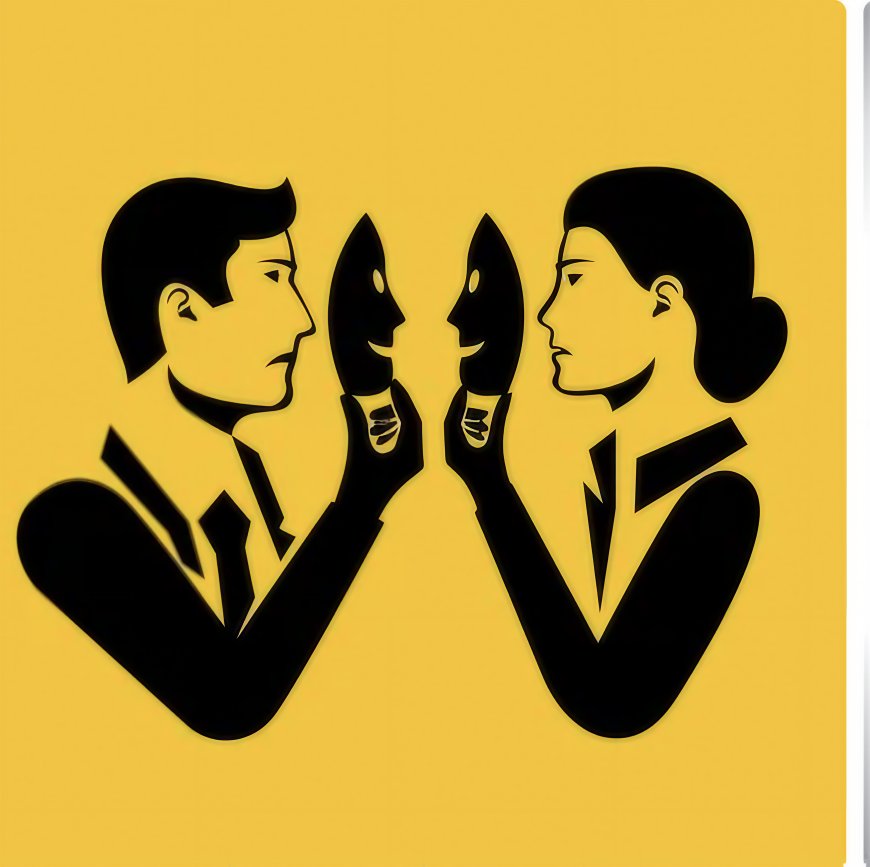
There is a peculiar hypocrisy embedded in the fabric of how we live.
We speak incessantly of culture, religion, morality, family honour and tradition, yet our everyday conduct often betrays the very values we claim to defend.
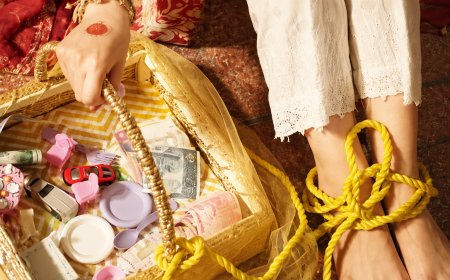
We demand modesty from women while tolerating cruelty from men. We preach religion while normalizing dishonesty. We speak of family while abandoning elderly parents. We condemn corruption in speeches while quietly negotiating with the corrupt.
Somewhere between what we profess and what we practice lies the uncomfortable hypocrisy of contemporary Bangladesh.
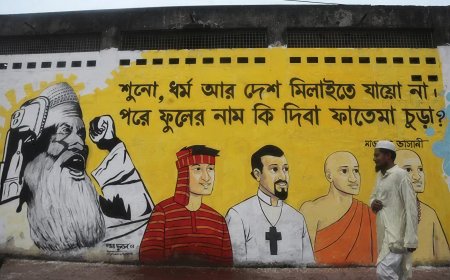
We have reduced Islam, too, into an argument about women's dress and sexuality, while conveniently forgetting the far more demanding commandments of faith: do not lie, cheat, steal, humiliate, oppress or harm another human being.
If Dante Alighieri were to revisit our society, he might recognise not the circles of Hell he imagined, but the ordinary moral compromises through which we manufacture our own. Perhaps the first reform we need is not constitutional, political or economic.
Perhaps it is moral. Before attempting to construct a just nation, we must ask whether we have learned to become just citizens.
Recently, a video circulated in which an elderly father, himself a teacher, appeared to be humiliated by his own son, accosting the father to bow before him while the son was smoking and behaved contemptuously.
Another case involved an elderly mother reportedly discovered dead after days of neglect in a room described as barely fit for human habitation, despite having educated and employed children. There are thousand such stories that oscillates in our feeds.
These images force an uncomfortable question: what happened to the moral universe in which parents were considered sacred, where serving them was a seraphic honour rather than a scornful inconvenience? This selective morality extends into bureaucracy.
The widely discussed case involving 17-year-old Changemaker Shahed Sharif, who struggled to retrieve his late mother's pension, reportedly exposed how ordinary citizens can become trapped inside bureaucratic indifference.
When a website he founded subsequently received thousands of reports about bribery proliferating across public services, and the scale of public frustration with systems. We proudly call ourselves a conservative, religious and honest society. But religion cannot merely be reduced to women's clothing, and conservatism cannot become a licence to humiliate the vulnerable.
The essence of faith is also honesty, justice, mercy, restraint. A society cannot repeatedly violate those principles and then compensate for the contradiction by policing women's appearance. Women encounter perhaps the most brutal version of this hypocrisy.
Imagine a woman publicly alleging that a powerful man has physically abused her, betrayed her or harassed her. Instead of investigating the allegation, society immediately examines her clothes, friendships, profession and lifestyle and we are living vicariously through these appalling feeds.
She may be a model, a showgirl, a supporter of certain party or someone society chooses to label contemptuously.
None of those identities extinguishes her citizenship or her right to protection and demanding investigation rather than character assassination. We become equally indignant when a girl smokes in public. Smoking is unquestionably harmful and should not be romanticised.
Yet the spectacle becomes morally fascinating when several men feel entitled to harass a woman for doing something that men and even boys routinely do themselves publicly.
The offence, it seems, is not always the cigarette or attire, what gives the impetus is the audacity of a woman occupying the same moral latitude men have long claimed for themselves. Our cultural life contains another paradox.
We passionately invoke the preservation of Bangladeshi culture and tradition while consuming imported culture on an extraordinary scale.
We celebrate art when it reinforces comfortable nationalist nostalgia but treated with suspicion when it questions contemporary political, religious or social realities?
The political acrimony between Bangladesh and India may dominate speeches, yet Indian television channels remain widely consumed, Indian products and fashion remain deeply embedded in the market, and our media devote enormous attention to Indian celebrities. At weddings across social classes, Hindi songs remain ubiquitous and the foreign ministry remains in a state of inertia instead of curbing it.
There is nothing inherently wrong with enjoying another culture. Cultural exchange is one of civilisation's oldest forms of enrichment. The contradiction begins when we loudly reject a neighbour politically while quietly reproducing its cultural vocabulary socially. Our political life is hardly exempt.
I approach this subject cautiously because in Bangladesh, political criticism can itself become a political identity. After the July-August 2024 upheaval and the fall of the previous government, Bangladesh expected more than a change of occupants.
The interim government with promises of manifesting “Triple Zero” also inspired another powerful expectation: that the country could reverse its decades-long brain drain and persuade accomplished Bangladeshis abroad to return.
The optimism was palpable.However, the #ReverseBrainDrainBD movement failed. Aside from a handful of insiders brought back and placed close to the interim government, most ended up sidelined.
Many Bangladeshis looked toward the BNP with expectations of reform, stability, economic relief, and institutional repair.
During the interim period, BNP voices had strongly questioned the legality and appropriateness of appointing foreign passport holders to important state positions, including roles connected to constitutional reform and foreign affairs.
There were also questions about whether the interim administration was excessively aligned with Western interests.
Yet after assuming power, the government retained figures whose backgrounds had previously attracted precisely such criticism, including a foreign minister who has also consequently elected as President of the UN General Assembly.
There is nothing inherently wrong with Bangladesh having internationally accomplished representatives, and their achievements can rightly be a source of national pride.
The question is one of political consistency. Were those earlier objections genuinely constitutional and principled, or were they simply convenient weapons of opposition politics? Citizens are entitled to ask. The economic test is even more immediate.
Inflation remains painfully high, hovering around 9%, while food prices and energy costs continue to suffocate low- and middle-income households. The government promised reform, including the depoliticisation of the financial sector.
Yet critics and sections of civil society have questioned whether some appointments, including the governor of central bank, sufficiently embody the reformist credentials promised to the public.
Needless to say, systemic threats to women's safety on the streets and in the workplace continue to be an endemic crisis in 2026. Likewise, a government that promised democratic tolerance must be judged not by its rhetoric but by the conduct of its supporters.
Reports of political retaliation, local coercion and attempts to control businesses inevitably raise memories of precisely the political culture Bangladeshis hoped to leave behind.
This opulence among party leaders directly contradicts the simplicity preached and practiced by the Prime Minister, who wears simple clothes, drives himself, walks to his office, and takes his daughter to the movies like any citizen.
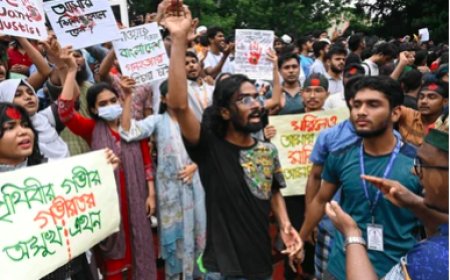
In the wake of the July Uprising, a student-led revolution successfully dismantled a regime under the banner of merit, honesty, and human rights. However, the betrayal of that promise sends shivers down the spine.
What followed was a descent into brutal violence, citizen turning against citizen, looting, arson, and atrocities that horrified the nation. We had comforted ourselves with the thought that such monstrosity belonged solely to an alleged fascist government.
The truth was far more terrifying: Ordinary people are just as capable of cruelty; they simply lacked the power and opportunity to express it before. Furthermore, public disillusionment grew as key student leaders transitioned from fighting for job quotas to occupying powerful state offices.
The interim period faced heavy criticism over alleged financial irregularities and nepotism among the new ruling elite's extended networks. Looking back at this political evolution, an unavoidable question emerges for contemporary analysts: which era exhibited the deepest hypocrisy—the pre-July regime, the postuprising interim government, or the political landscape of 2026? Perhaps we should wait and see what the remainder of 2026 reveals.
Governments deserve time, but citizens deserve vigilance.
Corporate Bangladesh is not immune either. Patriarchy remains one of the most underacknowledged impediments to women's advancement. A talented woman may be invited into a professional relationship under the language of collaboration, sponsorship or partnership, only to discover that the proposition has acquired an entirely indecent meaning.
Refusal can cost her projects, introductions, sponsorships and sometimes an entire professional ecosystem. The most insidious form of patriarchy is not always open misogyny. It is the invisible network through which men can recommend, exclude, promote, discredit and quietly close doors.
Some women eventually surrender, not because they lack talent, but because surviving the machinery becomes more exhausting than pursuing the dream.
I know something of this machinery myself. I faced such challenges before July 2024, during the interim era and unfortunately even during the new dawn of Bangladesh. Recently I was selected for a prestigious academic programme involving government patronage and national and international figures.
Later, I was informed that a government agency's verification had raised questions about my publicly expressed pro-liberation convictions and my reverence for the Father of the Nation, ergo I was subsequently removed.
On another occasion, very recently my organization entered into a collaboration for a prestigious event associated with a Bangladeshi diplomatic organisation. Despite the considerable time and effort my team invested, I was later sidelined for being vocal on pressing issues.
Because I had publicly expressed respect and affection for Bangabandhu, the association's president—a ruling party official whose son also heads another powerful organization, did not want me visibly associated with the project.
They preferred politically aligned individuals instead. I was given the option to do the work as long as the credit and identity went to someone else. Unsurprisingly, I refused.
What concerns me is not my own inconvenience but what such experiences mean for countless young women and men who may not possess the resilience, networks or confidence to withstand similar exclusion.
Perhaps this is where the great national contradiction becomes visible. We ask our most capable people to return from abroad while giving those at home reasons to leave. We speak of meritocracy while rewarding proximity. We demand patriotism while making belonging conditional.
So where does this leave us? In Plato’s Republic it reverberates that the good citizen and the good city are inseparable just like the ideal city Kallipolis.
Bangladesh therefore does not merely require better rulers. It requires better citizens. Perhaps our first responsibility is to embrace our hypocrisy rather than conceal it.
We must stop confusing imperfection with failure and confession with weakness. Across centuries, philosophers have returned to the same uncomfortable proposition: In the language of Dante every society has a purgatory of its own; one cannot reach paradise without first confronting the inferno.
Socrates believed that the examined life was essential to human virtue. Perhaps that is our conundrum. We keep searching for the perfect government when we have not yet produced enough citizens willing to practise the values they demand from the government. Perhaps salvation begins somewhere much simpler.
For me, the simplest answer remains the oldest one. Confucius philosophy “If there is righteousness in the heart, there will be beauty in the character” or Marcus Aurelius philosophy "He who does wrong does wrong to himself", or Bangabandhu’s Bengal philosophy distilled into three words: Love, love and love.
Imagine the bureaucrat who sees the pensioner as his own mother. The man harasses a woman on the street, seeing her as his sister.
The businessman who sees the employee as an equal human being. The manufacturer sees consumers as representative of god, The politician who sees the citizen not as a vote but as own children. Love alone will not build a modern state.
Love accompanied by honesty & dedication might produce something more consequential: Humane hospitals, conscientious consumers, dignified workplaces, impartial law enforcement, transparent institutions, astute politicians, credible courts and an education system that produces just citizens.
Perhaps Bangladesh does not need another generation that merely knows how to speak about religion, culture, patriotism or morality. Perhaps we need a generation that knows how to live them. And perhaps that is where the real Bangladesh begins.
Alisha Pradhan is a Bangladeshi social entrepreneur, media personality, and businesswoman. She is also the founding CEO of HerNet TV.