




























































A digital bank may have a head office, but no branches, sub-branches, agents or ATMs of its own. For anything involving cash, it has to rely on the networks of existing banks and mobile financial services (MFS) providers.
What good economic policies actually look like -- and how to tell when they are missing

Not only is the government expected to manage the current account deficit, but it is also expected to service the debt obligations it has inherited and pay for its electoral commitments, and yet somehow manage to bring inflation down.

It is striking that nearly two years after a youth led uprising that was triggered by protests about jobs, the economy is largely absent from public discourse. This may be the ultimate July betrayal of them all.
We must break the silence of the graveyard. The cure for inflation is found in the shovel, the tax holiday, and the cold-room -- not in a 15% interest rate. To follow India’s policy is to finally choose a stability that breathes.
You cannot have a stable nation where the youth are unemployed and the factories are silent. Stability built on silence is an illusion.

If Bangladesh treats artificial intelligence simply as another digital tool, it risks falling behind in a world where advantage increasingly rests on capability and commodified intelligence rather than labour alone.

Bangladesh has tremendous potential to grow both economically and institutionally but the growth depends on the trust that people and investors place in its institutions, and that trust is nurtured through elections that are fair, transparent, and conducted with integrity.

The economy is busier, but not necessarily more capable. After presenting eight charts, they tell basically one story. On the economic front, Bangladesh’s achievements are real. But the transformation is still incomplete.

Platforms expand opportunities while simultaneously consolidating economic power. Those who control digital infrastructure and data ecosystems enjoy disproportionate gains, while workers and small entrepreneurs absorb most of the risks.
Bangladesh faces simultaneous pressure from the IMF program and revenue reforms. Currently, effective PFM reform is not just a development strategy -- it is essential for economic stability.

When leaders fail to rise above personal impulses, nations suffer in ways that cannot be easily repaired. Economies falter, social bonds weaken, and the future becomes a battleground of unresolved grievances. History offers no shortage of warnings.
The timing could not be more appropriate. With election dates announced, the country has slipped into a familiar trance. What is striking is not what is being said, but what is being omitted. There is almost no sustained conversation about how Bangladesh will pay its bills, grow its industries, or persuade its own citizens to invest in their own country again.
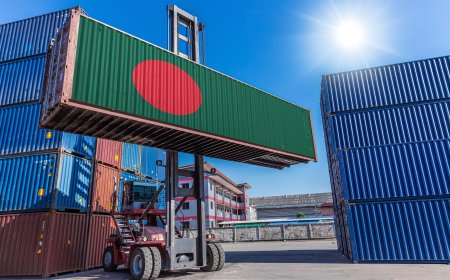
The average citizen is no longer buying the old nationalistic slogans. They are tired of inefficiency, corruption, and delay. They have reached a pragmatic conclusion: they do not care who owns the cranes; they care about how fast the ships turn around.
As we chart our future as an innovating nation, we must ask ourselves: Will we continue to be a nation that tolerates and even encourages heresy, heterodoxy and esoterism, or will we ignore the lessons of history and become a closed society, one that is hostile to new ideas?