




































![A Ledger of the Soul: Navigating the Allah-Bhagavant Nexus in a 19th-Century Puruṣākāra Jñāna Caupara [Gyan Chauper]](https://counterpointbd.com/uploads/images/202608/image_430x256_6a93baa3b09a7.jpg)


















Bangladesh’s Empty Chair at BRICS
Bangladesh does not need an India-first, China-first, Russia-first or West-first foreign policy. It needs a Bangladesh-first foreign policy. And perhaps the simplest test of such a policy is this: Which choice leaves the country with more doors open?

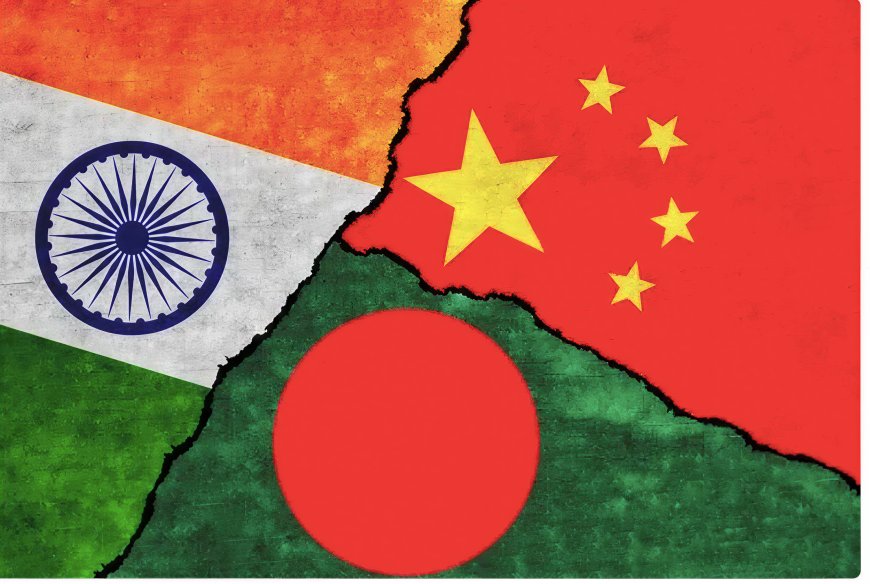
When leaders gather around the BRICS table in New Delhi this weekend, they will not all be friends. Some represent states locked in border disputes; some stand on opposing sides of wars; some are strategic rivals and major trading partners at the same time.
Yet they will sit in the same room. Bangladesh’s chair, by contrast, will be empty.
The government’s explanation is that Prime Minister Tarique Rahman was invited not in his capacity as prime minister of Bangladesh, but as the current chair of BIMSTEC.
The distinction matters in diplomatic protocol. But should it automatically have been read as a diminution of Bangladesh’s status? I would argue that the BIMSTEC invitation could instead have been treated as additional diplomatic capital.
As chair of a seven-member regional organization centred on the Bay of Bengal, Bangladesh had an opportunity to enter a room containing India, China, Russia, Brazil, Indonesia, the United Arab Emirates, and other consequential powers.
The expanded BRICS grouping now represents close to half of the world’s population and roughly 40 percent of global output measured at purchasing-power parity.
This summit is also discussing practical cooperation in areas including supply chains, innovation, entrepreneurship and cross-border economic mechanisms.
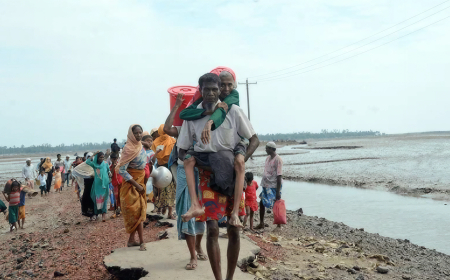
Had Bangladesh used the BIMSTEC chairmanship as an entry point, the prime minister could have pursued several conversations in a single visit: political engagement with India, investment with China, energy with Russia, economic cooperation with Gulf states, trade with Indonesia, and diplomacy around the Rohingya crisis.
If such conversations were possible, would the precise title printed on the invitation ultimately have been the most important question?
BRICS is especially instructive because it is not an ideologically coherent club. India and China are strategic competitors. Iran and the UAE do not have identical regional interests.
Russia is in profound confrontation with the West, while India maintains deep strategic relations with Western powers. The grouping’s internal contradictions are not a reason for Bangladesh to find it irrelevant. They are part of the reason the forum matters.
Diplomacy is not a reunion of friends. Often, the people with whom a state most needs to share a room are precisely those with whom it disagrees.
India itself provides an obvious example. It works with the United States, Japan and Australia through the Quad while sitting with China and Russia in BRICS. It has a serious border dispute with China, yet continues high-level engagement with Beijing.
It has bought large volumes of Russian oil despite Western pressure while simultaneously deepening technology, defence and investment ties with the United States.
Narendra Modi can meet Vladimir Putin without having to sever relations with Washington the following afternoon. That is strategic autonomy.
Indonesia offers another useful example. Joining BRICS did not require Jakarta to place itself inside a Chinese political orbit. Its long-standing foreign-policy instinct has been to remain active and independent, using competition among major powers to preserve room for manoeuvre rather than surrendering that room to one of them.
Vietnam is perhaps an even sharper illustration. It has a long history of mistrust toward China and continuing disputes in the South China Sea, yet China remains one of its most important economic partners. Hanoi has also deepened relations with the United States while maintaining older ties with Russia.
Its approach is often described as “bamboo diplomacy”: flexible in the branches, firmly rooted at home.
Bangladesh is neither the United States nor China nor India. It does not possess their military power, market size or economic weight.
A substantial part of Bangladesh’s leverage must therefore come from geography, connectivity, access to the Bay of Bengal, demographic and market potential, and, crucially, diplomatic options.
India is next door, China is close, the Bay of Bengal opens toward Southeast Asia, and Bangladesh sits at an important junction between South and Southeast Asia.
The country needs infrastructure, energy, investment, new export markets and climate finance. On the Rohingya crisis, it needs serious engagement with China, India and Russia, among others. In such circumstances, one of Bangladesh’s most valuable diplomatic assets should be the ability to keep multiple doors open at once.
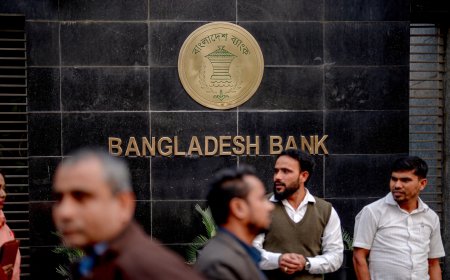
There is also a concrete economic dimension. Bangladesh has been a member of the BRICS-founded New Development Bank since 2021.
By the end of 2025, the bank had approved $42.9 billion in financing across 139 projects. In March this year, it approved two projects in Bangladesh: the NESCO Power Distribution System Strengthening Project and the Raipura Solar Power Plant Project.
Only last month, New Development Bank Vice-President and Chief Operating Officer Roman Serov visited Dhaka. Discussions included plans to increase lending to Bangladesh, the Dhaka-Chittagong Chord Line, a regional cargo hub at Chittagong airport, road and rail capacity, trade finance and possible support for Bangladesh’s issuance of Panda Bonds.
In other words, Bangladesh is seeking deeper engagement with an economic architecture created by BRICS while choosing to be absent from one of its most politically significant gatherings. That contradiction deserves an explanation.
The international system is no longer simple enough for the old assumption that closeness to Washington requires distance from Beijing, or that attending BRICS amounts to declaring oneself anti-Western.
Middle powers increasingly practise overlapping relationships because dependence on a single centre of power reduces room for negotiation.
Large summits also matter for reasons that rarely appear in the final communiqué. Leaders talk in corridors. Ten-minute meetings happen between formal sessions. A conversation begins over dinner. One foreign minister asks another to send a delegation. Officials exchange contacts.
Six months later, a brief encounter may have become a discussion about investment, credit, market access or political support. Geopolitics sometimes moves as much through who sat beside whom for ten minutes as through the language of a joint declaration.
These are elementary realities of statecraft. The public therefore deserves to hear the strategic case behind the decision from Bangladesh’s foreign-policy establishment.
The timing makes the question sharper. Xi Jinping is travelling to India for the first time in seven years. Vladimir Putin is in New Delhi. India is simultaneously strengthening trade and defence cooperation with Russia while preserving its relationships with Western powers.
BRICS contains states that distrust one another and still refuse to abandon the table. That is multidirectional diplomacy: not choosing a permanent friend, but creating options.
A major power can bargain with the weight of its military, its market or its capital. Bangladesh’s assets are different. Its location links India with Southeast Asia; it sits on the Bay of Bengal; it matters to China’s regional calculations; it is important to India’s security and connectivity; and it is a large, populous economy in the Global South.
The strategic value of that position increases when every major side has a reason to engage Dhaka.
Strategic autonomy, therefore, does not mean maintaining equal distance from everyone. It means building relationships in such a way that no single power becomes Bangladesh’s only door to the outside world.
Effective engagement with India, China, the United States, Europe, Japan, the Gulf states and institutions associated with BRICS expands the bargaining space available to a small or middle power.
By staying away, Bangladesh has not merely avoided India. It has also removed itself from direct access, at that moment and in that city, to a much wider group of potential partners.
There is, of course, a serious counterargument. Dhaka may believe that the symbolic importance of Tarique Rahman’s first visit to India is too great for it to be folded into a multilateral summit, and that the relationship should instead be reset through a full bilateral visit.
The government says such a visit will take place when conditions are conducive. That is not an irrational calculation.
But it creates a harder question: what additional strategic gain does Bangladesh expect from that future bilateral visit that outweighs the multilateral opportunity it is giving up now?
The government should explain that calculation. “The prime minister was not invited as prime minister” explains the protocol. It does not yet explain the strategy.
There is another, subtler risk. Dhaka may intend to say, “We protected the dignity of the office of the prime minister.” New Delhi may read, “Bangladesh declined the invitation.” Other capitals may simply register that Bangladesh was not at the table.
An empty chair speaks in diplomacy. The problem is that an empty chair cannot write its own message; other people interpret it for you.
I would not yet describe the decision to stay away from BRICS as a mistake. Strategy cannot be judged from a single photograph or a single weekend.
If Bangladesh follows this decision by building a more productive bilateral relationship with India while simultaneously widening its economic and political space with China, Russia, Brazil, Indonesia, the Gulf states and the New Development Bank, the absence may eventually look like part of a deliberate diplomatic sequence.
But if the calculation amounts simply to: “Our prime minister was not invited as prime minister, so we will not go,” then this begins to look less like geo-political strategy and more like the politics of protocol and prestige.
A state should care about dignity. But dignity and self-isolation are not the same thing.
Bangladesh does not need an India-first, China-first, Russia-first or West-first foreign policy. It needs a Bangladesh-first foreign policy. And perhaps the simplest test of such a policy is this: Which choice leaves the country with more doors open?
Dr. Lubna Ferdowsi is an academic and researcher based in England.