




























































Beyond the Gatekeepers of Bangladeshi Culture
Bangladesh’s identity was never meant to be dictated by an elite minority, nor silenced by fundamentalist threats. The real sound of the nation is already playing; it is time to secure the stage and let it resound.

For decades, the formal definition of Bangladeshi identity was curated from top-down institutions in Dhaka. Cultural heavyweights and political apparatuses enforced a rigid, polished, urban aesthetic -- one heavily reliant on a uniform interpretation of Rabindra Sangeet, patriotism-themed songs tied to the 1971 Liberation War, formal attire, and a hyper-regulated narrative of the nation's history.
While presented as national heritage, this institutionalized culture often functioned as a gatekeeper. It policed artistic expression, punished reinterpretation, and alienated millions across the rural delta who could not find their lived experiences reflected in the state-sanctioned ideal.
When the old political order dissolved, external observers rushed to warn of an impending void. The recent, unsettling disruptions of public life -- a concert forcibly shut down in Brahmanbaria, musical gatherings canceled under pressure in Kishoreganj, and aggressive demonstrations by fundamentalist groups -- fueled a panic that religious extremism was stepping in to dictate the nation's soul.
Yet this panicked narrative misses a crucial reality. A quiet, profound cultural resistance is rising across Bangladesh, but it is taking a shape that traditional commentators fail to recognize. It does not sound like the rehearsed choruses of urban auditoriums, nor does it yield to the silence demanded by dogmatists.
It lives in the decentralized, organic, and raw expressions of a generation that has discarded both political indoctrination and fundamentalist threats.
To understand this new movement, one must understand why the old cultural framework failed to hold the nation together. For years, young people and rural communities felt disconnected from a high-brow cultural hegemony that insisted on mechanical perfection over emotional truth.
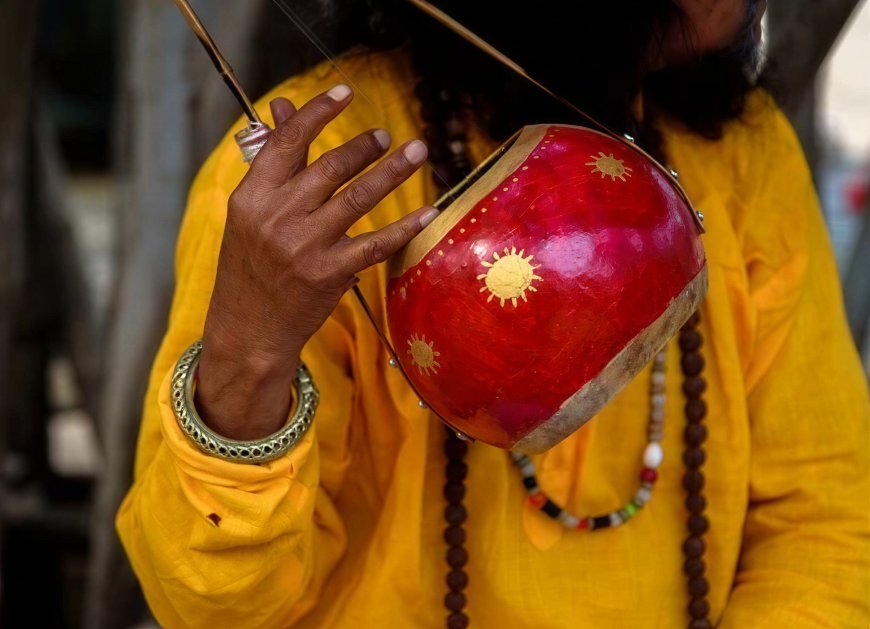
In the traditional folk arts, an artist does not merely recite a song; they inhabit its bhav -- its emotional and spiritual core. When a Baul or a Sufi-Fakir sings, the power comes from a direct, unpretentious effort to reach the human heart and provoke internal transformation.
Urban institutionalism stripped away this raw connection. By turning cultural heritage into an elite compliance test -- where singing Rabindra Sangeet or patriotic 1971 anthems required proper technique without necessarily requiring deep, felt understanding -- it created an artificial divide between "high culture" and the public.
While the songs of 1971 held immense historic power, rural communities often felt distant from their formal, institutional presentation. Even trained urban vocalists often learned how to sing these compositions "properly" without being taught to truly grasp or project their emotional weight.
It was from the village mystics of Bangladesh, rather than urban music institutions, that artists learned the vital distinction between mere singing and truly saying the words -- delivering lyrics with such personal conviction and raw feeling that they penetrate the hearts of the listeners.
The rigid enforcement of a political monopoly over 1971 further exacerbated this frustration. The struggle of 1971 belonged to the farmers, students, and workers who fought for liberty and pluralism, yet it was reduced to a frozen political narrative. This institutional rigidity created a cultural vacuum, leaving the public alienated and vulnerable to imported, dogmatic alternatives.
The new wave of artistic resistance bridges this precise gap by returning to the nation's true spiritual and musical foundations. Musicians, theater groups, and independent youth collectives are looking past state-sponsored institutions and diving into the massive, living reservoir of regional traditions: Baul, Sufi-Fakiri, Bhawaiya, Bhatiali, and the profound philosophy of Lalon Shah and Hasan Raja.
Contrary to the extremist rhetoric that positions music as inherently un-Islamic, the history of the Bengal delta proves the exact opposite. Islam spread through this riverine land primarily through the compassionate philosophy, poetry, and musical gatherings of Chishti Sufis and wandering saints. Reclaiming these esoteric traditions is not a rejection of faith; it is a restoration of indigenous spiritual history.
By articulating devotion through local melodies and regional dialects, contemporary artists are offering an authentic, native antidote to fundamentalism.
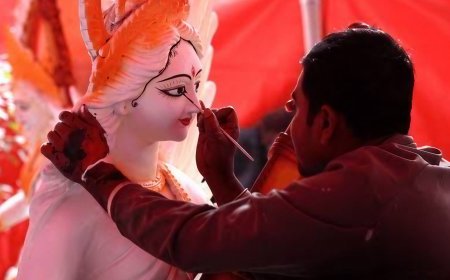
This living, syncretic spirit was recently put on full display in Sharolbari, Gazipur, during the full moon of Bhadra Purnima. In a moving gathering, performers and locals revived a traditional puja ritual -- a ceremony so old that even the local Hindu elders had almost forgotten it, remembering it only as a fading memory passed down from their parents.
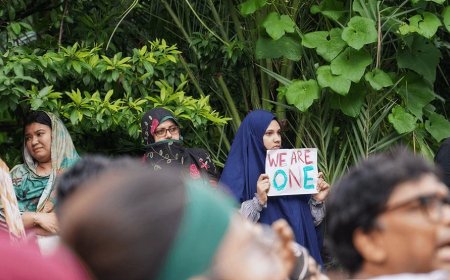
What made the occasion extraordinary was not just its revival, but who participated: Muslims, Hindus, and people of diverse faiths came together, from women in hijabs to youth from every corner of the country, participating and observing in their own ways.
The emotional weight of the ritual brought local Hindu villagers to tears as they saw a lost thread of their heritage honored collectively.
Perhaps the most remarkable moment occurred after the performance ended. The mosque directly across the venue, recognizing the spiritual and cultural gravity of the gathering, turned off the loudspeakers facing the stage to avoid disrupting the event.
This small, profound gesture revealed the true potential of Bangladeshi society when freed from top-down manipulation. It showed that mutual respect is not built through enforced uniformity, but through a shared understanding that every community deserves space to express itself.
Monoculture -- whether enforced as a single political definition of Bengali identity or a uniform, blaring interpretation of religious authority -- erodes the delicate fabric of local life. Bangladesh is naturally pluralistic, a tapestry woven from diverse spiritual traditions, regional dialects, and living rituals.
Trying to force this complex nation into a single mold, whether through political authoritarianism or fundamentalist decree, inevitably fails.
This revival is explicitly modern. Independent musicians are no longer afraid to blend ancient lyrics with contemporary genres, bringing Rabindra Sangeet and folk poetry into spaces where young listeners can actually feel the words. These artists are proving that heritage is not a fragile artifact to be guarded in a museum, but a living, evolving force meant to be reshaped by every generation.
The greatest threat to this organic renaissance is not a lack of audience, but the failure of state protection. When local administrations capitulate to extremist intimidation -- shutting down concerts, banning village fairs, or allowing mobs to enforce non-state vetoes over public gatherings -- they betray the constitution and abandon the nation's cultural workers. Safety cannot be bought through appeasement.
Every time an open-air event is canceled to pacify a vocal minority, the state surrenders public space to tyranny.
Protecting this living culture requires a fundamental shift in how the state and civil society view public arts. It demands an active, uncompromising defense of the nation's performers.
First, law enforcement must guarantee absolute security for cultural events in every district, ensuring that those who threaten artists face immediate legal consequences. The right of citizens to gather, sing, and perform is non-negotiable.
Second, there must be a systematic, nationwide effort to fund and restore local public spaces. Rural fairs, open-air stages, traveling Jatra Pala troupes, and district-level storytelling traditions like Maimansingha Gitika and Mainamati must be protected from local harassment.
These gatherings are not mere entertainment; they are the civic backbone of the countryside, bringing communities together across economic and ideological divides.
Third, the nation must dismantle the concept of "cultural policing." Freedom of expression must protect artists who reinterpret traditional forms, experiment with fusion, or challenge orthodoxies. The power of Bangladeshi culture lies in its expansive, syncretic history, not in forced conformity.
Cultural activism in Bangladesh never disappeared; it simply walked away from the co-opted stages of the political establishment. It is thriving in small-town rehearsal rooms, digital networks, regional shrines, and open fields across the country. It is a movement built on feeling, truth, and an undeniable connection to the soil.
Bangladesh’s identity was never meant to be dictated by an elite minority, nor silenced by fundamentalist threats. The real sound of the nation is already playing; it is time to secure the stage and let it resound.
Anusheh Anadil is a Bangladeshi musician, artist, cultural activist, and social entrepreneur.