



































![A Ledger of the Soul: Navigating the Allah-Bhagavant Nexus in a 19th-Century Puruṣākāra Jñāna Caupara [Gyan Chauper]](https://counterpointbd.com/uploads/images/202608/image_430x256_6a93baa3b09a7.jpg)


















Why Offering Bangladesh on a Platter Is Not a Development Strategy
The binary is brutally simple. Nations that negotiate as supplicants get extracted. Nations that negotiate as sovereigns get developed.
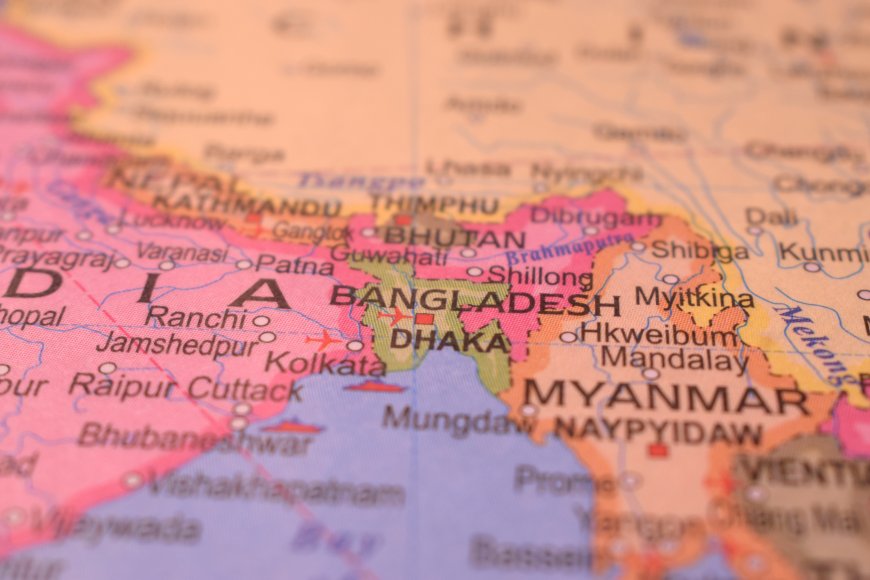
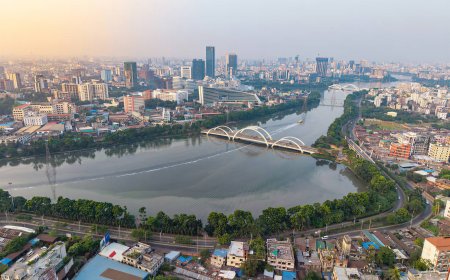
The air in Old Dhaka this month is a living thing. It presses against your skin, thick with the perfume of overripe mangoes, diesel exhaust from three-wheeled rickshaws, and the metallic tang of rain evaporating on sun-scorched asphalt.
For four centuries, this city has been a marketplace. Portuguese merchants once anchored here for the finest muslin in the world, a fabric so delicate that a bolt could pass through a wedding ring.
The British came next, then the Pakistani industrialists, then the global garment buyers who now inspect stitching in factories along the Mirpur corridor. Bengal has always known how to sell.
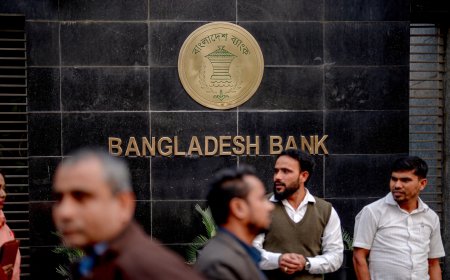
But what is being offered from a government lectern this June is not muslin. It is not jute, not ready-made garments, not even the young labour of a demographic dividend. It is the country itself, gift-wrapped in six words: "Bangladesh now most suitable for US investment."
The adviser who spoke them is not a villain. He is a human being navigating the cruel inheritance of August 2024 rupture: a treasury drained to dangerous levels, an International Monetary Fund program with unforgiving benchmarks, a nation of 180 million watching its foreign exchange reserves flicker like a monsoon candle.
Yet the language matters. The language is a choice. In the alleyway bazaars of this city, the loudest seller is always the one with the weakest merchandise. What does it say when an entire nation raises its voice to that pitch?
The Ledger of Tigers
Let us leave Dhaka for a moment and travel to Seoul, winter of 1968. South Korea's per capita income then was lower than Sudan's. The Korean War had reduced the peninsula to ash and rubble just fifteen years prior. American advisors filled the ministries. American aid kept the lights on.
Yet, Park Chung Hee -- however one judges his brutal authoritarianism -- did not stand before the world and declare Korea "suitable for American investment."
He did something else entirely. His state-owned banks, disciplined by a developmental state that brooked no argument, directed credit to handpicked domestic firms. Hyundai was ordered into shipbuilding.
Samsung was pushed into electronics. Foreign investment was not welcomed with open arms; it was permitted entry through a screen door, and only when it brought technology that Korean engineers could eventually own. The guest was invited to teach, not to buy the house.
Fast forward half a century. South Korea's outward foreign direct investment now exceeds its inward flows. It has graduated from supplicant to investor. The child who refused the clearance sale now owns the store.
Shift your gaze to Hanoi, 2024. A common misreading of Vietnam holds it up as a simple "China plus one" story -- a nation that opened its arms to American capital fleeing geo-political risk. Look at the actual numbers from Vietnam's Ministry of Planning and Investment.
In 2023, new American FDI commitments reached approximately $2.5 billion. Impressive, but South Korean firms committed $4.4 billion. Singaporean capital, $6.8 billion. The strategy is not alignment with Washington. The strategy is diversification, cold and deliberate, a portfolio designed so that no single investor ever owns the leverage to make demands.
And crucially, Hanoi has never signed an Acquisition and Cross-Servicing Agreement with the Pentagon. Its ports welcome American warships for courtesy visits, not logistical basing. There is an ocean of difference between being a production hub and being a protectorate. The Vietnamese Communist Party, whatever its sins, understands that distinction in its bones.
The evidence from the Asian miracle is not ideologically complicated. It is empirical. Nations that negotiated from strength got rich. Nations that offered themselves as platforms got used.
The Ink That Never Dried
We must now return to Dhaka, because the adviser's pitch did not spring from nowhere. It has a paternity, and that lineage demands examination.
Travel back to the negotiating tables of the Hasina era, roughly 2019 through 2023. Recall the draft Acquisition and Cross-Servicing Agreement, the ACSA -- a document that never reached the floor of Parliament for ratification, yet whose ink still stains the files of the Ministry of Defence.
Its provisions were straightforward: reciprocal logistical support between the US and Bangladeshi militaries, covering everything from fuel and food to access to ports and airfields.
Critics at the time -- a lonely coalition of civil society voices, left-leaning academics, and sovereignty-minded nationalists -- called it what it was: A de facto basing agreement without the politically toxic label.
The public backlash was fierce enough to slow the process. The Hasina government, already hemorrhaging legitimacy over election debacle and dissent suppression, hesitated.
The ACSA was never ratified. But the architecture of alignment was already built. The General Security of Military Information Agreement, GSOMIA, signed in 2018, remains the less visible half of this edifice.
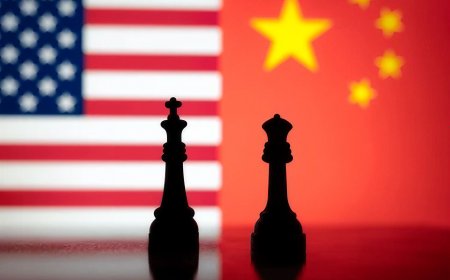
It integrates Bangladesh's military communications infrastructure into a US-led network whose primary mission in the Bay of Bengal is the containment and surveillance of a rising China.
What the adviser announced this month is the missing economic leg of that same strategic stool. The logic is seamless: Integrate militarily, then invite the same patron's corporations to own the infrastructure, the energy grids, the digital backbone. What was drafted in secret by a repressive government is now being announced with a smile by its successor.
What We Lose When We Become Suitable
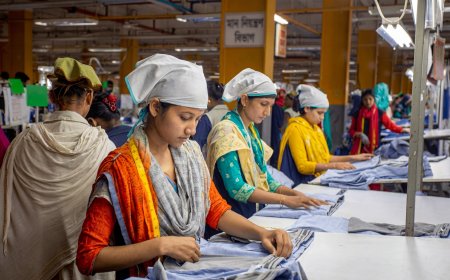
Why does any of this architecture matter for the woman stitching trousers in Gazipur, the university student refreshing his portal for exam results, the farmer in Rangpur watching his rice fields flood?
Because "suitability," when offered as a blanket invitation rather than a hard bargain, has a measurable price. And history has already billed it.
Consider Mexico after NAFTA. No developing nation integrated more deeply and hopefully with the American economy. Tariffs fell. Foreign capital poured into manufacturing. Maquiladora factories lined the border like assembly stations on a vast production floor.
Yet, over two decades, Mexico's GDP per capita growth averaged a paltry 0.8% per year. Wages in the export zones stagnated. The technology transfer never arrived because the contract never demanded it.
Mexican workers assembled components designed elsewhere, using patents owned elsewhere, for profits booked elsewhere. Mexico became deeply suitable for American investment. It did not become a prosperous nation.
Now consider Malaysia in the 1970s and 1980s. Foreign firms that wanted access to the Malaysian market were required to take on local equity partners.
The state created heavy industries -- steel, cement, eventually semiconductors -- and forced foreign investors into technology-sharing agreements as the price of entry.
The result was not capital flight. The result was a domestic industrial base.
Or look at Indonesia, right now, in 2026. President Prabowo Subianto's government is doubling down on a policy his predecessor began: A raw mineral export ban that forces the world's battery manufacturers to build smelters and processing plants on Indonesian soil. Nickel, bauxite, copper -- no longer exported as dirt.
Processed in Java and Sulawesi. Indonesian workers learning the metallurgy. Indonesian engineers running the lines. Jakarta is not waiting for an American firm to find it suitable. Jakarta is dictating terms, and the world is complying because the world needs what Indonesia has.
The binary is brutally simple. Nations that negotiate as supplicants get extracted. Nations that negotiate as sovereigns get developed.
The World is Moving the Other Way
Step back and scan the global horizon. What you will see is not a collection of developing nations hanging "Open for Business" signs and waiting for Washington to call. You will see something closer to a continental shift in bargaining power.
In Nairobi, Kenya is demanding that Chinese-built railways transfer maintenance skills to Kenyan workers as a condition of the loan. In Abuja, Nigeria enforces local content rules in its oil fields that require international firms to hire and train Nigerian engineers.
In Brasília, Brazil is leading a diplomatic charge for a new global minimum tax on multinational corporations, designed to prevent exactly the kind of profit-shifting that makes "suitable" investment destinations into hollowed-out shells.
Even in Latin America, where Washington's influence was once gravitational, the language has changed. The commodity is no longer cheap compliance. The commodity is access to critical minerals, to young consumer markets, to strategic geography. And those are being sold dearly.
This is not the Bandung Conference of 1955. This is the hard-nosed, transactional, multi-aligned capitalism of the new Global South. Its motto is not "We are suitable."
Its motto is: "We are ready -- ready to bargain, ready to enforce, ready to walk away from any deal that mortgages our children's future for our own short-term relief."
Dhaka's six-word pitch, in this context, sounds not like a strategy. It sounds like an anachronism, a ghost script from the 1990s structural adjustment era when the IMF wrote the speeches and finance ministers read them aloud. The world has moved. The question is whether Bangladesh will move with it.
An Invitation, Not a Surrender
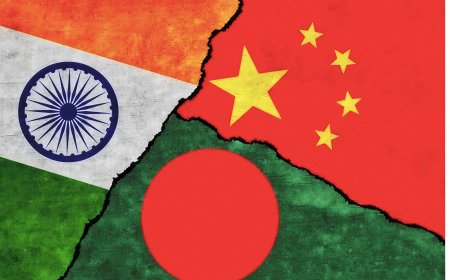
This is not a condemnation of any individual. The adviser inherited an impossible balance sheet. The geo-political squeeze between Delhi, Beijing, and Washington is real and tightening. The temptation to seek a patron is human. It is understandable.
But understandable is not the same as wise.
There is an alternative sentence that could have been spoken. It is longer, less photogenic, and far harder to implement. But it aligns with what the surviving success stories of the developing world actually do. It goes like this:
"Bangladesh is open for business. Our young workforce, our strategic position astride the Bay of Bengal, and our growing consumer market are assets the world needs.
We will partner with firms -- American, Chinese, Japanese, Russian, Indian, and beyond -- that commit to technology transfer, joint ventures with local companies, and the building of regional value chains that lift Bangladeshi workers from assembly into design, from stitching into branding. We are not a platform for anyone's geo-political rivalry. We are a nation with interests of our own."
That sentence demands something from a government. It demands a strategy beyond: "Please come." It demands the institutional confidence to say no to deals that hollow out domestic capacity. It demands conditioning port access on shipbuilding contracts and energy investment on local grid ownership.
It demands reading the fine print of every ACSA, every GSOMIA, every bilateral investment treaty, and asking the question that sovereignty requires: Who benefits, a decade from now?
The monsoon rains will end. The bazaar will remain. The only question left hanging in the humid Dhaka air is whether the most valuable item placed on the table this season was not our garments, not our gas, not our geography -- but our strategic autonomy, priced for a clearance sale we the people never authorized, and whose receipt we will spend generations trying to recover.
Zakir Kibria is a Bangladeshi writer, policy analyst and entrepreneur based in Kathmandu, Nepal. His email address is [email protected].