





















































Morality Before Democracy
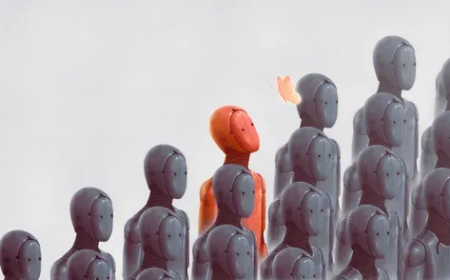
Democracy survives not because leaders are always virtuous, but because citizens possess the courage and awareness to resist injustice.

Democracy is often described as the rule of the people, but its true essence lies far beyond elections, constitutions, or political institutions. At its heart, democracy is a moral system built upon responsibility, justice, accountability, and public consciousness.
A nation may hold regular elections and remain distant from genuine democratic principles if its citizens fail to cultivate the ethical values necessary to protect them. Democracy, therefore, is not merely a mechanism of governance; it is the reflection of a society’s collective morality.
In a democratic state, people are the ultimate source of authority. Governments derive legitimacy not through force, but through the consent of the governed. Leaders are not owners of the state; they are temporary representatives entrusted with responsibilities by the masses. This relationship between citizens and the state can only function properly when morality guides public life.
A morally conscious society naturally demands transparency, fairness, equality, and accountability from its leaders. On the contrary, when morality weakens among the people, democratic institutions gradually become vulnerable to corruption, authoritarianism, manipulation, and injustice.
This is why the morality of the masses is deeply connected to the establishment and preservation of democratic principles. Democracy survives not because leaders are always virtuous, but because citizens possess the courage and awareness to resist injustice.
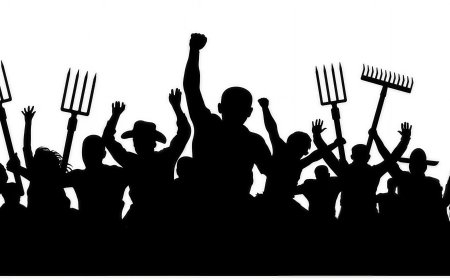
Whenever any branch of government loses public confidence through corruption, inequality, or abuse of power, people must speak. Silence in the face of injustice ultimately strengthens injustice itself.
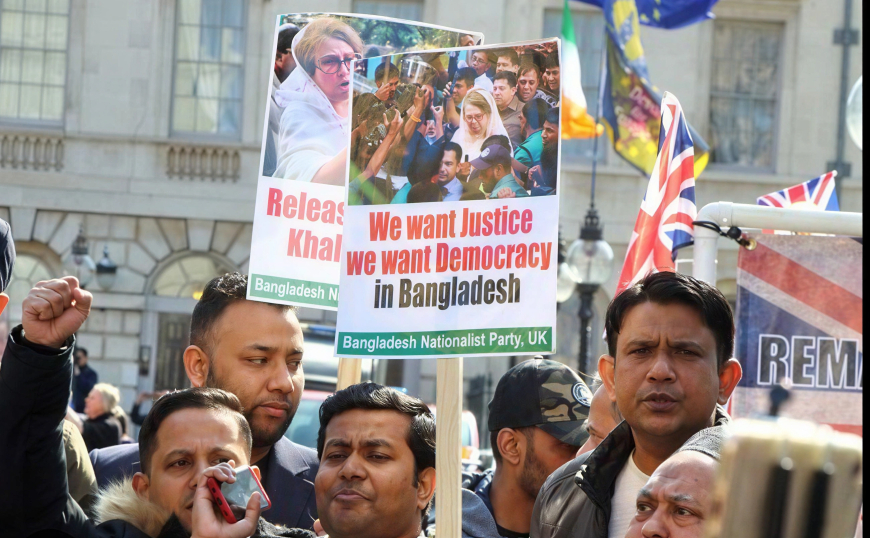
One of the major democratic weaknesses in Bangladesh is the widespread belief that civic responsibility ends with voting. Many citizens actively participate during elections but remain passive afterward, even when accountability disappears. Yet democracy is not confined to the ballot box.
Voting is only the beginning of democratic participation, not its conclusion. A healthy democracy requires citizens who remain vigilant long after election campaigns end.
Democracy may therefore be understood as a social contract built upon four interconnected relationships: people to people, people to representatives, representatives to people, and representatives to representatives. These four dimensions collectively shape democratic culture and governance.
The first relationship, people to people, reflects social unity and collective political consciousness. Citizens must rise above blind partisanship, prejudice, emotional manipulation, and personal gain to choose capable leadership for the greater public interest. Democracy begins within society itself. When citizens become divided by hatred, fanaticism, or political tribalism, democratic principles begin to decay from within.
The second relationship, people to representative, symbolises the delegation of authority. Through elections, people temporarily entrust power to representatives to govern on their behalf. However, this trust should never become unconditional loyalty. Representatives are public servants, not untouchable figures beyond criticism. Their authority exists only because citizens permit it to exist.
The third relationship, representative of people, forms the heart of democratic accountability. Leaders must remain answerable for every decision, policy, expenditure, and misuse of authority. Yet many citizens hesitate to question their representatives due to fear, party loyalty, or social dependency.
Ironically, people often celebrate successful leaders proudly but refuse to accept responsibility when corrupt or incompetent leadership damages society. Democracy cannot mature where citizens seek credit for political success while denying responsibility for political failure.
The final relationship, representative to representative, reflects coordination among political actors for the welfare of the nation. Democracy becomes fragile when politics transforms entirely into hostility, revenge, and endless confrontation. Political parties may differ ideologically, but democratic governance requires dialogue, compromise, institutional respect, and collective responsibility toward national interests. Without these values, democracy gradually turns into a permanent conflict rather than a public service.
The principle of “the greatest happiness for the greatest number” can only be realised when morality and responsibility reclaim their place at the centre of social life. Democracy without ethics eventually becomes hollow. Elections alone cannot ensure justice if society itself loses its moral compass.
This philosophical reality was recognised centuries ago by Plato, who famously conceived the state as “the individual writ large.” His idea suggests that the moral condition of society eventually shapes the character of the state itself. A corrupt society cannot consistently produce honest governance, just as an unjust political culture cannot sustain democratic fairness for long.
Similarly, Robert Dahl warned that democracy without an informed and educated citizenry risks becoming an empty structure incapable of distinguishing right from wrong. Democracy requires not only institutions, but also civic wisdom and public awareness. This understanding also resonates strongly with the thought of John Stuart Mill, who believed democratic participation contributes to the moral and intellectual development of citizens themselves.
Bangladesh continues to face several obstacles in practising genuine democratic principles. Electoral manipulation, political polarization, vote-buying, blind loyalty to parties and dynasties, and the misuse of public emotion often weaken democratic culture.
Before elections, many dishonest candidates attract voters through temporary financial assistance, emotional promises, and unrealistic visions of prosperity. Citizens become vulnerable to short-term temptations while long-term national interests fade into the background.
This is where moral responsibility becomes essential. The masses must realise that they are responsible not only for electing good leaders, but also for enabling bad leadership through silence, emotional attachment, or political negligence. Citizens must judge leaders based on integrity, competence, justice, and commitment to public welfare rather than party affiliation alone.
At the same time, the Election Commission must ensure transparency, neutrality, and fairness in the electoral process. Public understanding of democracy, constitutional rights, and civic responsibility must be expanded from rural communities to urban centres. Democracy flourishes only when citizens understand both their rights and their duties.
Ultimately, the masses are the lifeblood of democracy. Their morality becomes the morality of the state; their justice becomes the justice of the nation. When citizens become rational, ethical, and responsible, democratic principles naturally grow stronger. But when society normalises corruption, silence, intolerance, and blind obedience, democracy gradually loses its meaning.
Democracy, therefore, survives not merely through institutions but through the conscience of the people.
Md. Yeasir Arafat is a student at the University of Rajshahi.