



































































The Cost of Anti-Export Bias
When the domestic market offers higher returns with lower risks, firms naturally prioritize domestic sales over exports.

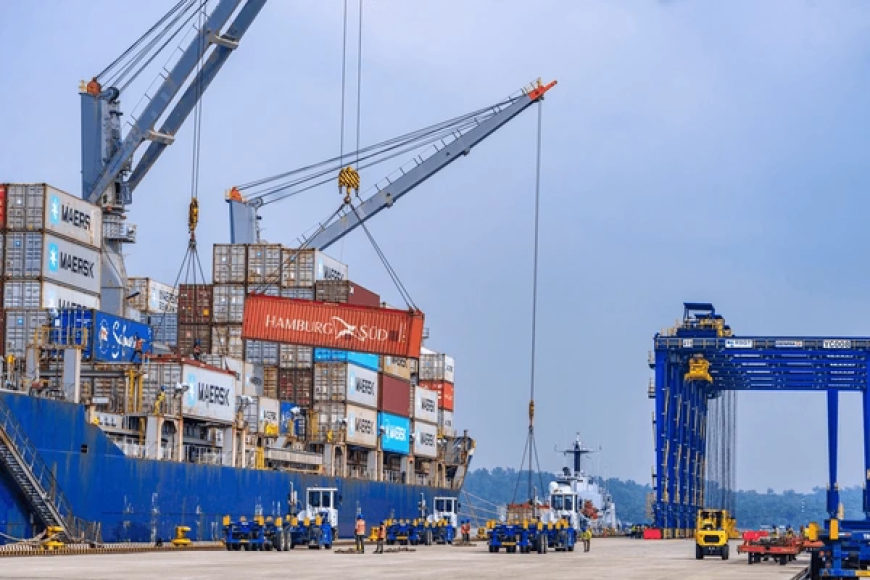
Export diversification is widely recognized as a central pillar of sustainable economic development. Countries that successfully expand their export baskets -- moving from a narrow range of primary commodities to a wider array of manufactured and high-value products -- tend to experience more stable growth, higher employment generation, and stronger resilience to global economic shocks.
However, such diversification rarely occurs in an environment where domestic economic policies create a persistent anti-export bias. When trade policy is excessively tilted toward protecting domestic industries through tariff walls and import restrictions, the result can be a structural disincentive to export. In that sense, a country cannot realistically expect to diversify its export basket if anti-export bias becomes an embedded policy choice.
Protection of domestic industries through tariffs is not inherently problematic. In fact, many developing countries have historically used temporary protection to nurture infant industries until they become competitive. However, the key issue lies in the duration and design of such protection.
When tariffs remain high for prolonged periods, domestic producers often become comfortable operating within the sheltered domestic market. Instead of striving for efficiency, innovation, and global competitiveness, firms may focus on exploiting domestic demand protected by tariff barriers. This phenomenon gradually creates an anti-export bias in the economy.
Anti-export bias emerges when the policy framework makes selling in the domestic market more profitable and less risky than exporting to international markets. High tariffs raise domestic prices above international levels, allowing producers to earn comfortable margins by selling locally.
Exporting, on the other hand, requires meeting international standards, maintaining competitive pricing, dealing with logistics and compliance costs, and facing volatile global demand. When the domestic market offers higher returns with lower risks, firms naturally prioritize domestic sales over exports.
In economies with large or moderately sized domestic markets -- such as Bangladesh -- this dynamic becomes even more pronounced. Bangladesh has a population exceeding 170 million, creating a substantial domestic consumer base. If trade policies heavily shield local industries from foreign competition, many producers may find the domestic market sufficiently lucrative and therefore feel little incentive to venture into global markets. In such circumstances, the economy may experience industrial growth that is inward-looking rather than export-oriented.
The consequences of this inward orientation are significant. Export diversification requires firms to constantly innovate, upgrade technology, improve productivity, and comply with international quality standards. These improvements often occur when firms face global competition and are compelled to enhance efficiency.
Protectionist environments, however, reduce such pressure. When companies are protected by tariff walls, they may lack the incentive to modernize production processes or invest in research and development. As a result, the economy becomes locked into a narrow range of export products.
The experience of many developing countries illustrates this pattern. Economies that pursued import substitution strategies for extended periods often struggled to diversify exports. Industries established under heavy protection remained dependent on domestic markets and were rarely competitive internationally.
By contrast, countries that gradually shifted toward export-oriented industrialization -- encouraging firms to compete globally -- were able to broaden their export structures significantly.
The East Asian development experience provides a powerful example. Economies such as South Korea and Taiwan initially protected certain industries but simultaneously created strong incentives for firms to export.
Export performance was closely monitored, and government support was often conditional upon achieving export targets. Firms that failed to compete internationally gradually lost policy support. This system effectively minimized anti-export bias while still allowing strategic industrial policy.
In Bangladesh, the issue of export concentration is widely recognized. The country’s export sector is dominated by the ready-made garments (RMG) industry, which accounts for more than 80 percent of total merchandise exports. While the success of the RMG sector is a remarkable achievement, it also highlights the limited diversification of the export basket.
Over the past decades, various policy initiatives have attempted to promote new sectors such as pharmaceuticals, leather goods, light engineering, agro-processing, and ICT services. Yet progress in diversifying exports has been relatively slow.
One important factor contributing to this challenge is the persistence of policy-induced anti-export bias in certain sectors. Tariff structures often provide substantial protection to domestic industries, especially through high supplementary duties and regulatory duties on imported goods. While such measures are intended to support domestic producers, they may unintentionally reduce the incentive for firms to explore export markets.
Another aspect of anti-export bias relates to the relative cost structures faced by exporters and domestic producers. Exporters often face higher compliance costs related to customs procedures, logistics, certification, and international marketing. If the domestic market remains protected and profitable, firms may find it rational to avoid these additional complexities associated with exporting.
Furthermore, the presence of tariff escalation -- where higher tariffs are imposed on processed goods compared to raw materials -- can discourage the development of value-added industries aimed at export markets. This situation may inadvertently promote production primarily for domestic consumption rather than for international trade.
A broader macroeconomic implication of anti-export bias is the limited integration of the economy into global value chains. Modern international trade is increasingly organized through complex production networks where different stages of production occur across multiple countries. Participation in these global value chains requires openness to both imports and exports.
High tariffs on imported intermediate goods can increase production costs and reduce the competitiveness of domestic firms in international markets. Consequently, the country may miss opportunities to join global manufacturing networks.
For Bangladesh, overcoming anti-export bias is particularly important at a time when the country is approaching graduation from least developed country (LDC) status. LDC graduation will gradually reduce certain trade preferences in major export markets. As preferential market access diminishes, competitiveness will become an even more critical factor in sustaining export growth. Export diversification will therefore be essential for maintaining economic resilience.
Reducing anti-export bias does not necessarily mean abandoning support for domestic industries. Rather, it requires a careful rebalancing of policies so that domestic protection does not undermine export incentives. Several policy measures could help achieve this balance.
First, tariff rationalization is crucial. Excessively high tariffs and supplementary duties should gradually be reduced to encourage domestic firms to become more competitive. A simplified and transparent tariff structure can reduce distortions and promote efficiency.
Second, policies should ensure that exporters have access to imported inputs at globally competitive prices. Mechanisms such as bonded warehouse facilities, duty drawback schemes, and bonded manufacturing arrangements can help mitigate the impact of tariffs on exporters. Expanding and simplifying these schemes would further support export-oriented production.
Third, improving trade logistics and customs procedures can reduce the cost and complexity of exporting. Efficient ports, streamlined documentation processes, and digital trade facilitation systems can significantly enhance the competitiveness of exporters.
Fourth, industrial policies should increasingly focus on productivity enhancement rather than protection. Investments in technology adoption, workforce skills, research and development, and infrastructure can strengthen the capacity of firms to compete globally.
Fifth, access to finance for export-oriented sectors should be strengthened. Specialized financial instruments, export credit facilities, and risk-sharing mechanisms can help firms enter and expand in international markets.
Finally, a broader cultural shift within the business community is necessary. Exporting should be viewed not as an exceptional activity but as a natural extension of business growth. Government agencies, trade bodies, and financial institutions can play a role in fostering this mindset through targeted support programs and international market development initiatives.
In conclusion, the proposition that a country cannot effectively diversify its export basket while maintaining strong anti-export bias is largely valid. When domestic industries are shielded behind high tariff walls for prolonged periods, they often become oriented toward the domestic market and lose the incentive to compete globally. This inward-looking structure limits export diversification and reduces the economy’s ability to integrate into global value chains.
For Bangladesh, the challenge is not to eliminate protection overnight but to ensure that trade and industrial policies encourage firms to look beyond the domestic market. A gradual shift toward a more balanced and export-friendly policy environment can stimulate innovation, competitiveness, and diversification. Only by reducing anti-export bias and fostering outward-oriented industrial growth can Bangladesh expand its export basket and secure a more resilient position in the global economy.
Nasrin Sheely is an analyst and commetator based in Dhaka, Bangladesh, specializing in banking, economic policy, and international trade.