






























![A Ledger of the Soul: Navigating the Allah-Bhagavant Nexus in a 19th-Century Puruṣākāra Jñāna Caupara [Gyan Chauper]](https://counterpointbd.com/uploads/images/202608/image_430x256_6a93baa3b09a7.jpg)




















Promised Work, Deployed to War
An unknown number of Bangladeshi young men whose families parted with savings of 10 lakh taka or more for the prospect of a better life for them, find themselves on a distant frontline in a war they never chose, in a country whose language they cannot speak, and fighting for a side they were never asked to join.

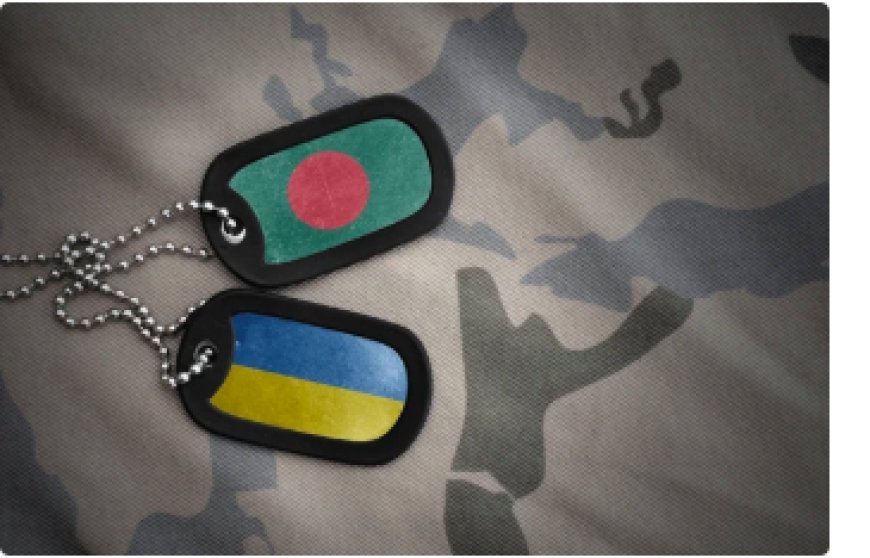
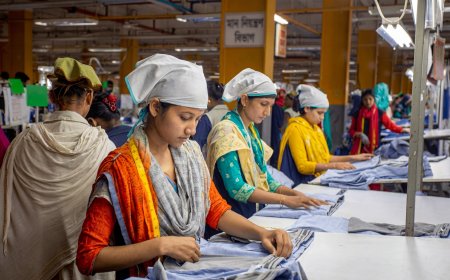
On May 8, when four young men from Patgram, a bordering village in the district of Lalmonirhat, boarded a flight to Moscow, they believed they were heading towards well-paying jobs at a garment factory.
Each of their families had paid between 9.5 and 10 lakh taka to two local brokers for that promise. Since their arrival in Moscow, the families have received no contact from them.
According to reports now emerging from multiple sources, these four men, along with many others, have been conscripted into the Russian military and are serving on the frontlines of the war in Ukraine.
The Patgram case is not an isolated incident. Bangladesh’s Ministry of Expatriate Welfare and Overseas Employment confirmed in a press conference on 2nd June 2026 that at least 30 Bangladeshi youths had been trafficked to the Russian military through three recruiting agencies.
Keep in mind that these are the numbers we the government managed to track, the untracked numbers are unknown. The government’s response was to cancel those agencies’ licences which has been widely criticised as insufficient, given that the actual scale of the problem appears considerably larger.
A joint investigation by Fortify Rights, a Thailand-based human rights organisation, and Truth Hounds, based in Ukraine, has documented at least 104 Bangladeshi nationals currently serving in Russia’s military.
According to the report, none enlisted voluntarily or knowingly apart from one particular individual who posts regular updates on his youtube channel, his justification for joining was the pay.
These recruitment method follows a recognisable pattern: young men are approached with promises of employment as cleaners, data-entry operators, or garment workers, with salaries far exceeding what the domestic market offers. Basically offers which are too good to be true.
Some are even sent to Russia on student visas. The deception reaches its most critical point upon their arrival in Russia: as they exit airport, they are presented with documents in Russian and are asked to sign. These signatures, which are made without any understanding of the language are in reality enlistment contracts for military service.
By the time the reality of their situation becomes apparent, passports are usually confiscated and any means of return effectively cut off.
Once conscripted, the conditions are reported to be severe. With no military background, and being given one or two days of basic training, sometimes limited to firing a few gunshots. Many are reportedly placed at the front of advancing units to absorb fire ahead of trained soldiers like canon fodder. Others are assigned to clearing bodies from minefields, navigating known minefield terrain on foot. Those who dare to object, are said to face collective punishment: confinement outdoors in freezing temperatures, denial of food, and threats of being shot. A number have been reported to have already died under these conditions.
The phenomenon is not unique to Bangladeshis. Nepal is widely identified as the most severely affected nation in South Asia from such practices, with estimates placing the number of Nepalis drawn into this system as electricians, hotel workers, and general labourers at around 15,000. Our neighbouring country India has also been implicated; their Supreme Court has issued directions for a formal investigation into the trafficking networks involved, and intelligence agencies have reportedly dismantled several such rings.
What connects these cases is a structural vulnerability that transcends any single actor or incident. In many countries with high unemployment, large migrant worker populations, and persistent economic poverty, the promise of a well-paying overseas job carries a lot of weight.
Traffickers operating within this space exploit not only economic desperation but also informational asymmetries by targeting the lack the means to verify job offers, understand foreign-language contracts, or access legal assistance once inside Russia.
So long as the war in Ukraine continues, Russia’s demand for frontline manpower appears to sustain the commercial incentive for such recruitment, regardless of its legality under international law.
The institutional response in Bangladesh has, to date, been limited in scope. Revoking the licences of a handful of agencies does little to address the informal channels of personal networks, sub-agents, and social media recruiters through which many of these departures are generally arranged.
Nor does it account for Bangladeshi nationals already residing in European countries on refugee/asylum status, have also been approached and lured towards Russia from there.
Observers and advocates have called for more substantive state intervention: direct diplomatic engagement with Moscow, a temporary restriction on travel to Russia under employment or study pretexts, and a broader crackdown on the recruitment networks still operating within Bangladesh. Whether the government will have the will to move in that direction remains to be seen.
For now, an unknown number of Bangladeshi young men whose families parted with savings of 10 lakh taka or more for the prospect of a better life for them, find themselves on a distant frontline in a war they never chose, in a country whose language they cannot speak, and fighting for a side they were never asked to join. And frankly speaking, a war they don’t care about.
Shafqat Aziz is a barrister (Lincoln’s Inn) and an accredited Civil-Commercial Mediator (ADR-ODR International).