

















































62 Million Women, One Decisive Mandate
A democracy matures not when one party wins, but when citizens quietly redraw the boundaries of power. In this election, women redrew those boundaries. The republic now stands on ballots they cast.
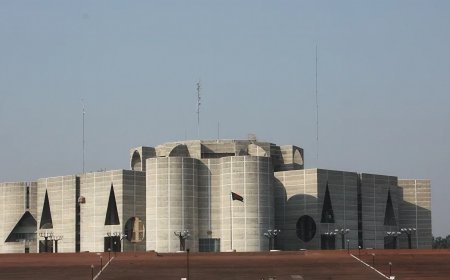
As of early February 13, 2026, with vote counting largely complete and projections stabilizing across major outlets, the electoral landscape points to a decisive verdict.
The Bangladesh Nationalist Party–led alliance is positioned to secure approximately 209-212 seats in the 300-member Jatiya Sangsad. The Bangladesh Jamaat-e-Islami aligned bloc has won roughly 68-70 seats. The NCP and other smaller parties hold a handful more.
Turnout stands at 60.69%, according to the Bangladesh Election Commission. The concurrent reform referendum has passed with a clear majority. This is not a fractured verdict. It is decisive.
But its deeper meaning lies not only in party arithmetic -- it lies in exposure, accountability, and the unmistakable role of women voters. 62.8 Million Women -- Half the Electorate.
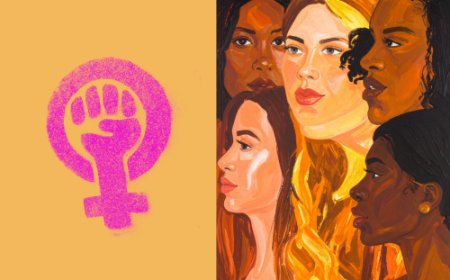
More than 62.8 million women were eligible to vote -- roughly 49% of the total electorate of about 127.7 million citizens. Yet only around 80-83 women candidates contested direct parliamentary seats nationwide -- barely 4% of the total field. Nearly half the voters. Barely four of the candidates.
With turnout above 60%, it is impossible to explain a ~210-seat majority without acknowledging substantial women’s participation. Women were not peripheral to this election. They were decisive.
Rajshahi - Women Leading From the Front
The national numbers were reinforced by what unfolded on the ground. In Rajshahi, one of the country’s major divisions, women were visibly prominent at polling centres. Reports from BSS and local observers described women outnumbering men at several stations, with sustained lines of female voters throughout the day. District turnout reached 70-72% in many constituencies, reflecting strong engagement and early, steady participation by women.
The image mattered: Women arriving early, waiting patiently, and voting in force.
That was not symbolic participation. That was electoral leadership.
Exposure, Not Suppression, Weakens Extremism
There is a broader political lesson embedded in this outcome. For years, pushing Jamaat underground distorted democratic contestation.
Suppression did not dismantle its narrative; it shielded it from scrutiny and, in some cases, generated sympathy among those who equate prohibition with persecution.
Movements denied open contest often convert suppression into mythology and grievance capital. Open scrutiny strips that advantage. By allowing Jamaat to openly campaign and contest, the interim administration subjected its rhetoric to democratic testing. And scrutiny matters.
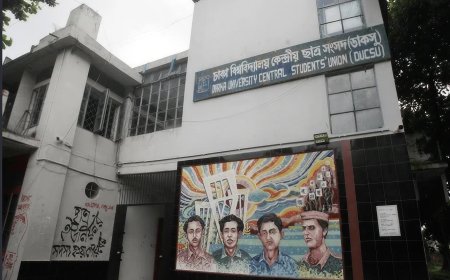
Following university elections -- including DUCSU -- where Jamaat’s student wing achieved strong showings, broader society was compelled to confront its politics directly. The months between those campus elections and the national vote exposed contradictions -- particularly regarding women’s leadership and public authority.
Visibility enabled critique. Debate enabled counter-strategy.
Jamaat’s projected ~68-70 seats represent a significant performance in open contest -- but they also reveal a ceiling: The limits of a political framework that cannot fully persuade a gender-balanced electorate under transparent scrutiny.
A Ballot-Box Response to Anti-Women Rhetoric
In this election, Jamaat did not nominate a single woman candidate for a general seat.
In a country with 62.8 million eligible female voters, that absence is not incidental -- it is structural exclusion. Women appear to have responded not with withdrawal, but with turnout.
By participating in large numbers, women made something unmistakably clear: They will not accept marginalization from leadership. They will not endorse frameworks that confine their authority. They will not disappear from national decision-making.
This was not a protest in the streets. It was a correction at the ballot box.
The Awami League Question
The Awami League did not participate in this election, having been banned following the July-August 2024 uprising and the grave allegations associated with that period.
Some of its supporters argued that no election could be legitimate without its participation. The 60.69% turnout directly challenges that claim.
When more than three out of five registered voters participate in a competitive process -- and when major alliances accept the outcome -- the argument that legitimacy depends on the presence of a single party weakens considerably.
Political legitimacy flows from public participation, not organizational indispensability. However, the future of the Awami League is not predetermined.
But it cannot be restored through denial.
If it is to remain politically relevant, it will need to:
- Accept responsibility for the violence associated with July-August 2024,
- Submit to judicial accountability,
- Offer a clear public acknowledgment and apology,
- Renew its leadership with credible, untainted figures.
Absent that reckoning, its political footprint will likely diminish further.
Democracies can forgive.
They do not forget without accountability. 1971 and 2024 -- Democratic DNA
This election revealed something deeper about Bangladesh’s political identity. The spirit of ’71 -- sovereignty and collective will - and the spirit of ’24 -- civic assertion and resistance to abuse of power -- both surfaced in this moment.
A 60.69% turnout. A decisive parliamentary majority. A reform referendum passed.
Women participating in force despite minimal candidacy. This was not merely an electoral event. It was a recalibration of power.
A Majority Built on Women’s Ballots
A ~210-seat mandate in a gender-balanced electorate is not gender-neutral. Women’s votes were indispensable.
If women helped secure this majority, governance now carries obligations:
- Expand women’s candidacy beyond token numbers,
- Ensure safety and enforcement credibility,
- Address economic pressures borne at the household level,
- Embed equal citizenship in institutional reform.
Democratic legitimacy built on women’s ballots cannot ignore women’s representation.
Democracy Has Held. Now It Must Deepen
This election will likely be remembered for turnout, for reform, for a decisive parliamentary shift. But it may ultimately be remembered for something more structural: Women -- nearly half the electorate -- refused political marginalization without confrontation.
They answered rhetoric with participation. They answered exclusion with arithmetic.
A democracy matures not when one party wins, but when citizens quietly redraw the boundaries of power. In this election, women redrew those boundaries. The republic now stands on ballots they cast.
It must rise to meet them.
Dr Monica Beg, MD, MPH is Former Chief and Global Coordinator, HIV/AIDS Section, United Nations Headquarters, Vienna, Austria.