





























































A User's Guide to the Un-Governed: The Bangladesh Lexicon
In 840, the mayor always wins. The machine keeps humming. The tenders keep flowing. But the film exists. Someone made it. Someone watched it. Someone wrote about it. And that, perhaps, is where the next story begins.

There is a moment in every Bangladeshi citizen's week when they stare at the road and think: There must be a word for this.
Not just "traffic jam." Not just "corruption." But a specific word for the way the public tender is written so precisely that only the contractor with the worst reputation can win. A word for the way a preventable catastrophe is met with a "crackdown" that vanishes the moment the camera crews pack up and drive home.
A word for the hollow exhaustion you feel when another building collapses and you know, with the bone-deep certainty of someone who has seen this film too many times, that nothing will change except the date on the newspaper.
We lack this vocabulary. And because we lack it, we are condemned to mistake the performance of governance for the substance of it. We call what happens here "politics," but it is often something closer to a long-running theatre production with a very predictable script. Transparency International tells us we rank 13th among the world's most corrupt countries, scoring a dismal 24 out of 100 -- well below the global average of 42.
The number is useful; it confirms the diagnosis. But it does not name the disease. To navigate this terrain, to understand why the boulder always rolls back down the hill, we need a new glossary: A User's Guide to the Un-Governed. This is not an academic exercise; it is a survival manual for the mind. Because to name a thing is to begin to control it.
The House Always Wins
If you pull back the curtain on the mobile court, the collapsed building, the bridge that cracks six months after inauguration -- complete with the mandatory photo of the minister cutting a ribbon he never should have been holding -- you will find the same three figures standing in the shadows. The politician. The bureaucrat. The businessman.
This is the Iron Triangle -- a self-reinforcing alliance where each node feeds the other. The politician provides protection, the bureaucrat provides discretion, the businessman provides capital. Public resources flow in; private wealth flows out. It is an architecture so durable, so perfectly designed for its purpose, that it might be admired if its purpose were not the slow, systematic extraction of a nation's future.
This is not crude theft. The Iron Triangle has evolved far beyond the cartoonish villainy of cash in a briefcase. It operates through Tenderocracy -- the subtle and highly legalistic art of writing a public procurement document so precisely that only one pre-selected firm can win. The tender notice is published, the process is "competitive," the paperwork is immaculate, and yet the outcome is foretold.
Between 2023 and 2025, eight of Bangladesh's largest mega-projects saw their combined costs surge from an initial estimate of $11.2 billion to a final bill of $18.6 billion -- a 68% overrun. These are not "cost overruns." They are the Iron Triangle's invoice, itemized and paid in full.
The circulatory system of this arrangement is the banking sector. Between 2009 and 2024, over Tk 25,000 crore of public money was injected into state-owned commercial banks to keep them breathing. The capital shortfall across the banking sector now exceeds Tk 1.55 lakh crore.
By September 2025, non-performing loans had surged to over 30% of total loans -- a figure that so alarmed the International Monetary Fund that it launched an investigation into years of data concealment. These are not "bad loans." They are the cost of maintaining the Triangle, and the bill is sent to you.
Mostofa Sarwar Farooki's 2024 political satire 840, also known as Democracy Private Limited, understands this machinery better than any policy brief. The film -- a spiritual sequel to his cult classic 420, the title itself a sardonic admission that the absurdities have only doubled -- features a mayor who does not simply rule.
He orchestrates. Every crisis is an opportunity for a new deal, a new tender, a new performance. The genius of the film is not that it exposes a broken system; it shows us a system that is functioning exactly as designed, for those inside it. The rest of us are merely the audience.
The Script When Things Fall Down
Every system built on extraction will eventually produce catastrophe. A building constructed with substandard materials procured through Tenderocracy will collapse. A ferry will sink. A fire will kill. When this happens, the state pivots to a well-rehearsed script that we can call Fait Accompli Governance: The art of presenting a preventable disaster as an irreversible, tragic act of God, in order to foreclose accountability.
The sequence is as predictable as the monsoon: Shock → Outpouring → Ritual Investigation → Administrative Silence → Normalization. The goal is not to find out what happened. The goal is to exhaust the public's grief until the system that caused the death is never questioned.
April 24, 2013. Savar. An eight-story building named Rana Plaza collapses, killing 1,136 garment workers and injuring over 2,000. The owner, Sohel Rana, is arrested. And then the script begins. 12 years later, nineteen cases filed in connection with the collapse remain unresolved. Eighteen are still pending before various courts. In the murder cases, only 93 out of 594 witnesses have given testimony to date.
The building owner is in prison; 31 others are out on bail, six are absconding, and three have died -- one escape route or another. Shila Begum, a former worker at Ethertex Ltd on the sixth floor, was trapped under debris for 18 excruciating hours before being rescued. She lost her right arm. Twelve years later, she still waits.
A 2023 survey by ActionAid found that 54.5% of Rana Plaza survivors are unemployed, with 89% of them jobless for five to eight years. This is not a failure of the justice system. This is Fait Accompli Governance working precisely as designed.
While the investigation "continues" and the witnesses "prepare," the state must be seen doing something. Enter Performative Governance: The deployment of visible action designed to maximize media coverage while minimizing structural change. Its signature instrument is the Mobile Court Theatre -- a van full of executive magistrates delivering "instant justice" that is visible, punitive to the poor, and structurally irrelevant.
The van screeches to a halt. The magistrate descends. Cameras flash. A street vendor is fined, his goods seized. By evening, the news bulletin leads with "Crackdown on Illegal Vendors." The illegal building extension that flouted every code, the factory owner who ignored every safety warning -- still standing, still operating, still protected by the Iron Triangle.
The performance is the policy. Farooki's camera captures these moments with the precision of a satirist who knows his subject intimately: Officials performing for the news cycle while the real power brokers watch from air-conditioned rooms, amused by their own theatre.
Why Nothing Ever Gets Fixed
You might wonder, at this point, why the state does not simply solve the problem. Why not reform the building code? Why not prosecute the defaulters? Why not fix the tender process? The answer lies in a governing philosophy that privileges temporary, reactive interventions over permanent, institutional solutions: Ad-Hoc-ism.
Ad-Hoc-ism is not incompetence. It is preservation. A solved problem yields no further rent, no further emergency powers, no further media spectacle. A "temporary" committee that exists for a decade is not a failure; it is a feature. An ad-hoc bypass road that becomes permanent ensures the permanent bridge tender can be delayed, renegotiated, and re-awarded to a different node of the Triangle.
The system needs problems to survive. Transparency International Bangladesh, in its 2025 report, explicitly identified "ad-hoc reform initiatives" and a "pick and choose approach to reforms" as key factors behind the country's continued poor performance. This is not an outsider's critique; it is the finding of the country's own anti-corruption watchdog, speaking the language of the lexicon it helped to create.
The psychological end-state of this machinery is the Normalization of Dysfunction. This is the moment when citizens stop expecting electricity 24/7. Stop expecting the footpath to be clear. Stop expecting the ferry to be safe. Stop expecting justice. The state has successfully lowered the bar of "good enough" to the floor. And once the bar is on the floor, any minor improvement feels like a gift from above, and any catastrophe feels like just how things are.
Those We Are Not Allowed to Mourn
At the end of this anatomy lies a category of people we can call The Unmournable. They are the victims of Fait Accompli Governance whose deaths are acknowledged but whose systemic cause is actively suppressed. Mourning them fully would require admitting that the Iron Triangle killed them. That Tenderocracy built their grave. That Performative Governance managed their funeral. That Ad-Hoc-ism ensures it will happen again.
Rana Plaza is not merely a tragedy. It is a case study in how a nation learns to bury its dead without burying the system that killed them. The BGMEA promised jobs for survivors. The promises were not kept. Labour leaders gathered at the site for the 12th anniversary and renewed their calls for justice and compensation, as they have every year.
Advocate Mahbubur Rahman Ismail has called for a special tribunal for "systematic killing of mass people," arguing that regular courts were designed for individual murders, not industrial slaughter. He is correct. But the lexicon of Fait Accompli Governance has no entry for "systematic killing." It has only "accident," "tragedy," "unfortunate event." Words that sound like mourning but function as forgetting.
This is why the glossary matters. To call Rana Plaza "an accident" is to participate in Fait Accompli Governance. To call it "corruption" is too vague to be actionable, a word so overused it has lost its blade. But to call it by its name -- The Unmournable, produced by Fait Accompli Governance, enabled by Tenderocracy, protected by the Iron Triangle, managed by Performative Governance, and perpetuated by Ad-Hoc-ism -- is to rob the system of its camouflage. Naming is the first act of resistance.
In 840, the mayor always wins. The machine keeps humming. The tenders keep flowing. But the film exists. Someone made it. Someone watched it. Someone wrote about it. And that, perhaps, is where the next story begins.
Not with a revolution, but with a dictionary. A user's guide to the un-governed, written by those who have learned, through long and bitter experience, how to read the script. The boulder rolls down the hill once more. But perhaps this time, we will stop praising Sisyphus for his effort and start asking why the hill is still there.
Zakir Kibria is a Bangladeshi writer, policy analyst and entrepreneur based in Kathmandu, Nepal.
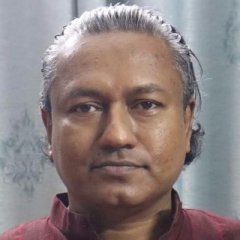
Zakir Kibria
Zakir Kibria is a writer, policy analyst, entrepreneur based in Kathmandu, Nepal. Chronicler of Entropy | Chasing next caffeine fix, immersive auditory haze, free falls. Collector of glances. “Some desires defy gravity.”
Email: [email protected]