









































![A Ledger of the Soul: Navigating the Allah-Bhagavant Nexus in a 19th-Century Puruṣākāra Jñāna Caupara [Gyan Chauper]](https://counterpointbd.com/uploads/images/202608/image_430x256_6a93baa3b09a7.jpg)





















Looking at the Saudi Naval Coalition from Bangladesh
This dependence cuts both ways. If the Saudi market were to close for any reason, the impact on Bangladesh's employment would be significant, particularly since other major markets such as Oman, the UAE, Bahrain, and Malaysia have not reopened at scale.


For half a century, the discourse of Bangladesh-Saudi Arabia relations followed a simple script: Bangladesh supplied workers and pilgrims, Saudi Arabia supplied remittances and oil. That neat division of labour is now giving way to something more complicated.
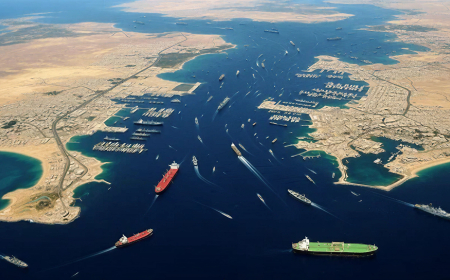
In the span of a single fortnight, Bangladesh joined a Saudi-led naval coalition formed to protect 'freedom of navigation' through the Bab al-Mandeb Strait, the Red Sea and the Gulf of Aden, after the Houthis announced their intent to blockade Saudi oil exports and strike tankers in the Red Sea.
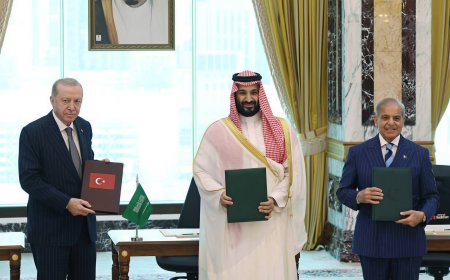
Saudi Arabia formalized its response by hosting representatives from 43 countries and the European Union in Riyadh on July 30 to establish the Multinational Maritime Defense Coalition, with 14 countries -- Bangladesh, Bahrain, the Comoros, Djibouti, Egypt, Jordan, Kuwait, Pakistan, Qatar, Somalia, Sudan, Türkiye, Yemen and Saudi Arabia itself -- signing the founding declaration.
The Saudi defense ministry described the coalition's charter as remaining open to any country wishing to accede, provided it completes its own national procedures. Bangladesh's own justification was deliberately modest: Its foreign ministry said Dhaka wanted 'stability' and 'peace' in the region, and that this was the basis on which it joined.
Bangladesh's Armed Forces Division, for its part, sent a delegation led by the Coast Guard director to Riyadh for the coalition's founding ceremony.
Whether this marks the beginning of a lasting strategic partnership or merely a moment of diplomatic alignment remains to be seen. What is already clear is that Bangladesh's relationship with Saudi Arabia is entering unfamiliar territory.
For decades, Dhaka's engagement with the Kingdom revolved almost exclusively around labor migration, remittances and religious ties.
By joining a Saudi-led maritime security initiative, Bangladesh has, for the first time, added an explicit strategic dimension to that relationship. The question now is not simply why Dhaka joined the coalition, but what this broader shift means for Bangladesh's economic interests, regional diplomacy and external partnerships.
Labour Remains the Real Foundation
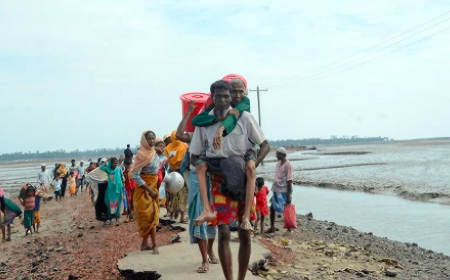
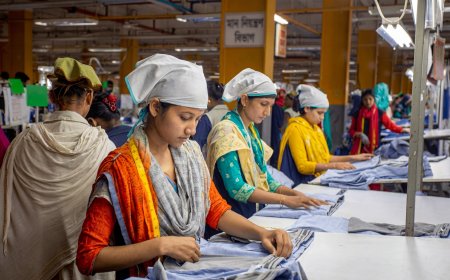
Whatever the strategic dressing, in Dhaka's thinking, the relationship between Dhaka and Riyadh still rests overwhelmingly on labor migration. An estimated 3.5 million Bangladeshi labor migrants live and work in Saudi Arabia, remitting over $5 billion annually and making them the Kingdom's largest expatriate community since the 1970s.
Saudi Arabia remained the largest destination for Bangladeshi workers in 2025 -- receiving about 752,000 of them -- and the Middle East as a whole accounted for more than 80% of Bangladesh's over one mn overseas workers that year, contributing around 60% of the country's record $32 bn in remittance earnings.
In the first quarter of the current fiscal year (FY2025–26), Saudi remittances jumped 43.7% to $1.2 bn, overtaking the United States as Bangladesh's largest single source.
This dependence cuts both ways. If the Saudi market were to close for any reason, the impact on Bangladesh's employment would be significant, particularly since other major markets such as Oman, the UAE, Bahrain, and Malaysia have not reopened at scale.
Based on that, it can be said that it is tough for Bangladesh to ignore any offer made by Saudi Arabia.
Saudi Arabia as a Bridge to Washington
There is a further dimension to Riyadh's outreach that deserves more attention than it has received: Saudi Arabia's proximity to Washington makes it a useful channel for a Bangladeshi government seeking to balance its relations with the United States and China.
Dhaka's foreign policy since the February 2026 election has been visibly triangulated between Beijing and Washington, alongside a tense reset with New Delhi after the fall of the Sheikh Hasina regime in August 2024.
Prime Minister Tarique Rahman made his first overseas visit in June 2026, visiting Malaysia and China, where he met President Xi Jinping and Premier Li Qiang and signed 15 memoranda of understanding, along with a joint communiqué elevating -- ‘Comprehensive Strategic Cooperative Partnership’ to build a community with a shared future in a new era.
He is now expected to travel to New York in September 2026 to join the 81st UN General Assembly -- a session whose presidency, notably, has been led by Bangladesh's own foreign minister, Khalilur Rahman, elected in June to a one-year term beginning September 8.
Washington's discomfort with this tilt has been evident.
During a visit to Dhaka in the first week of August, US Special Envoy for South and Central Asia Sergio Gor met Prime Minister Rahman and urged Bangladesh to join the State Department-backed Pax Silica initiative, a US-led framework on critical minerals, semiconductors and artificial-intelligence infrastructure designed to reduce reliance on Chinese supply chains.
Bangladesh, however, had days earlier confirmed it would join China's rival World Artificial Intelligence Cooperation Organization (WAICO), founded in Shanghai on July 16, initially as an observer.
Dhaka has made it clear that nothing is ‘settled yet’ on which bloc, if either, it will formally join. In this crowded field, closer Bangladesh-Saudi Arabia ties, especially membership in the naval coalition, offer Dhaka an indirect way to demonstrate reliability to Washington without relying solely on a bilateral track, given how close the ties of Riyadh and Washington have been on economic, strategic and security matters for decades.
The Saudi Investment Offer
Alongside the naval coalition and diplomatic choreography, Saudi Arabia also wants to expand its economic footprint in Bangladesh.
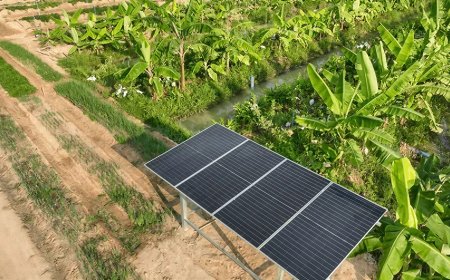
During his visit to Dhaka in the first week of August, Saudi Deputy Foreign Minister Waleed Elkhereji signaled that the Kingdom wants to move beyond labor recruitment into direct investment, naming fisheries, food processing, energy, renewable and solar power, information technology, and artificial intelligence as priority sectors.
This marks a deliberate departure from five decades of a relationship built almost entirely on remittances. For Bangladesh, the offer is genuinely attractive: These sectors bring capital, technology transfer and skilled-job creation, none of which the traditional labor-export model provides.
A joint BIDA-led investment session and a Joint Working Group meeting are reportedly being planned to translate the rhetoric into agreements.
The Risky Hormuz
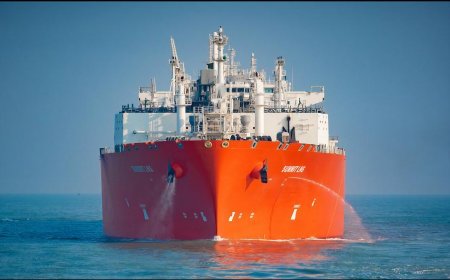
Amid all this, Dhaka should carefully weigh its position with Iran. The naval coalition is centered on the Red Sea, but the strait that actually matters most to Bangladesh's energy security is the Strait of Hormuz, through which roughly a fifth of global oil and LNG trade normally passes.
Qatar and the UAE -- whose gas exports move almost entirely through Hormuz -- supply about 72% of LNG and 100% of crude of Bangladesh's imports, according to Kpler data, leaving the country acutely exposed whenever the Strait is disrupted, as it was for weeks earlier this year after Iranian forces declared it closed and attacked vessels attempting to transit following on going war between US-Israeli and Iran.
Any perception that Bangladesh has thrown in with an anti-Iran security bloc carries real risk, given that Tehran retains the capacity to disrupt shipping through asymmetric means far beyond the Yemeni coast.
Dhaka must carefully manage its traditionally friendly relationship with Iran even as it deepens ties with Riyadh.
The Way Forward
Bangladesh should treat the coalition as a low-cost, high-visibility gesture rather than a wide security commitment, keep its role limited to information-sharing on freedom of navigation, and avoid anything resembling participation in operations directed against Iran or its proxies.
It should pursue the Saudi investment offer seriously, using it to diversify beyond low-skilled labor migration into fisheries, energy, IT and AI, and it should recognize that a warmer Riyadh channel can also ease its path with Washington.
Most importantly, Bangladesh should keep its channel open with Iran and stick to its message of promoting ‘peace’ and ‘stability’, which may help it to avoid being drawn deeper into a conflict that is not its own.
Ahamed Jobayer is a postgraduate in International Relations from South Asian University, New Delhi.