


























































Auto-Rickshaw Crackdowns in Dhaka are Pointless
Citizens are told that auto-rickshaws cannot be banned because millions depend on them for a living. That argument is sound for the drivers, who are among the poorest workers in the city. It is not an argument for shielding the people who profit from an unregulated supply chain.

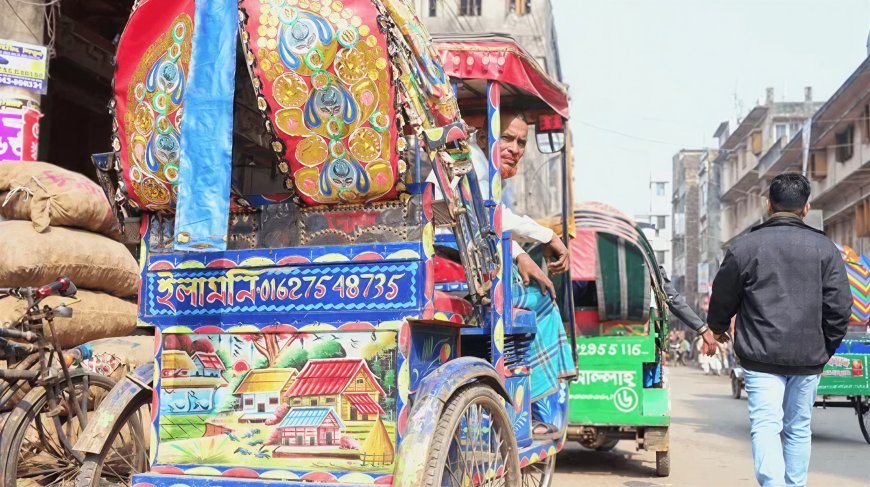
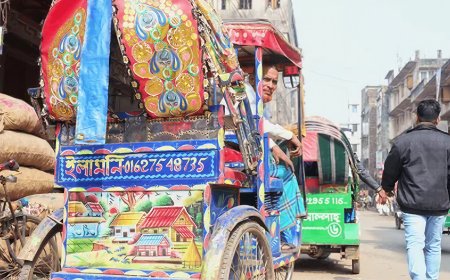
Dhaka's streets have no shortage of laws and enforcement. Police and city corporation teams seize auto rickshaw "Teslas," drives sweep through Gulshan, Banani and Asad Gate, and ministers announce new restrictions every few months.
Yet the places that actually produce, house, and power these vehicles carry on largely untouched. The state is visibly active against the driver and conspicuously quiet about the garage, and that imbalance explains why the crisis never ends.
Law Enforcement Looks Busy on the Roads
The record of street-level action is long. In May 2024, the Road Transport Minister told the BRTA to stop battery-run rickshaws, and days later the Prime Minister's directive let them run again.
In November 2024, the High Court ordered a halt within three days, and the Appellate Division suspended that order with a one-month status quo.
In April and May 2025, drives in Gulshan-Banani and at Asad Gate led to clashes and blockades. The Dhaka Metropolitan Police now says curbing extortion and regulating these vehicles is a top priority.
The pattern is constant: Visible crackdowns, seized vehicles, protests, and retreat.
Silence for the Source
Now ask a simpler question. When did the public last hear of an auto-rickshaw assembly workshop being demolished, or its owner prosecuted?
The State Minister for Local Government has himself admitted that the government does not know how many factories exist. A Jugantor report, as cited in a widely viewed analysis, found that nearly all previous drives targeted drivers on the road, with no systematic surveillance of factories.
A 2011 prohibition on assembly is said to exist, and the High Court has ruled the vehicles unlawful since 2014. If a ban on assembly were genuinely enforced, there would be nothing left to seize on the road.
Why the Workshops Survive
The most convincing explanation is political. These workshops are small, local, and cheap to set up, which means they depend on local protection.
Police lists reported by New Age name hundreds of alleged extortionists and patrons across Dhaka, including auto-rickshaw garages, and say money is allegedly shared among local politicians, union leaders and some police officers.
Prothom Alo has reported extortion at such garages in collusion with local ruling-party figures.
A union leader cited in a 2024 Financial Express report alleged at least Tk 1.3 billion a month is extorted from battery-run vehicles in Dhaka.
These are allegations and police intelligence, not court findings, and I do not claim that every workshop is run by a politician. But the weight of reporting points the same way: Where local power brokers profit, enforcement stops short of their door.
The Cost of Selective Enforcement
This selective enforcement is the worst of both worlds. A driver who owes about Tk 80,000 on a microloan, as one study reports on average, loses his vehicle and his income. The workshop that built it assembles a replacement the same week.
The garage and its illegal charging point keep drawing power, and the grid is losing revenue the Home Minister's own figures put in the billions. By his count there are about 48,000 illegal charging points in Dhaka, and electric three-wheelers use about five percent of national power.
Meanwhile, lead-acid batteries from these vehicles feed informal recycling that has left nearly four in ten children under five with elevated blood lead nationwide. Raiding the road does nothing about any of this.
Why Not Go After the Supply Chain?
A serious policy would reverse the order of priorities.
First, locate and register every assembly workshop, garage and charging operator, and shut those that refuse.
Second, prosecute the owners and the patrons who protect them, whoever their party affiliation.
Third, create a formal battery take-back and recycling system so that old lead-acid cells stop poisoning neighbourhoods.
Fourth, regulate the vehicles on the road using the model the government is reportedly considering: zoning, certified designs, number plates, driver licences and digital tracking. Delhi legalized e-rickshaws only after setting strict rules on design, speed and routes.
A Test of Political Will
Citizens are told that auto-rickshaws cannot be banned because millions depend on them for a living. That argument is sound for the drivers, who are among the poorest workers in the city. It is not an argument for shielding the people who profit from an unregulated supply chain.
The government has shown it can mobilize teams, tear gas, and even the army on the street. It has not shown the same appetite for the workshops and garages behind the problem.
Until it does, every crackdown will be what it has been so far: A show of force against the weak that leaves the powerful and their profits intact.
Shafqat Aziz is a barrister (Lincoln’s Inn) and an accredited Civil-Commercial Mediator (ADR-ODR International).