









































![A Ledger of the Soul: Navigating the Allah-Bhagavant Nexus in a 19th-Century Puruṣākāra Jñāna Caupara [Gyan Chauper]](https://counterpointbd.com/uploads/images/202608/image_430x256_6a93baa3b09a7.jpg)



















Bangladesh's Budget of Contradictions
A budget succeeds not because it contains attractive numbers but because citizens, investors, entrepreneurs, and international partners trust those numbers.
A budget is ultimately a promise. It is a promise that inflation will fall, jobs will grow, investment will rise, and citizens will enjoy a better future. But promises only matter when people believe them. That is the fundamental challenge facing Bangladesh's FY2026-27 budget.
The government has presented an ambitious vision. It speaks of building a "democratic, humane, and inclusive economy." It promises financial stability, accountable institutions, stronger growth, and even a pathway toward a trillion-dollar economy by 2034.
There is nothing wrong with ambition. The problem is credibility. A budget succeeds not because it contains attractive numbers but because citizens, investors, entrepreneurs, and international partners trust those numbers. Today, that trust remains fragile.
The Budget's Biggest Contradiction
One of the most striking contradictions in the budget is that it repeatedly criticizes the previous government's economic management while asking citizens to accept a new set of optimistic assumptions without first restoring confidence in the data itself.
The budget accuses the previous regime of hiding economic failures behind "fabricated statistics and empty rhetoric." That criticism may be justified. But if the government believes that key economic indicators were manipulated in the past, then rebuilding confidence in official statistics should be among its highest priorities.
Instead, the budget immediately presents ambitious growth, inflation, revenue, and development targets. This raises a legitimate question:
How can citizens evaluate new promises if they remain uncertain about the accuracy of the underlying data?
Economists have debated Bangladesh's GDP figures for years. The issue is not merely technical. GDP is the denominator used to calculate debt ratios, deficit ratios, tax-to-GDP ratios, and countless other indicators. If GDP is overstated, many of the country's fiscal indicators appear healthier than they actually are.
When Singapore publishes economic statistics, investors trust them. When South Korea releases growth figures, markets trust them. When Bangladesh releases numbers, many citizens immediately ask: "Are these real?" That question alone reveals a crisis of confidence.
Revenue Targets Ignore the Lessons of History
The budget aims to substantially increase revenue from collection despite years of underperformance. Bangladesh's tax-to-GDP ratio remains only 6.8 percent, one of the lowest in South Asia and among the lowest in the world. For comparison:
- India collects roughly 18-20% of GDP in taxes.
- Vietnam collects around 18%.
- Thailand collects approximately 16%.
- OECD countries average above 30%.
Bangladesh's challenge is therefore real. But history suggests that simply announcing larger revenue targets does not generate revenue. Over the last decade, the National Board of Revenue repeatedly missed collection targets. Yet successive budgets continued raising targets year after year. This resembles a family that continually increases next year's income projection despite repeatedly missing last year's income goal. Eventually, credibility disappears.
Vietnam provides a useful contrast. Before aggressively expanding public spending, Vietnam spent years modernizing tax administration, digitizing collections, reducing discretionary exemptions, and broadening compliance.
Bangladesh continues to focus disproportionately on targets rather than institutional reform. The result is predictable: Ambitious budgets, disappointing collections, and growing borrowing requirements.
The Missing War Against Corruption
Perhaps the most disappointing aspect of the budget is not what it contains but what it omits. Bangladesh consistently ranks among the poorer performers in corruption perception and governance indicators compared with many successful Asian economies.
Yet corruption appears more as a talking point than a measurable policy objective. Where are the annual corruption-reduction targets? Where is the public dashboard tracking major government contracts? Where is mandatory disclosure of beneficial ownership for companies winning public procurement? Where is an independent performance audit of mega projects? Where is the timeline for recovering laundered assets?
Countries that successfully transformed themselves did not merely talk about corruption. They fought it systematically. Singapore's transformation under Lee Kuan Yew was not built primarily on infrastructure spending. It was built on relentless enforcement, institutional accountability, and the certainty that corruption carried consequences.
Rwanda, despite limited resources, dramatically improved public service delivery through transparency reforms and performance-based accountability. Georgia's post-2003 reforms reduced corruption by restructuring institutions rather than simply increasing budgets.
Bangladesh's budget talks extensively about spending money. It says far less about protecting taxpayers from waste. That is a problem. Because corruption is not just a moral issue. It is an economic issue. Every inflated contract means fewer schools. Every politically connected loan means less credit for productive businesses. Every procurement scandal means higher taxes or higher debt.
Banking Reform Cannot Succeed Without Accountability
The financial sector remains Bangladesh's most immediate economic vulnerability. The budget itself acknowledges approximately Tk 6.44 lakh crore in defaulted loans. That figure is staggering.
To put it in perspective, the amount exceeds the annual national budgets of many developing countries. Yet despite years of banking scandals, Bangladesh has rarely held major beneficiaries fully accountable. This creates a dangerous cycle. Profits remain private. Losses become public. Taxpayers ultimately bear the burden.
History offers clear lessons. Following the Asian Financial Crisis of 1997, South Korea aggressively restructured banks, removed failed management, recapitalized viable institutions, and imposed accountability. Following its banking collapse in the early 1990s, Sweden forced shareholders to absorb losses before public support was provided. The United States, after the Savings and Loan crisis, shut down hundreds of failed institutions and pursued legal action against wrongdoers.
Successful banking reform requires consequences. Without consequences, future misconduct becomes more likely. Today, many ordinary Bangladeshis ask a simple question: If a small borrower misses a loan payment, the bank acts immediately. Why do politically connected borrowers receive different treatment? Until that question is answered, public confidence in banking reform will remain limited.
The Islami Bank Crisis
No discussion of Bangladesh's financial sector is complete without addressing the crisis that has engulfed Islami Bank Bangladesh PLC and several other major banks over the past decade.
For generations of Bangladeshis, Islami Bank was not merely another financial institution. It was a symbol of trust. Millions of depositors, expatriate workers, small businesses, and ordinary families chose the bank because they believed their savings were secure.
That trust has been severely damaged. Following the controversial change in ownership and management beginning in 2017, the bank experienced a dramatic deterioration in asset quality, governance standards, and public confidence. Investigations, regulatory findings, and media reports have documented large-scale loan concentration, questionable lending practices, and extensive exposure to politically connected business groups. The consequences are now visible throughout the banking system.
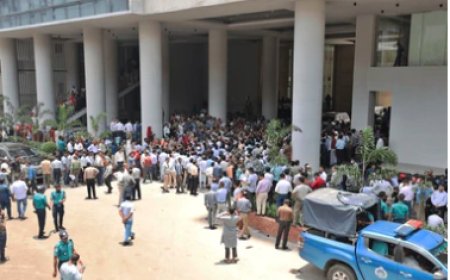
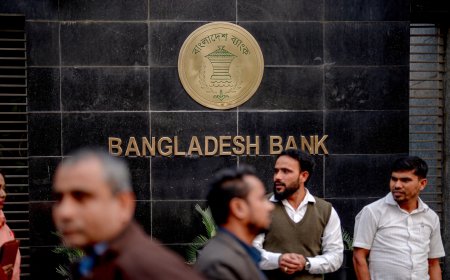
In recent years, several banks have faced severe liquidity shortages, forcing extraordinary intervention by Bangladesh Bank. Depositors in some institutions have struggled to withdraw funds. Interbank confidence has weakened. The central bank has repeatedly been compelled to provide emergency liquidity support to prevent broader financial instability.
This is not merely a banking problem. It is a trust problem. When depositors begin questioning whether their money is safe, the foundation of the financial system itself comes under pressure. No economy can sustain long-term growth when citizens lose confidence in banks. Every taka withdrawn from a bank and kept under a mattress is a taka unavailable for productive investment, business expansion, housing finance, or job creation.
The budget identifies "financial sector stability" as one of its top priorities. That objective is commendable. But stability cannot be achieved through liquidity injections alone. Liquidity treats the symptoms; governance failures are the disease.
The experiences of South Korea after the 1997 Asian Financial Crisis and Sweden during its banking crisis in the early 1990s demonstrate that successful banking reforms require transparency, independent audits, removal of responsible management, recovery of misappropriated assets, and protection of depositors above politically connected borrowers.
Bangladesh faces a similar choice today. The country can either confront the governance failures that contributed to the crises at Islami Bank and other troubled institutions, or it can continue relying on temporary fixes while underlying weaknesses deepen.
A banking system survives on capital, but it thrives on confidence. Restoring that confidence should be one of the government's highest economic priorities.
Inflation Is More Than a Statistic
The budget targets inflation of 7.5%. For policy-makers, inflation is a percentage. For ordinary citizens, it is daily life.
It is the mother in Rangpur buying less fish than last year. It is the garment worker in Gazipur whose salary increase disappears at the grocery store. It is the retired teacher in Khulna who now spends a larger share of income on medicine.
Official inflation figures matter. But lived inflation matters more. When families continue struggling despite optimistic projections, confidence erodes further. Economic recovery is not measured by PowerPoint slides. It is measured by whether people feel relief when they visit the market.
The Real Deficit is Trust
The government frequently speaks of a trillion-dollar economy. Perhaps Bangladesh will eventually reach that milestone. But becoming a trillion-dollar economy is not primarily a mathematical challenge. It is an institutional challenge.
Countries become wealthy when citizens trust institutions. When investors trust contracts. When taxpayers trust government. When depositors trust banks. When entrepreneurs trust the rules of the game.
Today, Bangladesh's largest deficit may not be fiscal. It may be a deficit of trust. The budget acknowledges many of the country's problems. That is an important first step.
The next step is harder. Replacing optimistic targets with credible reforms. Replacing slogans with measurable accountability. Replacing selective enforcement with equal treatment under the law. And replacing promises with results.
Because history shows that nations do not become prosperous simply by announcing ambitious goals. They become prosperous when citizens believe their government is telling them the truth.
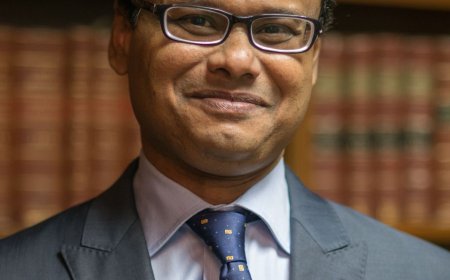
Dr Mohammad Nakibur Rahman is a professor of Finance at the University of North Carolina and the US spokesperson for Jamaat-e-Islami Bangladesh.