




































![A Ledger of the Soul: Navigating the Allah-Bhagavant Nexus in a 19th-Century Puruṣākāra Jñāna Caupara [Gyan Chauper]](https://counterpointbd.com/uploads/images/202608/image_430x256_6a93baa3b09a7.jpg)





















Bangladesh's Next Budget
The immediate steps are neither mysterious nor technically complex: Broadening the VAT base by reducing exemptions, strengthening the Large Taxpayer Unit to capture income from professionals and the informal wealthy, and automating tax administration to reduce discretion and corruption.

Bangladesh's upcoming national budget will be more of a statement of survival than a budget of priorities. The newly elected government inherits an economy long plagued by structural contradictions and growth without accountability.
In addition, the turbulence of the political transition and the interim government's mismanagement have complicated deliberations. Getting the right budget will not guarantee Bangladesh's future, but getting it wrong, in this fragile moment, could foreclose it.
The Hasina Paradox
Let us begin with an honest reckoning. By conventional measures, the Sheikh Hasina government's record was impressive. Bangladesh sustained GDP growth averaging 6 to 7 percent annually for over a decade, crossed the lower-middle-income threshold, reduced extreme poverty by more than half, achieved near-universal primary school enrollment, and made genuine strides in maternal and child health.
Per capita income, which stood below $700 in 2010, had risen to over $2,700 by the mid-2020s. On paper, Bangladesh was a development success story.
But beneath those headline numbers, the foundations were rotting. The banking sector was the most visible symptom. Successive rounds of rescheduling non-performing loans, politically directed credit to connected borrowers, and the scandalous hemorrhage of public bank capital led to an estimate that defaulted loans exceeded TK 150,000 crore.
This estimate, Bangladesh Bank's own count of defaulted loans, is widely believed to undercount the true figure, reflecting a slow-motion fiscal crisis deferred rather than resolved. The anti-corruption architecture existed on paper and was applied selectively: With efficiency against political opponents, with remarkable tolerance against regime allies.
Public procurement became a machine for the extraction of rents. Mega-infrastructure projects, some genuinely necessary, were systematically overpriced. And the institutions meant to check these tendencies, the parliament, the judiciary, the media, and the Election Commission, were progressively hollowed out.
The result was an economy growing on the strength of garment workers and remittances, while its institutional scaffolding weakened. When the political edifice collapsed on August 5, 2024, it did not fall because the economy had failed. It fell because the governance deficit had become intolerable. The economic consequences followed.
Missed Opportunity
The interim government led by Professor Muhammad Yunus arrived with enormous goodwill, both domestically and internationally. It had a mandate to stabilize, reform, and hand power to an elected successor on a sound footing.
Yet as a reformer and economic steward, its record has been controversial. Despite a mandate for stabilization and reform, key initiatives, such as the 'July Sanad,' remain in limbo. Furthermore, its foreign policy, most notably a controversial deal with the USA, has drawn sharp criticism, leading many to view its performance as not just mixed but, in some areas, actively detrimental.
The most damaging failure was the absence of a coherent macroeconomic framework. An administration that governed for most of two years never produced a credible medium-term fiscal strategy. Domestic borrowing, already elevated under the fallen government, continued to rise, crowding out private-sector credit at precisely the moment when business confidence needed support.
The lending rate ceiling, a structural distortion for years, was eventually reformed, but the banking sector's underlying NPL crisis was largely unaddressed. Foreign direct investment, already declining before the transition, fell further as investors waited for clarity on policy direction and property rights protection.
Inflation, which averaged above 9 percent for much of 2024 and into 2025, was treated primarily as a monetary problem to be managed by the Bangladesh Bank, even though its roots were also fiscal and structural.
The energy sector, where circular debt and capacity payments to idle power plants have been a drain on public finances for years, received no fundamental restructuring. Perhaps most damagingly, the interim period saw a deterioration in law and order in parts of the country, adding a genuine security premium to the cost of doing business.
To be fair to Professor Yunus and his colleagues, they inherited a genuinely difficult situation and governed under constant political pressure. Some of the economic declines during this period was the inevitable hangover from the previous administration's deferred problems. But governance failures during the interim period were not merely a continuation of past trends; they represented, in the absence of reform, a qualitative deterioration.
The window for structural change, when it was most politically available, was not used effectively. The newly elected government now faces a harder task.
What the New Government Faces
The newly elected government takes office amid a severely strained fiscal position. Revenue collection has missed targets for consecutive years; the tax-to-GDP ratio, at barely 8 to 9 percent, remains among the lowest in the world for a country at this income level.
The deficit is financed largely through domestic borrowing, with National Savings Certificate obligations alone representing a structurally expensive and distortionary instrument. Public debt remains manageable in absolute terms, but its composition -- particularly the reliance on high-cost domestic instruments -- is a medium-term vulnerability.
The banking sector faces the most immediate crisis. Non-performing loans, restructured loans, and zombie lending have reduced the financial system's effective credit-creation capacity. Small and medium enterprises, the engine of employment and domestic market demand, face a genuine credit crunch.
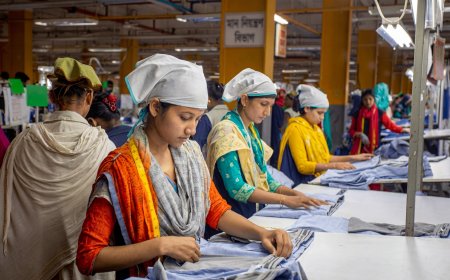
Foreign exchange reserves, which show signs of stabilization, remain below the level needed to provide a comfortable buffer against external shocks. The RMG sector, which still accounts for over 80 percent of export earnings, faces rising competition and compliance costs related to labor and environmental standards. The sector is also experiencing ongoing disruption to Red Sea shipping routes due to the regional conflict.
Investor confidence, both domestic and foreign, is fragile. The political transition has raised legitimate questions about policy continuity, contract enforceability, and the independence of regulatory institutions. A budget that speaks only to its own constituency, prioritizes populist transfers over structural reform, or fails to signal fiscal seriousness will accelerate capital flight rather than halt it.
What the Budget Must Do
Given this inheritance, what should the budget actually do? The temptation in post-transition politics is always strong to promise everything: Higher subsidies, expanded social protection, accelerated infrastructure spending, salary increases for civil servants, and generous allocations to every ministry. The government must resist this temptation.
Bangladesh does not have the fiscal space for an ambitious expansion. If, for some reason, the government is unable to resist this temptation, it would crowd out private investment, which is the only sustainable source of growth the country needs.
The first and most fundamental priority must be tax reform and domestic revenue mobilization. Bangladesh cannot continue to fund a developmental state on a tax base that captures less than 9 percent of GDP. The immediate steps are neither mysterious nor technically complex: Broadening the VAT base by reducing exemptions, strengthening the Large Taxpayer Unit to capture income from professionals and the informal wealthy, and automating tax administration to reduce discretion and corruption.
A realistic target is to add 0.5 to 1 percentage point of GDP to tax revenue over three years, creating genuine fiscal headroom without requiring external borrowing or spending cuts. The National Board of Revenue (NBR) needs political protection to pursue this agenda against the powerful interests that benefit from the current system. The budget should explicitly signal that protection.
The second priority is to stabilize the banking sector, but that cannot be achieved in a single budget. This budget can initiate the process. The government should announce a credible, time-bound non-performing loan (NPL) resolution framework with clear targets for each state-owned bank and genuine consequences, including management accountability and, where necessary, mergers or restructuring, for failure to meet them.
The Bangladesh Bank must be given, and seen to exercise, genuine independence in its supervisory function. Recapitalization of state banks with public funds should be conditional on demonstrable governance reform. Credit guarantee schemes for SMEs, funded from the budget at a modest initial scale, can begin to address the private-sector credit gap while broader banking reforms take hold.
The third priority is reorienting public spending toward productivity. Bangladesh has underinvested in human capital for years relative to its income level. Education spending, at roughly 2 percent of GDP, is well below that of regional peers; health spending is even lower. These are not merely social goods; they are the foundations of the export diversification and productivity growth that Bangladesh must achieve over the coming decade as its demographic dividend matures and the garment sector faces intensifying competition.
The budget should announce a credible multi-year path to raise education spending to 4 percent of GDP and health spending to 2 percent, funded by revenue gains from tax reform rather than deficit expansion. Infrastructure spending should continue, but with rigorous project selection criteria, published cost-benefit analyses, and independent oversight -- lessons the mega-project era conspicuously failed to teach.
The fourth priority is to address the governance deficit that has made it harder to implement every other reform. This includes restoring the Anti-Corruption Commission's independence and credibility, publishing beneficial ownership information for government contractors, reforming public procurement rules to reduce single-sourcing and politically directed awards, and strengthening the parliamentary Public Accounts Committee so audit findings have real consequences.
None of this costs money, but all of it is a prerequisite for spending money effectively. Foreign investors and development partners will watch these signals more closely than the headline deficit number.
Handle With Care
Is there a role for deliberate Keynesian demand expansion in this budget? The answer is yes, but it is carefully circumscribed. Bangladesh does face a demand gap: Consumption growth has slowed, private investment is depressed, and the multiplier from well-targeted public spending can be meaningful in this environment. But the conditions for successful stimulus are not yet in place.
Inflation, though declining from its peak, remains above target, and expectations are that it will rise further due to the war with Iran. The banking sector's dysfunction impairs the monetary transmission mechanism. And the government's credibility with financial markets, both domestic and international, is not strong enough to absorb a significant widening of the deficit without raising borrowing costs.
The appropriate form of stimulus in this context is not broad spending expansion but targeted, supply-side-enhancing investment: Rural roads and irrigation that raise agricultural productivity; vocational training and technical education that increase labor market flexibility; and digital infrastructure that reduces transaction costs across the economy.
These investments have high multipliers, create durable assets, and signal a government that is investing in structural transformation rather than purchasing political support. They should be funded by reprioritizing within the existing envelope: Cutting subsidies that benefit the rich, rationalizing the public investment program to eliminate low-return projects, rather than by expanding the deficit.
Crisis or Opportunity
Bangladesh has experience with crises. In the early 1990s, after years of military rule and political instability, the country undertook a set of institutional and economic reforms that laid the groundwork for sustained growth over the next two decades.
The garment sector expanded, remittances grew, poverty fell, and the country's international standing rose. That transformation was not inevitable. It required political will, technocratic competence, and a willingness to make difficult choices rather than defer them.
The present moment offers a similar, if narrower, window. The political transition has disrupted old patronage networks enough that reform faces less structural resistance than it has in years. The international community, including the IMF, the World Bank, and major bilateral partners, has signaled willingness to support a credible reform program with both financing and technical assistance.
The Bangladesh Bank, however, remains an institution whose leadership's independence, professional depth, and capacity for the technocratic resolve that genuine monetary reform demands have yet to be convincingly demonstrated. Whether that window translates into meaningful change or closes quietly, as so many before it have, will depend on whether those at the helm prove equal to a task that has defeated far more experienced hands.
But the window is narrow, and the risks are real. An economy growing at 4 percent, when it needs 7 percent to absorb its labor force, cannot afford years of fiscal drift. A banking system that cannot channel savings into productive investment is a structural brake on development. A governance environment that taxes the honest and rewards the connected will drive the best talent and capital elsewhere.
The upcoming budget will not solve these problems in a single document. But it can credibly and concretely signal that the new government understands them and has the resolve to begin the structural transformation that Bangladesh has been promising itself and deferring for too long.
The numbers in the budget matter. The institutions behind the numbers matter more. And the political will to protect those institutions from the pressures that have corrupted them before matters most of all. Bangladesh has the human capital, entrepreneurial energy, and economic base to build a genuinely prosperous future. What it has lacked, across administrations, is the institutional integrity to turn that potential into durable progress. This budget is not just a fiscal document. It is a test of whether that has changed.