



























![A Ledger of the Soul: Navigating the Allah-Bhagavant Nexus in a 19th-Century Puruṣākāra Jñāna Caupara [Gyan Chauper]](https://counterpointbd.com/uploads/images/202608/image_430x256_6a93baa3b09a7.jpg)




















When Citizenship is Redefined by Faith
The path forward begins by refusing to accept the silent exclusion as normal. It requires naming the disagreement for what it is: an attack on the pluralistic foundation of the state.

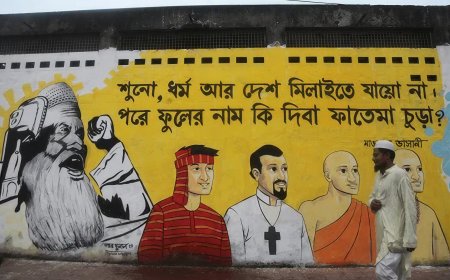
Imagine a country where the rules of belonging are rewritten overnight. Not by law, but by a single, stark declaration: In a nation with an 80% Muslim majority, "there can be no non-Muslim parliamentary representative".
This statement, voiced by a leader of the resurgent Bangladesh Jamaat-e-Islami (BJI), cuts through the noise of policy summits and electoral promises like a cold blade. It proposes a vision where the political community -- the demos -- is not composed of equal citizens, but is instead collapsed into a religious ethnos. In the charged atmosphere of Bangladesh's February 2026 elections, this is more than rhetoric; it is an attempt to politically disappear millions of Bangladeshis .
Clash of Visions
The statement feels particularly jarrant because of its context. Just days before, the same party hosted its glittering "Policy Summit 2026" at Dhaka's InterContinental Hotel, attended by diplomats, analysts, and editors from across the globe. The agenda was meticulously modern: Interest-free loans for graduates, a Smart Social Security Card, plans to create millions of ICT jobs, and ambitions to build the world's largest women's university.
The summit projected an image of pragmatic, tech-savvy governance focused on "dignity and shared prosperity".
Yet, this polished vision exists in parallel with a political identity BJI has never fully disavowed -- one rooted in its opposition to Bangladesh's secular liberation in 1971.
The party's recent resurgence, following its release from a long-standing ban and the toppling of Sheikh Hasina's government, has brought this tension to the forefront.
Their alliance with the student-protest-born National Citizen Party (NCP) is a marriage of convenience, aiming to unite the "spirit of 1971 with that of the 2024 movement". But what is the core spirit being offered? Is it the inclusive promise of the policy book, or the exclusionary logic of a religious test for office?
Disagreement That Silences
To understand the violence of the "no non-Muslim MP" claim, we can turn to philosopher Jacques Rancière. He defines true political conflict not as a debate within agreed rules, but as a "fundamental" disagreement (mésentente) -- a clash over who is even recognized as having a legitimate voice.
For Rancière, the established order -- what he calls the "police" -- is not just officers on the street, but the entire system that assigns who is visible and what is sayable, determining "that this speech is understood as discourse and another as noise".
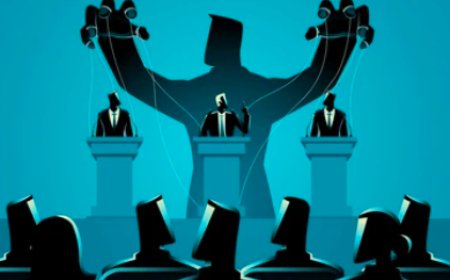
The call for religious exclusion is a quintessential act of this policing. It does not argue with non-Muslim citizens about policy; it seeks to remove them from the political conversation altogether. It declares their claim to equal representation as mere "noise" in the system. This creates a paradoxical silence -- a silent exclusion -- where a citizens presence in the nation is acknowledged, but their voice in its sovereignty is erased. When the foundational equality of citizenship is revoked by identity, the very stage for democratic politics collapses.
Digital Echo Chamber
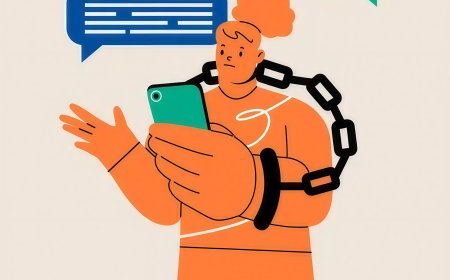
This political silencing finds its most potent amplifier in our digital public sphere. Bangladesh has experienced a 517.3% surge in internet use, with over 60% of users actively engaged on social media. These platforms have evolved into a vibrant, if chaotic, new arena for public discourse.
However, this digital sphere is not a neutral town square. It is a battleground where connective action can mobilize for progress, but also where majoritarian impulses can be weaponized to enforce conformity.
We have already seen the blueprint: A professor's private Facebook post is screenshotted and weaponized, leading to her termination without due process. This is the administration of fear played out at digital speed. In an environment where political discourse is increasingly mediated through personalised social networks, an exclusionary consensus can be solidified not through reasoned debate, but through viral repetition and social pressure.
The silent exclusion migrates online, where dissent can be drowned out by coordinated noise, and the disagreement is algorithmically suppressed before it can even be heard.
Reclaiming the Sensible
Therefore, the choice before Bangladesh is not merely electoral. It is sensory. It is about reclaiming the "distribution of the sensible" -- to use Rancières term -- which defines what is visible and audible in our common life.
Will the nation's political imagination be limited to a majoritarian monologue, where the promise of policy is forever shadowed by the threat of exclusion? Or can it embrace the challenging, vital dissonance of a true democracy, where the demos is an unbreakable covenant between all citizens, regardless of faith?
The path forward begins by refusing to accept the silent exclusion as normal. It requires naming the "disagreement" for what it is: an attack on the pluralistic foundation of the state.
It demands a public sphere, both physical and digital, where the right to be heard is non-negotiable. Bangladesh stands at a precipice. It can listen to the silencing whisper of exclusion, or it can choose the courageous, cacophonous, and beautiful sound of a republic where every citizen has a part. The world is listening.
Zakir Kibria is a Bangladeshi writer, policy analyst and entrepreneur based in Kathmandu, Nepal. His email address is [email protected]