































































Anti‑US Narratives and Chinese Influence in Bangladesh’s Political Transition
In this environment, terms like “deep state conspiracy,” “foreign funding,” etc provide a ready‑made vocabulary for dismissing the July uprising as manufactured rather than acknowledging the real anger that drove it.

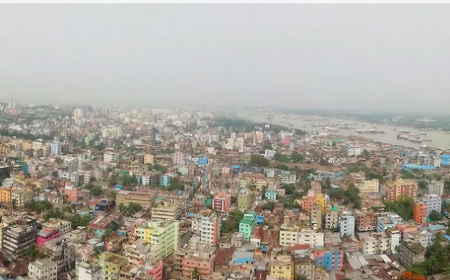
When Bangladesh’s student‑led quota protests escalated into a mass uprising in mid‑2024, the images that reached Western capitals were familiar: Crowds and blood in Dhaka, internet shutdowns, and a long‑serving autocratic leader ultimately forced from power.
Less visible from afar is the information landscape that has emerged since one where anti‑US conspiracy narratives have taken firm root, even as China quietly deepens its diplomatic and media footprint.
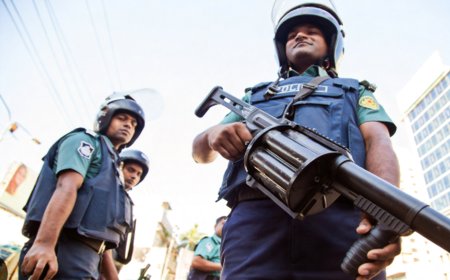
The quota protests began in July 2024 as a peaceful, student‑driven demand for fairer public sector recruitment, but they were met with harsh repression, including lethal force and mass arrests. The crackdown helped transform a policy dispute into a broader popular uprising that, by August, contributed to bringing down Sheikh Hasina’s 15‑year rule.
For many Bangladeshis, especially younger citizens, this felt like a democratic moment reclaimed from an increasingly authoritarian system.
Yet almost immediately, competing stories about what had really happened began to circulate. Supporters of the former government, including Sheikh Hasina herself as well as some sympathetic commentators at home and abroad, promoted the idea that the United States had orchestrated a regime‑change operation using aid channels, civil society networks, and sympathetic media.
The Awami League’s official social‑media messaging has depicted the “July movement” as a foreign NGO‑driven media assault designed to destabilize Sheikh Hasina’s government, and has promoted an English‑language book even, July Fool: How Bangladesh Was Deceived, which characterises the uprising as a meticulously planned “color‑revolution” based coup funded by the United States and assisted by Pakistani intelligence rather than a spontaneous protest wave.
This narrative is reinforced by a growing ecosystem of partisan outlets and shadowy advocacy platforms around. In India, for example, the right‑wing magazine Organiser has described the events as a “successful attempt by the CIA,” presenting the student protests as the favourite playbook of American regime‑change operations.
A diaspora‑linked platform registered in Canada, the Global Centre for Democratic Governance, goes further, portraying Dr Muhammad Yunus’s appointment as chief adviser as the culmination of a CIA‑backed coup that allegedly installed a West‑loyal puppet government with the help of Jamaat‑e‑Islami, BNP, ISI and other actors.
GCDG is particularly led by Prof. Dr. Md. Habibe Millat, a former Awami League member of parliament and close political ally of Sheikh Hasina, which underlines how this conspiracy narrative is also being institutionalized within circles linked to the former ruling party. Other polemical essays and commentaries recycle the same storyline: That the July-August uprising was less a domestic revolt than the latest entry in a long catalogue of US‑engineered coups.
Some regional commentary goes further by explicitly placing Bangladesh in the frame of “color revolutions.” An Asia Times column, for instance, characterizes the upheaval as a “color revolution on India’s doorstep,” drawing parallels with protest movements in Eastern Europe and the Arab world and implying a familiar Western script behind events in Dhaka.
The pairing of “regime change” and “color revolution” is now a recognizable trope in anti‑democratic, often pro‑Russian narratives: Democratic protest movements are framed not as expressions of local grievances but as externally scripted plots.
These claims draw rhetorical strength from a much broader global debate. Mainstream reporting and scholarship have documented repeated episodes in which Washington did play a role overt or covert in leadership changes from Latin America to the Middle East, as highlighted by investigations in outlets such as AP, AFP, The Guardian and Al Jazeera.
A recent Bangla‑language analysis in a leading Dhaka daily,The Daily Star, writes that the United States is the country most frequently accused of involvement in “regime change,” especially since the Cold War, citing declassified archives and ‘academic works’. Against that backdrop, it is not surprising that many find the idea of an American hand in their own political crisis at least plausible, even when direct evidence is thin.
At the same time, a recent YouTube solo show critiques “NGO elites” as power‑hungry and foreign‑aligned, to argue that parts of civil society are more accountable to donors than to citizens pointing to some specific narrative quarters I have already discussed above.
In this environment, terms like “deep state conspiracy,” “foreign funding,” etc provide a ready‑made vocabulary for dismissing the July uprising as manufactured rather than acknowledging the real anger that drove it.
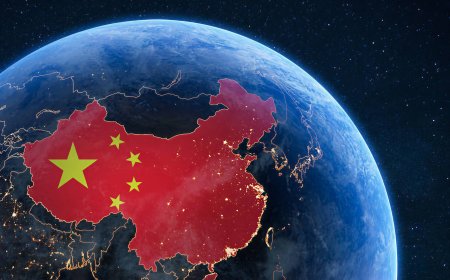
At the same time, China has been working steadily if less noisily to build relationships with Bangladeshi media, influencers and political figures. One flagship initiative is the Golden Silk Road Bangladesh Media Award, launched with the Chinese embassy’s support and co‑hosted by a coalition of major Bangladeshi media bodies, including the National Press Club, DRU, DCAB, ERF and others.
The awards recognize reporting on China and China-Bangladesh ties in categories such as general news, economy and technology, culture and sports, visual journalism and media innovation, with cash prizes funded by Chinese business associations and friendship organizations; in 2025, some 30 Bangladeshi journalists from print, television and online outlets received these awards.
Chinese officials describe this platform as a way to “strengthen friendship” and “build mutual confidence,” underscoring how narrative influence is treated as a core pillar of the bilateral relationship.
This media diplomacy sits within a wider ecosystem of Chinese cultural and information outreach. Confucius Institutes and related Chinese‑language programmes have taken root at major Bangladeshi universities, including the University of Dhaka, North South University, Rajshahi and Chittagong university including some private universities in Dhaka and outer regions in queue, as part of a broader South Asian network of centres that promote Chinese language and culture.
Recent anniversaries in Dhaka have been used to launch initiatives like the Bangladesh-China Media Club, explicitly aimed at deepening cooperation between Chinese outlets and Bangladeshi journalists.
On the political side, Beijing has intensified party‑to‑party and elite outreach. Since late 2024, multiple high‑level delegations from Bangladesh have travelled to China at the invitation of the Communist Party of China, bringing together senior figures from governing and opposition parties, representatives of newer political formations, and leaders from allied organizations.
Local and Chinese reporting describe these visits as major diplomatic milestones, noting that delegations typically mix established politicians with youth and student‑wing leaders like DUCSU, as well as civil‑society and media figures suggesting that Beijing is investing not only in the authorities of the day but also in the next generation of political actors.
Beyond formal politics, Chinese actors have reached out to prominent Bangladeshi content creators and commentators. Exiled activist and digital influencer Pinaki Bhattacharya, for example, has publicly described being invited by the Chinese government to engage with academics, foreign‑office officials, media and party‑school representatives, presenting it as the start of a new “people‑to‑people relationship” between the two countries.
Reports of other online creators, youth leaders and campus‑level representatives joining study tours and exchange trips often alongside party politicians and civil‑society figures suggest that Beijing is trying to cultivate a broad ecosystem of sympathetic voices who shape discourse well beyond traditional newsrooms.
China’s diplomatic messaging during the crisis itself further illustrates this approach. In 31st July 2024, as protests and violence escalated to the peak, a Chinese foreign ministry spokesperson said Beijing was “closely following the developments in Bangladesh” and “stability has returned in Bangladesh following the quota reform unrest”, framing events primarily through a stability‑first lens.
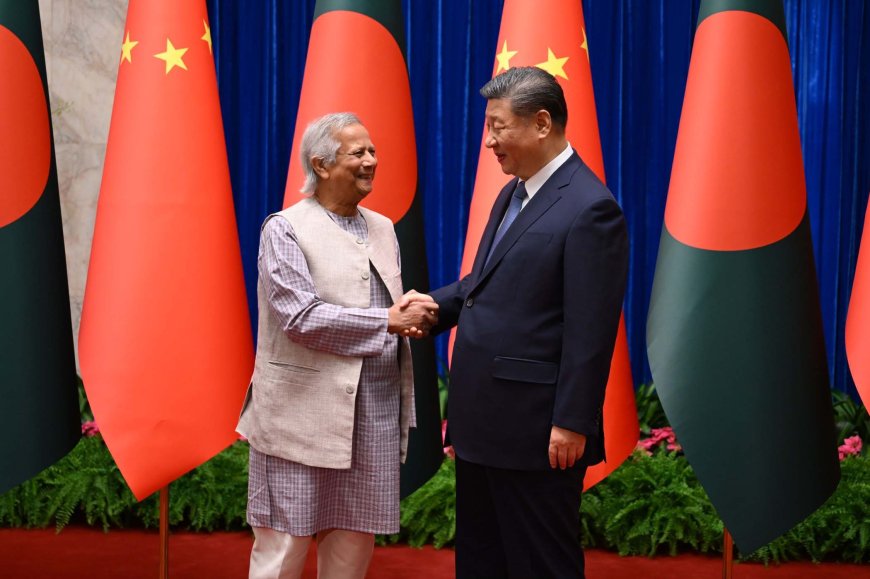
Within days of Sheikh Hasina’s resignation and the dissolution of parliament, China publicly welcomed the Yunus‑led interim government, and made Yunus’s first official bilateral state visit abroad to Beijing in March, 2025.
That combination of cautious neutrality at the height of the unrest and rapid, prompt engagement with the new authorities after 5 August underscored Beijing’s determination to remain an indispensable partner to whoever sits in Dhaka’s corridors of power.
Whether Bangladesh’s post‑uprising generation sees the United States as an ally, a threat or simply irrelevant will depend less on high‑level communiqués than on how Washington engages with the stories Bangladeshis tell about themselves -- and about the powers that claim to stand with them.
Minhaj Aman is an Analyst focusing on information integrity and digital influence operations.