








































![A Ledger of the Soul: Navigating the Allah-Bhagavant Nexus in a 19th-Century Puruṣākāra Jñāna Caupara [Gyan Chauper]](https://counterpointbd.com/uploads/images/202608/image_430x256_6a93baa3b09a7.jpg)




















Bangladesh's Draft AI Policy: Vision Needs Velocity
Success depends on three commitments that cannot be deferred: Speed. Visible, funded action in year one. Not plans for action. Action. Resources. Specific, budgeted commitments, not proposals


I've spent the past several months writing about Bangladesh's AI future as a four-piece arc. I started with the opportunity, moved through policy foundations, examined institutional needs, and confronted the inclusion challenge. I thought that arc was complete.
Then the draft National AI Policy 2026-2030 landed on my desk. Well, my inbox. Same thing these days.
It became clear that the arc wasn't finished. The draft demands a fifth piece -- one that sits at the uncomfortable intersection of vision and implementation, aspiration and constraint, timing and political reality.
My conclusion after reading it carefully: Even if we accept the vision and values at face value, and they're actually quite good, the policy still falls short. The draft gets the principles right. What's missing is urgency and committed resources.
The Good News
Let me give credit where it is due. At a broad level, the draft is conceptually strong. It adopts a risk-based governance framework aligned with international norms. It places explicit prohibitions on mass surveillance and social scoring. It commits to ratifying the Council of Europe's AI Convention, quite possibly the first South Asian signatory.
Not bad. Actually, solid.
The values are largely sound. The vision is coherent: AI as an economic multiplier, ethics by design, public-private collaboration, and an ambition for regional leadership. All good.
If this were an academic exercise, Bangladesh would score well. Vision is cheap. Execution isn't. The draft has all the trappings of a plan, phases, institutions, frameworks. What's missing is money, authority, and anyone who'll lose their job if it doesn't happen.
The Clock Is Ticking
AI is moving fast. We are not. And having watched this field for four decades, I can tell you, it doesn't wait for committee approvals
The draft does propose sensible things, regulatory sandboxes, an AI Innovation Fund, sovereign compute infrastructure. No argument there.
But when? With what budget? Under whose authority?
These are not details to be deferred to committee deliberations. They are, in practice, the line between policy and execution.
A few months ago, writing about the UNESCO AI Readiness Assessment, I noted that a policy without execution mechanisms is not a plan, it is a press release. Reading this draft, the déjà vu is hard to ignore..
Consider talent. The policy acknowledges the need for AI education reform. The UNESCO assessment already showed us the cost of delay: Bangladesh produces roughly 2,000 AI-capable graduates annually. Our competitors? Tens of thousands.
The policy discusses curriculum reform. Curriculum reform takes years. Years. The window for Bangladesh to build domestic AI capacity? Measured in months, not five-year plans.
You see the problem.
The Funding Problem
What concerns me most is not what the draft proposes, but what it leaves unfunded. It envisions an AI Innovation Fund.
Budget allocated: Zero.
It proposes sovereign data and compute infrastructure.
Capital committed: Zero.
It calls for regulatory sandboxes.
Funding for regulatory capacity: Zero.
I could go on, but you get the drift.
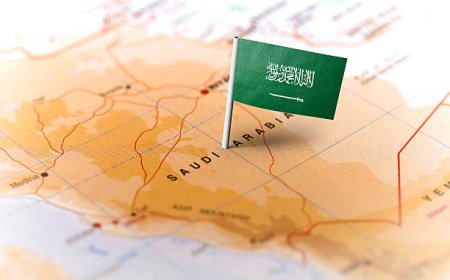
This is not a question of scale. It is a question of absence. There's a difference between we can only afford a small start and we haven't actually committed to starting. Compare this with regional peers. Saudi Arabia has allocated tens of billions of dollars to AI.
The UAE has created a dedicated AI ministry with a real budget, not a placeholder, an actual number with actual zeroes. Granted, we're not awash in petrodollars or Singapore's sovereign wealth. But even Pakistan's AI policy specifies funding mechanisms, a permanent 30% allocation from their national RD fund. Pakistan has committed money. We are only committing paragraphs
That difference matters. Institutions without resources cannot function. And policies without functioning institutions? They rarely move beyond the conference where they were announced.
Déjà Vu
This matters because we have seen this pattern before. Bangladesh has consistently demonstrated an ability to produce thoughtful policy documents.
What we have struggled with is converting those documents into funded institutions with authority, continuity, and measurable outcomes.
The 2019 National Strategy for AI contained detailed roadmaps. Very little materialized.
Not because the ideas were flawed. They weren't. But ideas without institutions, budgets, and enforcement power tend to remain ideas. They become those documents you find years later in a drawer, still relevant, still unrealized.
The current draft proposes a National Directorate for Governance of Intelligent Algorithms. In principle, this is the right move. But the draft leaves an important question unanswered.
Why should this time be different? When will it be constituted? Who chairs it? What budget does it control?
What authority does it have to enforce decisions rather than merely coordinate?
The answers to those questions determine whether the directorate becomes a governing body or another committee producing reports that quietly gather dust. We have enough reports.
Year One
Let me be clear about what I mean by velocity. Not vague urgency. Actual operational speed. Year one. Not year three. Not “medium term.”
Year one: Constitute the National Directorate with cabinet-level authority, dedicated staff, and a clear mandate to act. Not to advise. To act.
Allocate real capital to the AI Innovation Fund. Not to be determined. Not pending approval. Allocated. In the budget. With a line item you can point to.
Begin construction of national AI data and compute infrastructure through public-private partnership. Signed agreements. Executed contracts. Shovels in ground.
Launch large-scale AI literacy and skills programs targeting government employees, educators, and students. At national scale, not as pilots in three districts that well evaluate for expansion. Operationalize regulatory sandboxes with approved projects actually running. Not frameworks for future sandboxes. Running sandboxes. With companies in them. Doing things. Expensive? Yes. But inaction is more expensive.
The World Bank estimates $17 billion in lost economic opportunity by 2030 if Bangladesh fails to adopt AI strategically. Thats not a projection. That's a price tag for doing nothing.
Whose AI Is It Anyway?
The policy mentions data sovereignty, but this issue deserves deeper attention. Much deeper. Our current AI deployments rely almost entirely on foreign infrastructure. Cloud platforms are external. Training frameworks are external. Base models are external.
We are, in effect, renting our AI future from landlords who don't speak Bangla and have no particular interest in our success.
As AI systems expand into healthcare, public services, and finance, this dependence only deepens. Every new deployment strengthens a stack we do not control. Without domestic data centers, compute capacity, and Bangla-first models trained on local data, what we are building is not quite Bangladesh's AI future. It is an adapted version of someone else's. We become consumers of AI rather than creators of it. Sovereignty, in this context, is not ideological. It is operational. It is about whether we can make decisions about our own systems or whether we have to ask permission.
People, Not Plans
The policy treats talent development as a medium-term objective. That's a mistake. Talent is mobile. The engineers who could build Bangladesh's AI future will build elsewhere if the conditions don't exist here. They already are. I've watched it happen for years.
Bangladesh produces roughly 2,000 AI-capable graduates annually. Our competitors produce tens of thousands. Curriculum reform won't close that gap. Not in time. The policy should declare year one a national talent emergency. Rapid training. Diaspora engagement. Industry apprenticeships. Not committees. Not pilots. Scale. Waiting for educational reform to slowly turn is not a strategy.
The Inclusion Question
The draft acknowledges inclusion, and rightly so. The UNESCO assessment highlighted the reality: limited internet penetration, sharp urban-rural divides, gender disparities in STEM, and local languages with minimal digital resources. What remains unresolved is sequencing.
Deploy AI systems at scale before addressing digital access, and you risk deepening existing divides. The connected get smarter tools. The unconnected fall further behind. AI becomes another wedge in an already unequal society.
How we align infrastructure investment with inclusion is not a secondary issue. It is central to whether AI becomes a shared national asset or a source of further fragmentation.
I don't have easy answers here. But I know the question can't be deferred to phase three.
Political Reality
Elections are days away. By the time this article is published, we may already have a new government.
This policy was developed under an interim administration. The incoming government may adopt it, revise it, or shelve it entirely. History suggests continuity across transitions cannot be assumed. Promising initiatives have lost momentum simply because they were associated with the previous administration.
Every restart costs time. And time is precisely what we lack. I am hopeful. But hope is not a strategy.
What It Will Take
The draft National AI Policy reflects serious thinking about AI governance. Now it needs to become serious action.
Success depends on three commitments that cannot be deferred: Speed. Visible, funded action in year one. Not plans for action. Action. Resources. Specific, budgeted commitments, not proposals. Numbers. Taka. Allocated. Authority. Institutions empowered to act, not merely coordinate. Power, not just process.
Above all, it requires political continuity that survives the transition. Whoever forms the next government needs to understand: this is not a partisan issue. This is about whether Bangladesh competes in the next economy or watches from the sidelines.
The authors of this draft did something important. They published it for public comment. That takes confidence. It invites scrutiny. This article is my contribution to that process.
I hope they use it. I hope the next government uses it. Because waiting for perfect policy has never been a winning strategy in technology. You build. You learn. You adjust. And you move.
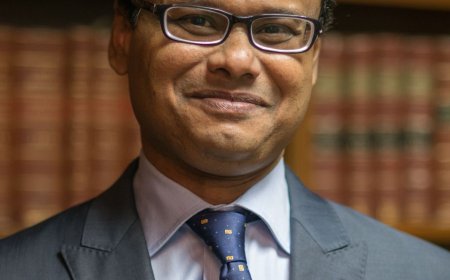
Dr. Zunaid Kazi is an AI visionary and entrepreneur who has spent over 30 years turning complex ideas into intelligent systems.