































































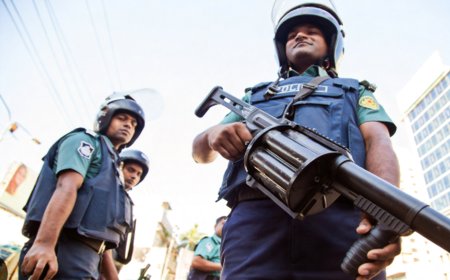
If unlawful killings by police are prosecuted while unlawful killings of police are ignored, the law becomes partisan. If mob killings are investigated while state killings are diluted, the law becomes cynical.
The purpose of this article is not to belittle BNP’s victory in the 2026 election. The purpose is to peel the layers of statistics to get to the ground truth and what we can infer from them with reasonable confidence.

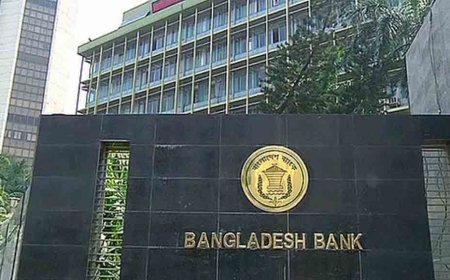
This government came to power with a democratic mandate. But it risks squandering it. City administrations must look neutral. International crimes prosecutions must feel independent. And the central bank must signal credibility beyond politics.
If the BNP's goal had been to signal to the Bangladeshi people that everything their adversaries say about them is true, that nothing has changed from the time they were last in office 20 years ago, that they remain exactly the same party of cronyism, corruption, and contempt for public opinion, they could not have done a better job.
The immediate challenge before Prime Minister Tarique Rahman is to slow down the gyration of the turning wheel and to set us on a straight path. To assess such possibilities we need to clearly understand the political lessons from the recent elections and to explore the pitfalls which lie ahead.

A two-thirds parliamentary majority means nothing if the streets of Dhaka turn against you, as Sheikh Hasina learned. If Tarique governs with the same composure and restraint he has shown since his return, there is reason for hope. If he does not, the verdict of the streets will be swift.

In the final analysis, a truly elected government is powerful not because it controls the state machinery, but because it commands the consent of the governed. That consent, however, is not permanent; it must be earned every day through performance, integrity, and humility.
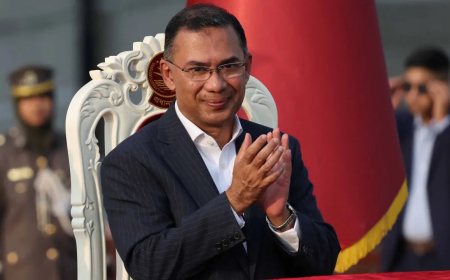
Your service to the nation can only continue if your well-being is safeguarded. Ultimately, the responsibility also rests with the state’s security apparatus, particularly those entrusted with your protection. When credible threats are perceived, it becomes their duty to act decisively.

Episode 9 of Counterpoint Generations reflects on the immediate post-election landscape, examining voter participation, the formation of the new cabinet, and the institutional challenges facing the incoming government as parliament prepares to begin its term.

For all its organizational discipline, ideological clarity, and grassroots networks, Jamaat-e-Islami has spent five decades confined to the margins of Bangladeshs political mainstream -- not because it lacked ambition, but because the stage was always owned by others.

It is time we moved from change is coming to change has happened. I strongly recommend to start with a small cabinet with a mix of veteran politicians, young politicians and technocrats. The scale can be extended after 6 months once the foundations are laid. A large cabinet will cause management nightmare and decisions will get obstructed.
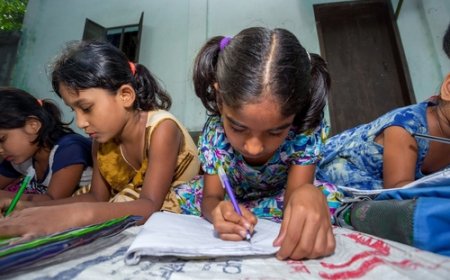
I write not to add another idea to the pile, but to argue for changing how we decide which ideas deserve the limelight. The answer lies in redesigning the system of decision-making itself -- clarifying who decides, how decisions are made, and how public money is allocated.

Voters opted for political change at a moment of acute economic strain and fraying public security. They desperately want stability and tangible economic recovery. That's what they voted for. That's what they now expect to receive in return.
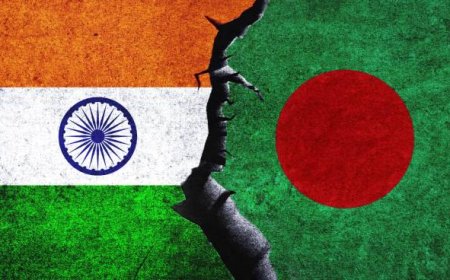
The fact that Jamaat has won so many seats for the first time ever -- most of them along Indian borders -- should be a cause for concern for India. While Bangladeshis may not have embraced Islamic fundamentalism this time, anti-Indian sentiment is clearly gaining ground.
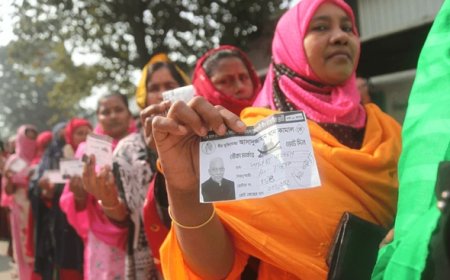
Bangladesh remains socially conservative in many ways, but voters demonstrated political moderation. Economic stability, welfare support, and social peace mattered more than ideological confrontation. The electorate did not reject religion. It rejected restriction. It did not embrace radical liberalism. It embraced balance.

BNP has to govern not merely as the winner of an election but as the steward of a divided nation. Jamaat-e-Islami has to act as a parliamentary opposition, not as a liberation war revision society. The international community has to support democratic consolidation, not strategic alignment.