














































In Kerman, the Past Stays Present
This piece marks the first in a multi-part series that seeks to place a human face on the Iranian people, moving beyond the abstractions of politics and stereotype.
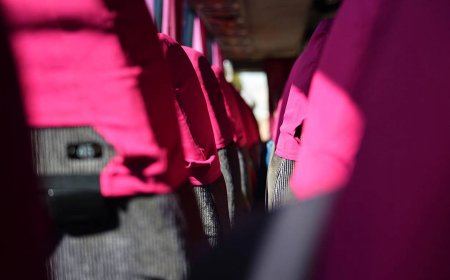
We arrive at Kerman as the day steps up to full swing. The city is quite nicely laid out and surprisingly modern. It looks quite a lot like Europe to me, France in particular, but maybe that’s because of all the Peugeot cars on the streets; old ones, from the 70’s and 80’s, adding to Iran’s somewhat timeless appeal.
The urban design is slightly plain but there are parks and green spaces and everything seems well tended and clean. It’s not a chaotic, messy place at all and has none of the squalor of South Asia. There are lots of women on the streets, young and old alike. In fact, it’s possible that there are more women out than men.
Many of them look like students, and carry books and bags. There are black chadors and full hooded hijabs, but these are outnumbered by blue jeans and manteaus, and entirely outdone by a strong showing of heavy makeup and puffed up hair, albeit under rather non-committal wraps.
They all smile easily, and don’t cut nearly as subdued and forlorn a figure as their Pakistani counterparts do.
We get out of the bus and walk for a bit before taking a taxi to Hotel Akhavan, which is recommended in the guidebook as a mid-range option. I watch a bit of Iranian T.V. There are a few channels, all in Farsi of course, and there seems to be plenty of revolutionary propaganda on display.
Numerous images of martyrs are shown. There are scenes of battle fields, flags, the impression of blood, pictures of victory and smiling faces all set to thumping marching band music in Persian style.
It’s tedious so I switch channels and find, bizarrely, an international Kabaddi tournament. There are teams from many countries and at the moment we’re watching Iran take on Sri Lanka. From the excited tones in the commentary I can tell that Iranians like a chance to demonstrate their physical prowess, and to take advantage of that universal connection between sports and nationalism. Don’t we all?
We make our way to the Bazaar-e-Buzorg area, Kerman’s equivalent of an old town. The Bazaar is sprawling, and as we approach it, we see a domed adobe structure with decorative patterns carved into its walls and an ingenious earthen air conditioning system called Badgirs.
These appear over the roofs of buildings and use the Coanda Effect to cool the interiors of houses - as they have done for thousands of years. It all begins to look quite old indeed and quite like the Persia of lore. The new city blends together with this, modern walls are built along 16th Century ones, and the two run together for a while until the contemporary yields entirely to the ancient and we enter a medieval city that the British knew as Carmania.
Sections of the Bazar-e-Buzorg are said to be from Sassanian times, but there’s no way of knowing which ones. The newer structures are the 15th century Safavid-era square; an open courtyard surrounded by shops, similar to its much larger cousin the Naksh-i-Jahan in Esfahan.
Kerman was conquered by the invading Arabs along with the rest of Persia in the 7th Century, but their grip over eastern Iran was tenuous and it managed to support a Zoroastrian presence for a few centuries longer.
Kerman’s relative independence also made it attractive to the outlawed Kharijites, the very first Muslim extremists and the people who popularised the practice of calling other Muslims kaffirs if they didn’t like their stripes. It was a Khariji assassin that killed Hazrat Ali Ibn Talib during what is known as the first Muslim civil war.
The Khariji, which means ‘the ones that left’, are a confusing lot. All my instincts tell me that I should despise them for their hard lines but there are a few things about their beliefs that I admire. For instance, they were convinced that political leadership should be based on merit and not blood ties, and that rulers could only be considered legitimate if they relied on a consultative process to govern justly. They also insisted that Islamic jurisprudence be based on the Quran alone and eschewed many subsidiary sources like the Hadith.
They were well ahead of their time with ideas like these, but none as exceedingly progressive as their belief that a woman could be an Imam and lead the faithful if she had the right qualifications. In the dichotomous world we live in they are a complete absurdity, yet there they were, representing that most unusual combination.
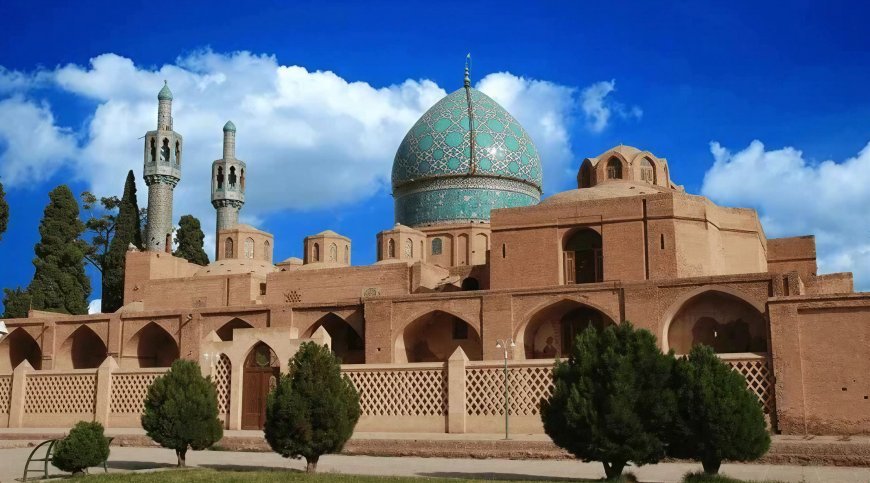
Kerman was the capital of Iran at different times in its history. The Muzzafarids, who defeated the Mongols in the 1300s and began the Persian Reconquista of Iran, had their capital here and built the splendid Jameh Mosque, which lies at one end of the Bazaar-e- Buzorg. Its enormous Iwan (portal) is a thing to behold; it rises some 20 meters into the sky and is one of Iran’s largest and most beautiful Iwans. This is also my first glimpse of Persia’s fabled mosaic tile work and its absolutely spectacular.
I stare unblinkingly at it, mesmerized by the geometrical patterns, the arabesque designs, the calligraphy, the floral and vegetal motifs, the honeycombed endings and the perfect balance of light and shade all done using just four colours, white, yellow, aquamarine and royal blue. It has three smaller Iwans, equally if not more beautiful and the four face each other across an open courtyard in an archetypal Persian mosque plan.
The eastern Iwan opens out to the street, while the other three are closed prayer halls. It’s hard to properly describe the intricacy and subtlety of the tile work, and how perfectly symmetrical everything is, but it gives me a wonderful feeling of harmony.
The only thing that jars is the enormous clock above eastern Iwan. It’s square and the neon sign of an ‘Allahu’ on top of it is unforgivably ugly.
In the passages of the covered bazaar, which has openings in its multi-domed roof, and flower-like panels around them -- their lit petals diffusing the light to illuminate a larger area -- shops sell virtually anything from clothes, to trinkets to music, to electronics, to spices, to nuts, olives, gold jewellery, copper pots and pans, food, fruit juice, fabrics, bedsheets, beds -- anything and everything.
It’s a massive ancient mall with beautifully decorated ceilings and carries on forever on either side, thronging with shoppers who have been using it for centuries. We stroll across the roundabout bustling with late afternoon shoppers, dating couples, taxis, buses, people returning from work, mothers with children, hawkers and vendors. It’s a lively scene of ordinary life in Iran set against dry mountains, ancient earthen bazaars, modern yellow public telephones, the brilliant blue dome of a martyr’s tomb and lots of young, attractive people dressed smartly in contemporary clothing, sporting hip hairdos and trendy shoes.
It’s certainly not the sort of Iran a popular narrative would have you imagine.
Iran comes to a halt between 12:30 pm and 3:00 pm when the heat is most intense and people go home to have lunch and take naps, siestas basically. This relaxed pace of life is extremely agreeable to me and I wander around the maze getting strong sensations of familiarity. It feels a little like New Market in Dhaka, but about a few hundred times bigger.
As I walk around, I get asked, ‘Koja has’ti?’ or, ‘Kodam Keshvar? Paw-kistan, Hendustan?’ frequently, until I’m able to work out that Koja must mean ‘where’, has’ti means ‘from’ and Kodam Keshvar means ‘which country’. Iranians are very curious and seem to love engaging you in that childish and playful manner in which they also speak.
There’s no reticence in their approach nor is there an imposing quality about it, not even when they are stopping you in your tracks to interrogate you! It’s all very light-hearted and jovial, like they’re perpetually amused. They also have impeccable manners.
I wander into Santoori, an 18th Century Hammam that’s been converted into a restaurant and perhaps the most beautiful teahouse in the world. It has domes with lightwells for roofs and ornately decorated walls, pillars and arches adorned with lamps, wall hangings, paintings and prints. The lighting is low and colourful and I’m transported to the sort of Persia that fables will help you conjure up in your imagination.
In the centre of the room hypnotic folk music is being played on a santoor accompanied by a duff. Tables, divans, cushion and carpets are spread around the stage in a circular fashion, conforming to the design of the building, which also has great acoustics and the music hovers like the clouds coming from the qalyans being smoked.
I find Yves here, he’s sitting with Mohin, a calligrapher, who greets me as I enter and we immediately start chatting. Mohsin is a self-declared ‘Majnoon’ and his wide, luminous eyes testify to it. We’re instantly plunged into a deeper dialogue and start talking about how to live blissfully in the knowledge that death in always only one breath, one heartbeat away.
For fun, he writes my name in Farsi and I write his in Bangla, and then he tells me that there must be absolutely no application of mind, no thinking in any truly honest attempt at being. I bring up names like Hafez and Khayyam and he dismisses them all as thinkers.
No thinking. There isn’t freedom in thinking, only more constraints. Constraints of language, of logic, of rhetoric, of conclusons, of alternatives, of reason, of information - all sorts of things that have fences and edges. It’s not the same as ‘being’, which has no edges, nothing finite, no endings. Not even death.
But I have to ask him about things like livelihoods. How does one just be, given that life requires bread?
Bread will run after me, not I after it. If you do, you will be like that dog that chases its own tail, going around in circles and never getting your bread. God has ordained your Rizk, so trust Him and live every moment free. Free of the thought of bread.
Seeing my brow furrow he realises that he’s oversimplified the matter and caveats it by saying,
It’s a training, Agha, its not that you just say ‘tomorrow I’ll be free.’ You train yourself for austerity, for simplicity for freedom from all things, including your mind. It’s not easy, but as you do it, your soul will become stronger and it will be easier.
Many hours pass in the absorbing atmosphere of Santoori. It’s almost impossible to leave. We have lunch here, and then go back to smoking, drinking tea and listening to music. I do plenty of people watching. Groups come and go, mainly young and mixed groups of boys and girls, perfectly comfortable to be hanging out together.
No one finds it strange and apart from the loosely fitted headscarf, there’s nothing ‘secluded’ about the way people carry themselves.
They seem comfortable in their bodies and no one seems to be interested in making them feel otherwise, unlike in Pakistan, where such a casual attitude to ‘free mixing’ would be given a pornographic spin. Jealous and lecherous eyes might have made the women recoil there, even in Dhaka often, but Iranians seem to forgo these baser indulgences and the absence of haughtiness also reveals the enduring urbanity of Persian civilization.
There’s a gentle, courteous nature about them, which is completely genuine.
Young Iranian men sometimes look a little effeminate too - they wear skintight clothing and are noticably concerned about their appearances, quite unlike the rugged and more overtly masculine Pakistanis.
Their manners and mannerisms are ‘Asiatic,’ for lack of a better word, reminiscent of an East Asian kind of humility, which is familiar to me as a Bangladeshi. They seem to like each other’s company very much and a natural, almost child-like joy radiates from them; their edges are very smooth. The women are pretty but have similar faces and dress very alike, blue jeans, black tops and single, solid coloured scarves. It seems to be a conscious sort of conformity.
Yves meets a man who owns a travel agency and talks with him about places to go while Mohsin goes and catches up with some people he knows. He seems to have gone off us slightly and when he sends a pot of tea over to us before he leaves, I find the Bangla calligraphy I had given him, torn to shreds and strategically placed under the teapot.
I’m hurt by this, and can’t seem to recall what I might have done to cause him the offence that he has gone to creative lengths to make apparent. I ask the travel agent about it, and he tells me not to worry since Majnoonis like Mohsin wear their hearts on their sleeves
It’s almost impossible not to upset them since they only understand absolute love. If you prefer to measure out your love, like most people do, they will find you miserly. Besides, Iranian manners are very nuanced; if you aren’t Iranian it's easy to accidentally offend someone. Don’t worry about it. In the evening, we go looking for an Internet café and take a walk through the newer part of the city. We still aren’t able to communicate properly, so find our way mostly by following a map and landmarks.
There are lots of people out, mostly young, walking around and shopping; the most popular places seem to be the shoe shops and the ice-cream joints. Persian house music blares out from many of the outlets along the road and greasy-haired boys hang about them in skin tight jeans. As we’re walking we see, through a door left ajar, a strange wrestling gym that has an octagonal floor with rings like a darts board.
Percussionists perched high above the floor in a decorated gallery are keeping a steady rhythm on massive traditional drums. The rhythm quickens and with it my pulse, and now a hypnotic chanting can also be heard.
A man entering the gym sees us standing at the doorway and invites us in. We sit in the stands and watch the wrestlers in embroidered Indonesian batik-like shorts go through a series of calisthenics and chant along with the drummers in a ritual that’s clearly more than just a physical exercise.
I recognize the scene from a clip I once saw on the news in Dhaka, when a tournament for the sport was being held there. We’re watching a session of Varzesh-e-Bastani winding down at a Zoorkhaneh. Zoor Khaneh, which translates into the more recognizable Zaur Khana in Urdu, means ‘the place of strength’ and is really just another way of saying it’s a fitness centre – but with a difference.
It is not just about fitness of the body, but also of the mind and spirit, not entirely unlike Yoga actually, or the East Asian martial arts, or even Brazil’s Capoeira.
There are contending theories about its origins, some say it began after the Arab invasion as a way for the Persians to defend themselves and their heritage, others believe that it began between the 1st and 4th Century AD and yet others take it to as far back as the beginning of Zoroastrian civilization.
But all agree that the practice was developed as a way of preserving the physical, philosophical and spiritual integrity of Persian life. The present form dates to the fourteenth century and to the poet-Pahlevan called Pouryay-e-Vali who revived it and established the structure it currently conforms to. The aim is to produce Bastanikars who embody martial skill as well as moral principles like kindness and goodness, entwined with Sufi ideals of Dervishism.
Like many things Persian, Varzesh-e-Bastani attempts to combine all of Iran’s inherited values, Islamic and pre-Islamic, to produce a code that brings out the best of a person’s character. The highest form of a Bastanikar is a Pehlevan, and similarities to the Hindustani word Pahlowan isn’t a coincidence.
It shares a number of features with the Indian Malla Juddha wrestling style, and the oblong aubergine-shaped wooden clubs used by Bastanikars are acknowledged to be of Indian origin. The names of various exercises are recognisable to speakers of Indic languages, names like Sheena exercises (push ups), Greiftan (a sort of clean and jerk), Narmesh, (‘soft’ exercises like stretching) and Charkhidan (whirling, a practice that also mimics the Dervish).
The culmination of a session is the Kusti, the wrestling match between pairs of Pahlevans.
It’s all very ‘deshi’, and in fact so kindred are India and Iran in this respect that in rural Punjab a champion Pahlwan will be conferred the title of Rustam-i-Punjab or Rustam-i-Hind, invoking that legendary Iranian strongman.
Sessions at the Zoorkhaneh included a dhikr-like chanting as well as recitations from Persian epics, encouraging athletes to aspire to both spiritual and heroic heights. It’s Sufism in jockstraps, and is also, as some have suggested, the reason why Iran has such a good wrestling record at the Olympic Games.
Zoorkhaneh is Iran’s national sport but it nearly disappeared altogether in the 1930s when people forsook it for being unfashionably un-modern.
Luckily it didn’t though, and is being practiced with gusto here in Kerman where the Bastanikars, some quite elderly, shake hands with us enthusiastically after they finish, their eyes and bodies bathed in a contented afterglow. Some also wear the Zoroastrian Faravahr symbol around their necks, along with their ‘Allahu’ pendants.
We carry on towards the Internet café and come across another gym. This one’s a kickboxing arena that has younger, leaner Rustams vigorously going through their paces. There are no numinous undertones here; just heavy metal music blaring and explosive, loud, punishing action.
We watch them for a while and then head to the Internet place around the corner, which is manned by Jawaad, a cherubic medical student who’s as pleasant as the colours of spring, and works at his brother’s Internet shop in the evenings. We pick Jawaad’s brain for a while about places to see in Kerman and then check our email.
After about 45 minutes he comes over to us and says, ‘ok, my shift is over, come with me if you please’. We go out and get some ice cream together, which Jawaad won’t let us pay for, and then he announces that he will give us a short tour of Kerman by night. It sends us through the motions of Iranian etiquette where offers aredeclined, insisted upon, declined again and insisted upon again, declined again, insisted upon again and finally accepted.
They call this gracious little dance ‘Tawrouf’ and everyone here knows the steps. It’s all convoluted and superfluous but extremely charming, and a permanent feature in virtually every interaction with Iranians.
Jawaad takes us first to the Kerman Library, a stately old building with beautiful arches that, oddly enough, began life as a textile factory, and then to the parks around the Yakhchal or icehouse. Yakhchals are a staggering feat of ancient engineering. So staggering in fact, that you can’t help wondering how far ahead of everyone else the Persians were in 400 B.C when they managed to keep large quantities of ice frozen in the middle of summer, in a blistering desert.
They could also make ice in winter by using qanats (another brilliant innovation) to channel groundwater into the yakhchal where it would freeze, shielded from the sun by enormous walls made out of a cement called sarooj, a composition of clay, egg white, lime, animal hair, ash and sand that is heat resistant and water proof. The structure is a massive inverted cone attached to walls, with landscaping and gardens around it. People have put out blankets and are sitting on the grass, smoking qalyan and enjoying the night sky.
Jawaad tells us a little about his life and dreams. He wants to be a General Practitioner, loves Iran but seems to have reservations about the government. He tells us how his father was killed in the Iran-Iraq war, after I complain, rather indelicately, about the stuff on TV, which, it turns out, is on there because September is the month of the ‘Holy Defence’.
He doesn’t seem offended though and tells me how Shias see martyrdom as a matter of immeasurable pride. I’m sure they do, but I don’t believe for a second that death isn’t as devastating for them as it is for everyone else.
We talk until it gets late and then start walking towards the main road. A convoy of cars passes us tooting their horns in unison and Jawaad tells us it’s a wedding party. Balloons and ribbons are tied to some of the cars, and girls hang out the window waving their arms in the air like orchestra conductors. We decide to take a taxi back to the guest house which Jawaad won’t let us pay for of course.
The music being played by the driver is lovely so I say so, and when he drops us off, he pops out the cassette tape and says: ‘Take it Agha, it’s yours.’ I decline, he offers again, I tell him it’s not tawrouf, I simply don’t own a cassette player. He accepts this reason and laments that if only he could take the player out of his car, he would give that to me too. What peculiar people.
Zeeshan Khan is the author of 'Right to Passage -- Travels Through India, Pakistan and Iran' and a barrister from Middle Temple.