


































































The Energy Crisis and the Imminent Rise of the Multipolar World Order
The final irony of our current moment is that while the world watches the dramatic surface conflicts and the crises that dominate headlines and social media feeds, the deeper system is already adjusting, already adapting, already moving towards a different configuration.

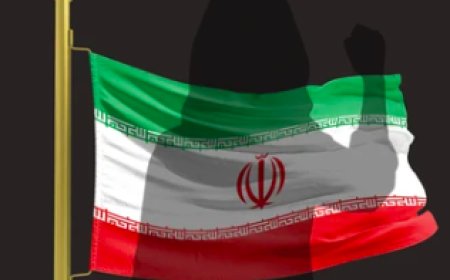
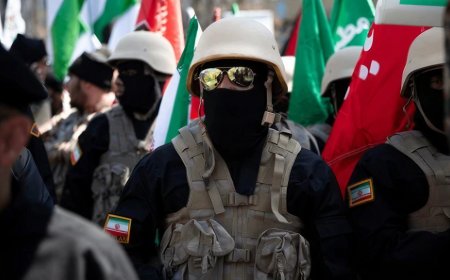
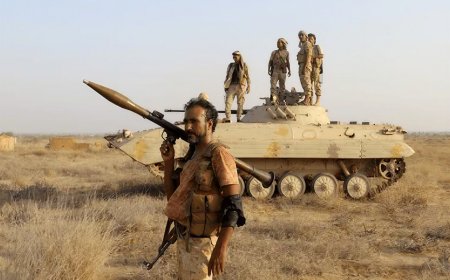
In the midst of the death and destruction of the unjust war imposed on Iran by Israel and America, a far more consequential, possibly irreversible restructuring of global power is being spontaneously constructed away from the popular gaze. This rapidly evolving new reality is the key component of a truly multi-polar world.
This article looks into the probable paradigm shift that is likely to determine who controls the energy powering the global economy for generations.
In today’s world, victory equals the control of energy flows. That control is shifting despite what mainstream Western analysts and their psychologically colonized agents and subjects refuse to see.
Energy has historically been one of the primary tools of geopolitical influence. This influence was relatively concentrated in Western hands through control of financial systems, shipping routes, pricing mechanisms, and institutional frameworks.
The math is simple enough:
1) By controlling energy supplies, Western powers have exerted lopsided influence on the economies that depend on them and
2) By Influencing those economies, the same Western powers shape the distribution of global power.
The war is diluting and dispersing that concentration of unipolar power and its nodes -- not evenly across all geographies, not completely onto new power centers, but noticeably and increasingly towards Asia.
We know that this particular war for profit and power, once again imposed by the GEOP-American nexus, has severely disrupted supply chains as energy prices continue to climb and subsequently, markets to react with volatility. The volatility generates pressure as governments rush to react and respond. This is not an unfamiliar pattern of cyclical disruption we have witnessed repeated since 1973.
What we are witnessing now is not a temporary adjustment, but a structural transformation of the familiar status quo. It is a foundational re-scripting of how energy flows and moves around the world and who controls that traffic.
The escalating instability across west Asia has triggered a global energy shock, but not because supply has collapsed. The shock comes from the collapse of certainty because in energy markets, uncertainty is far more destabilizing than actual scarcity.
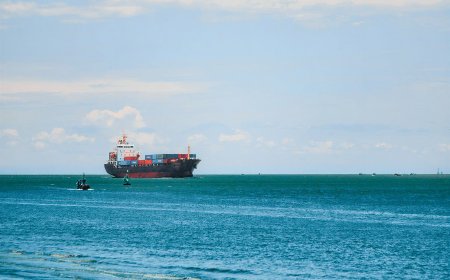
The supply of oil does not need to be depleted. Instead it needs to become unreliable in order to cause a cascading crisis in the supply chain. When war forces vulnerability and additional risk upon shipping routes, then insurance costs must spike as risk premiums rise across the board.
The cost of energy, as the direct defensive consequence of the Israeli-American war of aggression in the region, has ceased to be about production. Now it is entirely about trust in systems that were uncritically accepted to be the norm.
The Russia Factor
Bearing that in mind, Russia's emerging role becomes central to understanding the emerging multipolar global order. While western countries have attempted to reduce their reliance on Russian energy while sanctions alongside political pressure have been imposed, Russia has not disappeared from the global energy system.
It has adapted, redirected, overcame, and repositioned itself in ways that are generating lasting structural changes designed to question, subvert, and finally alter the status quo of unipolar power.
In theory, sanctions were designed to isolate Russian energy exports, reduce revenue to Moscow, and limit Russian geopolitical influence. In practice however, the sanctions have redrawn the global energy map.
Instead of flowing westward to Europe as they did for decades, Russian oil and gas have increasingly shifted eastward towards Asia. This transition has created a new kind of energy relationship built on mutual necessity rather than political or ideological alignment. The dynamics at work here are driven by the calculus of mutual interest.
Needing new markets for its energy exports, sanctioned Russia is providing discounted energy to Asian buyers not from generosity but from necessity. Asia needs reliable supply at manageable prices. Between these two needs, a mutually beneficial collusion is arranged to serve both parties regardless of what Western concerns.
For countries like China and India, this presents a significant opportunity to access energy at prices below global market rates, reduced exposure to volatile international markets, and greater control over industrial input costs.
For Russia, it guarantees operational continuity of revenue streams from its export infrastructure despite Western sanctions. It also maintains and enhances its geopolitical relevance through new partnership components.
This is arrangement is unlikely to reverse when current tensions ease. As the rungs of the escalation ladder continue to be climbed -- the arrangement becomes the “new normal” structural shift with newly established trade routes, and a newly developed pipeline infrastructure. Once long-term agreements are signed and implemented, these arrangements are likely to persist.
Energy systems are characterized by inertia that do not change overnight. But once they do shift, reversing direction becomes extraordinarily difficult. The gradual emergence of parallel energy markets operating according to different rules and different political logic, becomes the new practice.
The Western aligned energy system that has dominated global markets for decades is characterized by transparency, regulatory frameworks, pricing through established global benchmarks, transactions conducted through dollar denominated financial systems.
The emerging alternative network is more flexible, more political, and less visible to traditional market observers. In new system, pricing can be negotiated bilaterally between governments, and transactions can bypass traditional financial channels.
Because political alignment matters less than practical access to supply, Russia sits at the center of this emerging network -- not as a dominant hegemonic power in the traditional sense, but as a critical supplier within a fragmented system that is growing in significance with each passing month.
The implications of this bifurcation extend far beyond energy markets themselves.
The Asia Factor
Asia in particular, this distinction between shortage and uncertainty is absolutely critical to understand and consider. Asia is not merely a consumer of energy. It is structurally dependent on imported energy in ways that European and American economies are not.
Emerging economies like our own, in addition to the larger ones like China, India, Japan, South Korea, have built our entire economic growth models on reliable access to imported oil and gas.
The entirety of global industrial systems demand it as a driving force that literally fuels those engines. Our manufacturing architecture and output and transportation networks collapse without it. Simply put, our economic power cannot be sustained without reliable energy flows.
Unlike energy rich regions in West and Central Asia, our South and East Asian economies lack sufficient strategic reserves to hedge ourselves against escalating disruptions.
Driven by untested assumptions and confirmation bias, escalating disruption creates a clear and present vulnerability that remains invisible during stable periods -- until it becomes devastatingly clear during moments of crisis.
In other words, when energy flows are threatened, then growth itself is threatened. When growth is threatened, then political stability becomes uncertain. That is precisely why Asian response to current instability is not ideological, but a deeply practical matter informed by survival imperatives rather than strategic preferences.
The China Factor
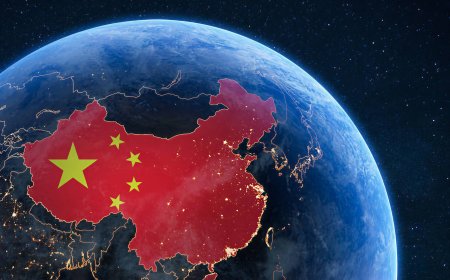
China's approach to this transformation is particularly instructive. Beijing is not reacting opportunistically but strategically responding to current circumstances. Its approach is designed to secure energy access, not merely for immediate needs, but for decades into the future.
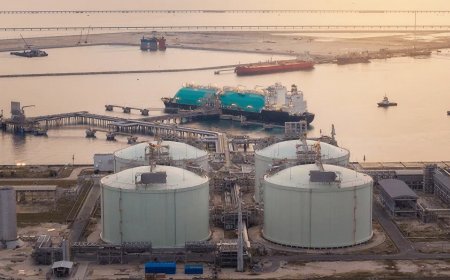
This means pursuing long-term supply contracts that lock in access regardless of market fluctuations. It means massive infrastructure investments in pipelines, port facilities, and transportation networks. It means financial arrangements specifically designed to reduce exposure to external control through dollar denominated systems.
By taking this comprehensive approach, China is lowering its structural vulnerability, not entirely eliminating its pre-war dependence. For an economy of its scale, that is impossible at this juncture. Hence China is reducing exposure significantly while engineering a new strategic option.
And in geopolitics, strategic option is a form of expanding power.
The India Factor
India operates according to a different, more flexible, and more opportunistic logic than China's approach. India has significantly expanded its imports of Russian oil not because of ideology alignment with Moscow but simply because of price. Discounted energy provides immediate economic benefits through lower input costs, reduced inflationary pressure and greater fiscal space for domestic priorities.
At the same time, India maintains its relations with Western countries, continuing trade, diplomatic engagement and strategic cooperation. India does not fully align with either emerging block. Instead, it balances between them, extracting advantage from both while avoiding overdependence on either.
This balancing act is not unique to India. It reflects a broader trend in international relations where countries increasingly prioritize national interest over ideological alignment. It’s an existential reality where survival must take precedence over strategic loyalty, and where flexibility becomes more valuable than consistent partnership.
The Paradigm Shift
The ongoing war is locating and uncovering a critical insight about the limits of Western policy tools in this new environment. Sanctions, while powerful in certain circumstances are not absolute instruments. Their effectiveness depends fundamentally on participation by key economic actors.
When large economies like China and India choose alternative pathways, the impact of sanctions becomes diluted. This does not mean sanctions fail entirely, but it does mean they reshape global behavior in ways that were not intended and are often counterproductive to Western interests.
Instead of isolating a targeted system, sanctions can accelerate the creation of alternatives. They can push countries towards building infrastructure and relationships that would not have developed as quickly otherwise.
This is precisely what we are witnessing in the energy sector. A gradual but accelerating paradigm shift proportional to the military steps in the escalation ladder is stewarding the world towards a more fragmented global system. A decentralized ecosystem where energy flows are diversified, dependencies are reduced, and where control is more democratic than at any point in recent decades.
As this parallel energy system evolves, something else begins to change that extends beyond petroleum markets. The role of financial infrastructure in enforcing Western power begins to weaken.
Carefully nurtured hard and soft control over financial systems, particularly dollar-based systems for international transactions, has reinforced Western influence globally for decades. Energy trade was conducted overwhelmingly in dollars. Transactions passed through established financial networks based in Western capitals. Access could be granted or restricted as a tool of policy.
But as alternative energy markets develop outside these traditional channels, this financial leverage begins to erode -- not by disappearing entirely, but weaken meaningfully. Because if energy can be traded outside traditional systems using alternative currencies and alternative clearing mechanisms, then the leverage associated with controlling those traditional systems declines proportionally. This is where the narrative fractals move beyond energy into the fundamental architecture of global power.
We are witnessing a paradigm shift in who controls the systems that matter for economics and politics influence in the 21st century, not merely a shift in where oil flows. Because energy in the modern world is not simply a commodity to be bought and sold. It is infrastructure. It determines how economies function, how supply chains operate, how political relationships are sustained over time.
When energy systems begin to change at a structural level, the consequences extend far beyond commodity markets. They reshape the underlying architecture of the global order itself. This is not a temporary adjustment driven by current crisis that will reverse when stability returns. This is the early stage of a systemic transition towards something different from what we have known.
The Rise of a Multi-Polar World
The most important aspect of this transformation may not be what is changing but how invisibly it is changing. There is no single moment anyone can point to and declare that this is when the global system shifted. There is no dramatic break, no clear demarcation between old and new.
There is only a series of small rational decisions by individual countries and companies. Each one logical. Each one justified by immediate circumstances. Each one almost invisible on its own. And yet together these decisions form a trajectory, a direction, a movement towards something genuinely new in global affairs. This is how international orders actually evolve. Not through sudden collapse, but through gradual reconfiguration.
Stability, even when imperfect, is rarely abandoned quickly. It is adjusted, modified, layered with alternatives until eventually those alternatives become significant enough to stand on their own. And when that happens, the system is no longer what it once was, even if its external appearance remains familiar.
So what does all this mean for the future of global power? The emergence of a multipolar energy system means no single center dominates completely. Multiple networks coexist and interact. Countries have options they did not possess before.
Power becomes distributed rather than concentrated. This does not eliminate competition. If anything, it intensifies competition because multiple overlapping systems create conflicting incentives and complex relationships.
In addition to more fair and democratic competition, it also creates resilience because dependence on single pathways is replaced by flexibility in an uncertain world. Such flexibility is a form of strength that was not available when the system was more rigid and more centralized.
The final irony of our current moment is that while the world watches the dramatic surface conflicts and the crises that dominate headlines and social media feeds, the deeper system is already adjusting, already adapting, already moving towards a different configuration.
By the time this transformation becomes fully visible to mainstream observers, it will no longer be a question of whether the global system has changed. It will only be a question of when exactly the change became irreversible.
Because in the end, this is not simply about oil and gas. It is about who will control the fundamental architecture of the global economy for generations to come. And that future is already being constructed quietly, methodically while most of the world looks elsewhere.
Sohel Nadeem Rahman is an Industrial Psychologist specializing in Neurocognitive Systems, Behavioral Finance, and Strategy.