









































![A Ledger of the Soul: Navigating the Allah-Bhagavant Nexus in a 19th-Century Puruṣākāra Jñāna Caupara [Gyan Chauper]](https://counterpointbd.com/uploads/images/202608/image_430x256_6a93baa3b09a7.jpg)

















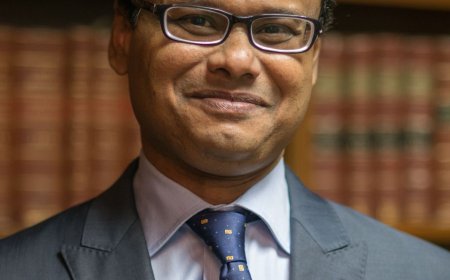


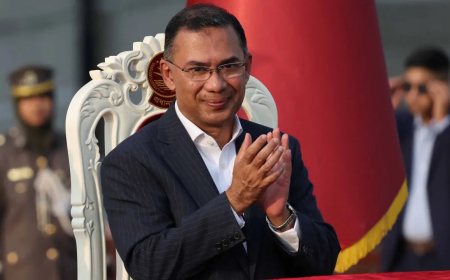
Tarique Rahman Must Lead on Accountability
Bangladesh needs leaders willing to say what I believe must be said: Crimes against humanity warrant organizational accountability, but only through a judicial process that respects rule of law. That is the stance Tarique must take.


My position is that the Awami League's organizational complicity in crimes against humanity during July-August 2024 warrants banning -- but through rigorous judicial process, not administrative decree.
Tarique Rahman's failure to articulate this position represents a missed opportunity to establish principled accountability while protecting democratic process. I argue he must take this stance, and I will explain why.[time]
The Case for Organizational Complicity
I want to emphasize the distinction between individual crimes and organizational complicity. The OHCHR investigation found "reasonable grounds to believe that the former government and its security and intelligence apparatus, together with violent elements associated with the Awami League, systematically engaged in serious human rights violations, including hundreds of extrajudicial killings." This was not rogue individuals acting outside organizational structure -- it was systematic violence coordinated through party apparatus.[ohchr]
The evidence I have reviewed suggests command responsibility and institutional facilitation: The government deployed security forces while "some ministers and members of the Awami League reportedly influenced its affiliated organizations, such as the Chhatra League, the student wing, the Jubo League, the youth wing, and the Swechasebak League, to take measures against the protesters." This represents organizational planning and execution of violence, not isolated criminal acts.[en.wikipedia]
Under international criminal law principles, organizational complicity exists when an entity facilitates crimes through its structure, resources, and command hierarchy. The threshold is knowledge and facilitation -- the organization need not share the specific genocidal intent of perpetrators, but must know crimes are occurring and provide material support that facilitates their commission.
Judicial Process vs. Administrative Fiat
I believe Bangladesh's amended International Crimes Tribunal Act provides the proper mechanism. Section 20B authorizes the tribunal to ban organizations "if it finds credible evidence that they committed, aided, incited, or otherwise facilitated war crimes." Critically, this is a judicial determination by a tribunal, not an executive decree.[dhakatribune]
The amendment was promulgated specifically to address organizational accountability: "This amendment empowers the prosecution of organizations implicated in crimes against humanity, where credible evidence of institutional complicity exists," explained Law Adviser Asif Nazrul. The draft allows bans "for a period not exceeding 10 years" if "any political organization is found to have committed, aided, abetted, or facilitated the commission" of crimes against humanity.
This framework respects due process: evidence must be presented, tested through adversarial proceedings, and evaluated by an independent tribunal. The organization can mount a defense. The burden of proof rests on the prosecution to demonstrate systematic complicity beyond isolated individual acts.
What Tarique Must Advocate
I contend that Tarique should publicly call for the International Crimes Tribunal to investigate organizational complicity and make a judicial determination on whether the Awami League as an institution facilitated crimes against humanity. This position would accomplish several objectives:
1. Establish Accountability Through Law
Rather than remaining silent while benefiting from administrative exclusion, I believe Tarique should demand that the Awami League face judicial accountability for organizational conduct. This transforms the current situation from political opportunism to principled justice.[time]
His statement should specify what I would articulate as: "I call on the International Crimes Tribunal to investigate whether the Awami League as an organization systematically facilitated crimes against humanity during July-August 2024. If the tribunal finds credible evidence of institutional complicity -- not merely individual crimes by members, but organizational direction and facilitation of violence -- then a judicial ban is appropriate under our amended ICT Act."
2. Distinguish Individual from Organizational Liability
I maintain that Tarique should clearly articulate that Sheikh Hasina and individual leaders must face prosecution for ordering violence, while the organizational ban question requires separate judicial determination of whether the party structure itself was weaponized to commit atrocities.[cjil.uchicago]
Command responsibility doctrine holds that leaders are criminally liable for crimes committed by subordinates when they knew or should have known about the crimes and failed to prevent or punish them. But organizational complicity goes further -- it examines whether the institution's resources, hierarchy, and structures were systematically deployed to facilitate crimes.
3. Set Democratic Precedent
By demanding judicial rather than administrative determination, I believe Rahman establishes that party bans require the highest evidentiary standards and independent judicial review. This protects the BNP from future weaponization of party bans while ensuring accountability for genuine organizational complicity.
His position should emphasize what I would say: "No political party should be banned by executive decree. But when a tribunal, through rigorous judicial process, finds that an organization systematically facilitated crimes against humanity, democratic societies have the right -- indeed the obligation -- to prohibit that criminal organization from seeking power."
4. International Legal Legitimacy
This approach aligns with international norms on organizational accountability that I've studied. The corporate complicity jurisprudence from international tribunals establishes that entities can be held accountable when they knowingly facilitate crimes through material support, even without sharing perpetrators' specific intent.
The standard is whether the organization knew or reasonably should have known that its actions facilitated crimes, and whether it provided substantial assistance that had a direct and substantial effect on commission of those crimes. The evidence I've reviewed -- Awami League ministers directing student wings to attack protesters, security forces receiving orders from party leadership, and systematic coordination of violence across the country -- suggests this threshold may be met.international-review.
The Moral Imperative: Blood Demands Accountability
The July-August massacre resulted in over 1,400 deaths, 13,500 injuries, mass sexual violence, enforced disappearances, and torture. The UN investigation found this violence was "systematic" -- not spontaneous, not isolated, but organized and coordinated.
When Tarique says "we have a very, very strong responsibility to those people who lost their lives," I argue he must follow through with concrete accountability mechanisms.ohchr+2
Remaining silent on whether the organization that orchestrated this violence should face judicial consequences is, in my view, moral evasion. The martyrs of July didn't die simply to replace one dynasty with another -- they died demanding systemic accountability and institutional transformation.[time]
Addressing the Democratic Participation Argument
Some argue that banning any party violates democratic principles of political pluralism. But I reject this framing -- it conflates legitimate political parties with criminal organizations. Democracy does not require protecting organizations that systematically employ violence as political strategy.
Post-war Germany banned the Nazi Party not as political persecution but as recognition that certain organizations forfeit the right to participate in democratic politics through systematic criminality. The Allied Control Council understood that an organization built on genocide cannot transform into a legitimate democratic actor simply by rebranding.[en.wikipedia]
Similarly, if the ICT determines through rigorous judicial process that the Awami League as an organization -- not merely individual members -- systematically facilitated crimes against humanity, then banning that criminal enterprise does not violate democratic principles. It protects democracy from organizations that weaponize democratic institutions to commit atrocities.
Distinction from Current Administrative Ban
The critical difference from the current situation, as I see it, is process. The interim government banned the Awami League through administrative action, citing "security and sovereignty" concerns without judicial determination of organizational complicity. This is executive overreach that sets dangerous precedent.[en.prothomalo]
I believe Rahman should criticize this approach while calling for proper judicial process. His position should be what I would advocate: "The administrative ban was premature and procedurally flawed. However, the substantive question of organizational complicity must be addressed through the International Crimes Tribunal. If the tribunal finds evidence warranting a ban, that judicial determination carries legitimacy that administrative decrees lack."
This threading of the needle -- opposing executive bans while supporting judicial accountability -- demonstrates principled commitment to both rule of law and justice for victims.
Political Cost and Moral Necessity
I acknowledge this position carries political risk for Tarique and BNP. A proper ICT investigation might take months, potentially delaying the February 12 election. The Awami League would mount vigorous legal defense, prolonging uncertainty. Some BNP supporters who want swift retribution might view the judicial process as a weakness.
But I maintain that principled leadership requires accepting political costs when democratic integrity demands it. Tarique's current evasiveness -- abstract opposition to party bans while benefiting from the specific ban that advantages him -- reads as opportunism to me. A clear call for judicial determination would establish him as a statesman willing to prioritize institutional legitimacy over electoral convenience.[time]
Moreover, I believe a judicial ban carries far greater domestic and international legitimacy than administrative exclusion. If the ICT, through transparent proceedings with due process protections, determines that the Awami League systematically facilitated crimes against humanity, that finding withstands challenges that the current administrative ban cannot.[dhakatribune]
Principled Accountability Over Political Convenience
My argument is that Tarique Rahman must advocate for banning the Awami League -- but exclusively through the International Crimes Tribunal's judicial process, not administrative fiat. His statement should demand what I consider essential:
1. Full ICT investigation of whether the Awami League as an organization systematically facilitated crimes against humanity
2. Rigorous evidentiary standards and due process protections during tribunal proceedings
3. Judicial determination based on evidence of institutional complicity, not political convenience
4. If the tribunal finds organizational complicity, a time-limited ban appropriate to the crimes
This position honors the blood of July's martyrs while establishing precedents that protect Bangladesh's democratic future. It distinguishes principled accountability from political persecution, judicial determination from executive overreach, and organizational complicity from individual liability.ohchr+1
Rahman's current silence represents what I view as intellectual cowardice masquerading as pragmatism. Bangladesh needs leaders willing to say what I believe must be said: Crimes against humanity warrant organizational accountability, but only through a judicial process that respects rule of law. That is the stance he must take.
Tahmid Islam is a political analyst and host of the socio-political podcast Bangladesh and Beyond.