















































Why the Nation Owes Tarique
That Bangladesh did not turn into a hardcore right-wing country is because of Tarique. The country continues to progress as a centrist, tolerant nation. For this, we should forever remain indebted to him.
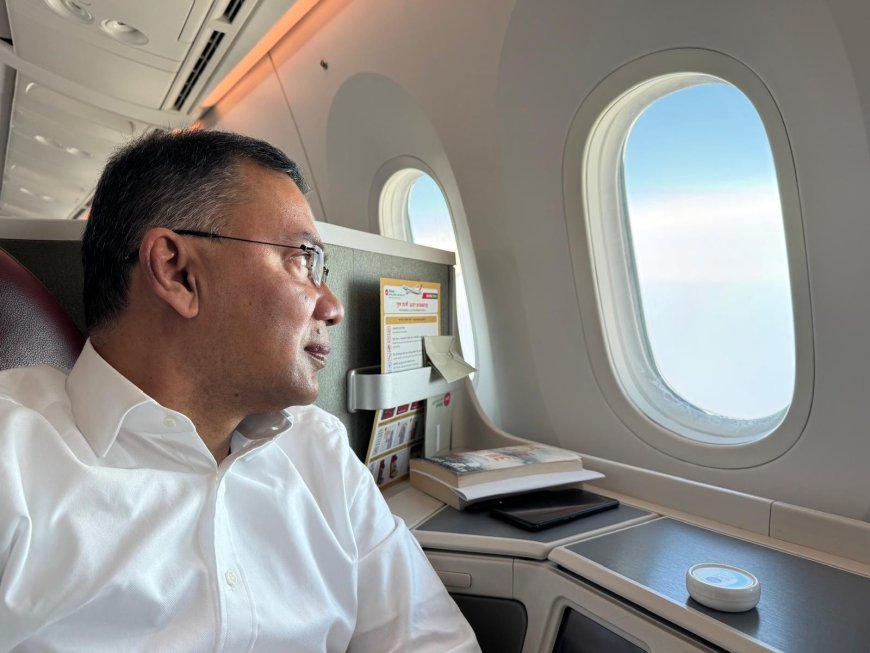
Seventeen years have passed, and a lot of water has flowed in the Buriganga and Jamuna rivers.
The day Tarique Rahman left the country under those circumstances, except for a few hardcore BNP workers, there was hardly anyone in the country who sympathized with him.
Speaking in his favor required immense courage and strong conviction.
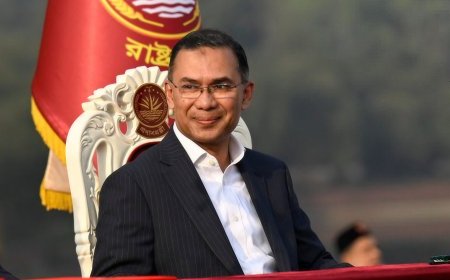
Today, after 17 years, Tarique Rahman is returning to the country -- and the situation has completely reversed. Now, criticizing him requires courage.
That said, we cannot stop criticism altogether. Criticism must continue -- pointing out mistakes point by point, showing them clearly without holding back. There are many criticisms that can be leveled at Tarique Rahman, and he needs to hear them.
But today, let the criticism rest. Today is not the day for criticism. That time will come. Today is the day to say all the positive things. Today is the day to highlight some of his vital contributions. Let me point them out one by one:
In the years following 1/11, there was a hysteria of so-called "reform" in the country. To implement "minus-two" and depoliticize the nation, some newspapers and TV channels collaborated with the military government.
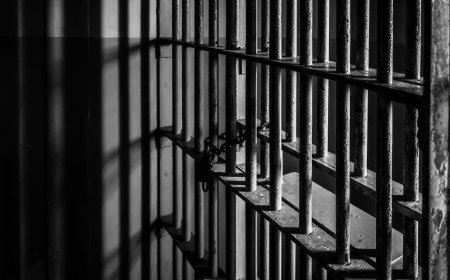
Politicians were kept in jail and tortured. The DGFI's Joint Interrogation Cell would detain politicians and businessmen, torture them, and record videos. But no one uttered a word about this injustice. The media more or less fully supported the military government.
The public was unaware of these atrocities. Those who knew didn't dare speak out -- no one had the courage to talk about it back then.
How did the public first learn about the unspeakable torture inflicted on politicians? Through Tarique Rahman.
The day he was first brought to court, ignoring the menacing guards, Tarique Rahman described in detail the torture he had endured.
The next day, newspapers, citing Tarique Rahman, published for the first time the details of the Joint Interrogation Task Force's torture.
Before him, many other victims had appeared in court, but due to fear of the military government, no one had dared speak about it.
That day, the courage Tarique Rahman showed in the courthouse led to the end of the Joint Task Force's torture campaign. It was the beginning of the end of the the 1/11 military government.
Tarique Rahman has many traits that can be discussed and criticized, but his courage has always been underappreciated -- even now. I believe he inherited much of his father's bravery.
On September 11, 2008, when Tarique left the country, his life was in danger. He was hung from the ceiling and beaten mercilessly for weeks. The torture broke his spine's vertebrae. He couldn't move. He was bedridden and in excruciating pain.
If he had stayed in custody like this for a few more days, he could have died or become permanently paralyzed.
In this condition, arrangements were made to take him to the UK. Political asylum, visa -- everything was arranged. A man who couldn't sit up was transported in a prison van to the airport.
But before boarding the plane, DGFI officials created another problem. Tarique Rahman had to sign a pledge that he would resign from politics and retire. Tarique refused to bend. If they wouldn't let him go, fine -- he'd rather die than sign.
Eventually, the DGFI backed down. Tarique Rahman himself crossed out the title "Pledge" and wrote "Statement" with his own hand.
Why he hasn't returned earlier, I don't know. But I don't believe it's due to lack of courage.
Politics and public sentiment are like a rollercoaster ride; they don't move on a flat surface -- they are constantly going up and down.
There had been a massive swing in the country's dominant public mood in the last months of Hasina's rule.
Now, right-wing forces are seemingly in the ascendant. Jamaat's victories in universities, the sky-high popularity of the recently killed Sharif Osman Hadi -- all point in this direction.
Traditionally, the center-right BNP could have reflexively shifted further right, adopting more right-wing, conservative rhetoric to exploit the public mood and secure a massive electoral victory.
Powerful public opinion makers like Pinaki and Konok wanted exactly that. But BNP saved the country from becoming like BJP-ruled India, Zia-ul-Haq's Pakistan, or Trump-ruled America.
And the biggest credit for this goes to Tarique Rahman.
Mirza Fakhrul Islam Alamgir was certainly there -- but the decision-maker who took the full risk and responsibility for this radical ideological shift was Tarique Rahman.
Under Tarique Rahman's leadership, BNP made a huge sacrifice for the country.
Having lived abroad for 30 years, I've seen that Bengali narrow-mindedness typically doesn't change much even in Western liberal societies.
But after 18 years in London -- the cradle of Western liberal democracy -- Tarique Rahman seems to have fully absorbed the progressive culture of London.
That Bangladesh did not turn into a hardcore right-wing country is because of BNP and Tarique Rahman.
Tarique Rahman took a huge personal risk.
The country continued to progress as a centrist, tolerant nation.
For this, Bangladesh and its history will forever remain indebted to Tarique Rahman.
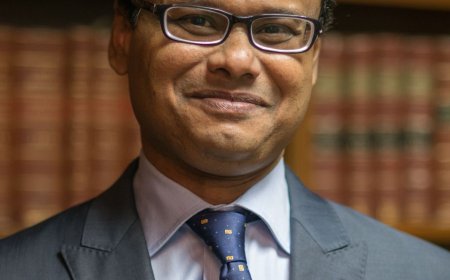
Dr Rumi Ahmed Khan is a Professor at the South Asia Institute, University of Texas, Austin; the Convenor of the Bangladesh Research Analysis and Information Network; and a pioneer of democracy and human rights activism among the expatriate Bangladeshi communities. This essay will be published in a book on diaspora and citizens’ activism during the July Uprising.