



























![A Ledger of the Soul: Navigating the Allah-Bhagavant Nexus in a 19th-Century Puruṣākāra Jñāna Caupara [Gyan Chauper]](https://counterpointbd.com/uploads/images/202608/image_430x256_6a93baa3b09a7.jpg)




















The Changing of the Guard
After liberation in 1971, the decisions made in those first years shaped the country for decades. The people who rise to state power or prominence in the next few years will define Bangladesh's trajectory for a generation.

I had a childhood game I used to play when driving by the Prime Minister's Office in Tejgaon. I would crane my neck and quickly scan the PMO gate. If army soldiers stood at attention before the PMO, then I knew the Prime Minister was in office then. It was a small ritual of observation, but one rooted in centuries of tradition.
The origins of this practice trace back through Pakistan's President's Bodyguard to the colonial-era Governor General's Bodyguard, and ultimately to the guards at Buckingham Palace who have protected British sovereigns since 1660.
On the subject of British monarchs, Barbara Tuchman, writing about the funeral of King Edward VII in The Guns of August, observed: "On history's clock it was sunset, and the sun of the old world was setting in a dying blaze of splendor never to be seen again." She was describing the last great gathering of European royalty before World War I shattered their world.
Many crowned heads of state who attended that funeral would soon lose their thrones, and sometimes their lives, as the age of European imperialism collapsed. Funerals have always been natural inflection points in national history.
They mark the end of an era and force a country to reckon with what comes next. The old guard passes. With the first election in 40 years that will not see the participation of either Khaleda Zia or Sheikh Hasina, the new one steps forward.
Khaleda Zia's funeral became an event of geo-strategic importance with the attendance of Indian External Affairs Minister S. Jaishankar and Pakistan’s National Assembly Speaker Sardar Ayaz Sadiq.
Indian officials had stopped meeting with BNP leaders during the later years of the Hasina regime, a calculated signal of Delhi's support for the Hasina dictatorship. The funeral provided a convenient opportunity to reset.
Jaishankar met with Tarique Rahman and delivered a personal letter from Prime Minister Narendra Modi. The handshake at a funeral allowed both parties to resume their relationship without the awkwardness of explaining why relations had been frozen for so long.
This moment echoed the Vajpayee government's approach when Khaleda Zia first took power in 2001. India's National Security Adviser Brajesh Mishra rushed to Dhaka to congratulate her and famously told journalists that India "would not put all its eggs in one basket." It was a calculated signal: Delhi would engage with whoever held power in Dhaka, regardless of party affiliation.
For various reasons, that BNP government never capitalized on the opening. Had it done so, the next two decades might have looked very different. The relationship between India and Bangladesh now faces fresh challenges.
The BCCI's recent decision to remove Bangladeshi cricketer Mustafizur Rahman from the Kolkata Knight Riders IPL squad triggered a diplomatic crisis. Bangladesh banned IPL broadcasts and will (in my opinion, unwisely) boycott the T20 World Cup, scheduled in India. The cricket row exposed deeper tensions in the bilateral relationship.
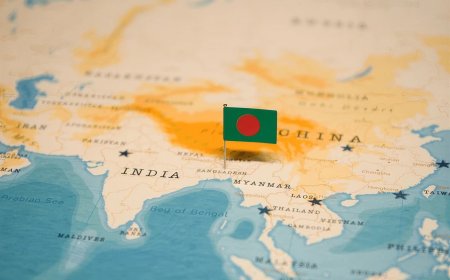
A stable relationship with India is critical to Bangladesh's future. Geography is destiny, and Bangladesh shares a 4,096-kilometer border with India.
The Modi-Trump relationship has fractured in recent months, creating a small opening for Dhaka to maneuver. But that opening could close at any moment.
The present geo-political moment favors great powers and regional hegemons asserting dominance in their spheres of influence. The United States in its hemisphere. China in East Asia. Russia in its near abroad.
Bangladesh's next elected government must chart a course that avoids two extremes. It cannot adopt blind anti-Indian jingoism and nor can it return to the fawning servitude that characterized the Hasina era.
Bangladesh needs a relationship with India built on pragmatism and mutual interests. One that protects Bangladeshi sovereignty while acknowledging Indian security concerns. One that pursues economic cooperation without surrendering policy autonomy. The challenge is finding that balance.
The absence of envoys from China and Saudi Arabia was jarring. So was the failure to secure an official statement from the White House. This doesn't bode well for the BNP given the magnitude of challenges it will face if it wins the February elections and forms the next government.
Bangladesh needs strong diplomatic relationships with major powers. Khaleda Zia’s funeral was a low-stakes opportunity to rebuild those connections.
The limited turnout suggests the BNP needs to rethink both its party foreign policy apparatus and the structure of its foreign policy team if it forms the next government. More fundamentally, it needs to explore ways to create durable ties that will remain whether the party is in or out of power.
On January 22, the Washington Post dropped a bombshell based on a leaked audio recording from an off the record meeting between US diplomats and Bangladeshi journalists, where a US diplomat strategized about how to co-exist with a potential Jamaat government.
Six weeks after that leaked meeting, two American officials, former Under Secretary of State Albert T. Gombis and former Ambassador-at-Large Morse H. Tan, arrived in Dhaka and met various Bangladeshi civil society figures and officials, including Chief Adviser Muhammad Yunus.
One suspects this visit was no coincidence. Gombis oversaw the Bureau of Democracy, Human Rights, and Labor, the State Department's conscience on religious freedom issues.
Tan spent his career prosecuting war crimes and defending persecuted religious minorities. These weren't generic former diplomats making courtesy calls, but rather, two officials whose entire professional identities revolve around protecting vulnerable religious minority communities.
As such, one cannot help but admire the nimble footwork that resulted in this visit with such alacrity as the contents of the leaked audio became more widely circulated.
Bangladesh stands at a crossroads reminiscent of 1972 or 1991. After liberation in 1971, the decisions made in those first years shaped the country for decades. The same happened after parliamentary democracy was introduced in 1991. The people who rise to state power or prominence in the next few years will define Bangladesh's trajectory for a generation.
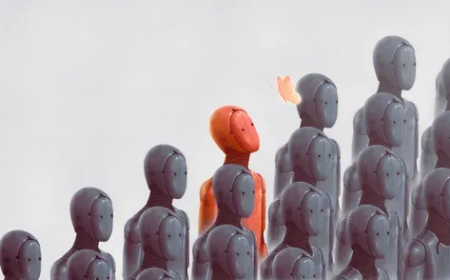
They inherit a country battered by institutional failures, polarized by old grievances, and navigating a treacherous geopolitical landscape. The guard is changing. The question is whether the new guard understands the weight of the moment.
Bangladesh's next leaders owe the nation more than vacuous posturing or ideological rigidity. They owe competence, vision, and the courage to make hard choices. The transition is almost over. The work awaits.
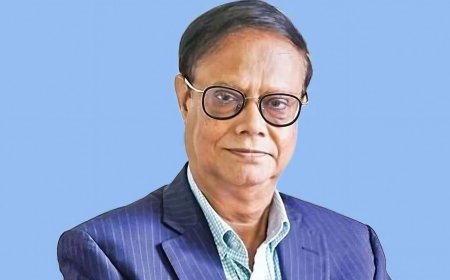
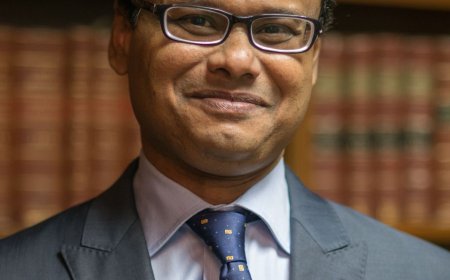
Ehteshamul Haque is a lawyer who focuses on technology transactions. He teaches corporate law at American University.