



























































Moderation is the Virtue
In a riverine land such as ours, mainstream might be a more evocative term -- BNP represents the confluence of various cultural, historical, social milieus that continue to flow through us. As Mrs Zia has memorably put it, BNP situates itself to the left of the right, and to the right of the left.

Online hullaballoos are arguably a feature if not the essence of the social media eco-system, with one’s "success" measured in terms of how much sound and fury their posts generate.
However, often the nature of the controversy and the characteristics of the most furious responders reveal insights about the initial poster and the underlying socio-cultural-political dynamics. This has been the case with a couple of recent posts by Tarique Rahman.
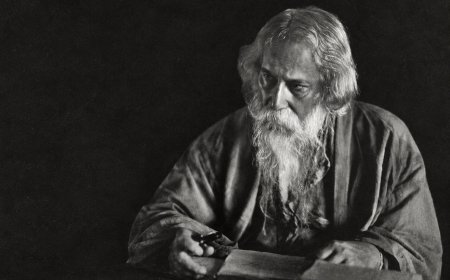
Back in 2023, the then Acting Chairperson of BNP observed Rabindranath Tagore’s birthday with a post in Facebook. Pandemonium ensued from those to whom the poet is "an Indian/Hindu enemy of the people of Bangladesh’s Muslim majority."
By showing respect to him, Mr Rahman (and BNP) was apparently bowing to Indian hegemony and betraying the party’s core values -- so claimed the post’s online detractors.
Fast forward a few months, when the BNP leader observed the passing of Delwar Hossain Sayedee with another post. This time it was cacophony from a different corner of the Bangla cyberspace --according to these netizens, by mourning the Islamic preacher, BNP was showing its true face, its eternal pact with "war criminals, fundamentalists, militants" and so forth.
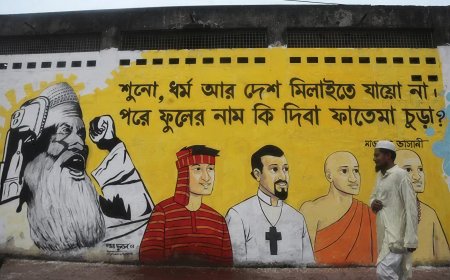
Of course, the two episodes reveal what different fringes and extremes of our socio-cultural tapestry fear and detest the most. More importantly, these posts also reveal that Mr Rahman, and the party he leads, has been representing the vast majority of Bangladeshis who are comfortable with both Rabindra shangeet and waz mehfils.
These posts were, of course, neither isolated nor novel. The BNP has always been a broad, open tent on cultural matters. Tagore’s birth anniversary, for example, had been observed with similar words by senior figures of the first BNP government.
The Ekushey Book Fair received the state patronage through the Bangla Academy from 1978. Bangla rock and pop music and the Bishwa Ijtema of the Tabligh Jamaat both flourished under successive BNP governments.
Aguner Parashmani, Humayun Ahmed’s ground-breaking movie set in the wartime Dhaka under Pakistani occupation, was produced with the full state patronage of the BNP government in the 1990s.
The BNP leadership has over the decades have been criticized for not engaging politically on the socio-cultural fronts. Such criticisms miss the essence of what BNP’s politics aspires to be. Perhaps a couple of examples of what BNP is not would help illustrate what it is or wants to be.
To court the literary and cultural elites of the country, a former military dictator pretended to be a poet. The same general also had a knack of showing up at mosques on Fridays, claiming he had dreamt the previous night that he would be among their ranks, even though the security would have swept the area for days.
No BNP leader has had to fake it like that. From Dr B Chowdhury to Mirza Fakhrul Islam Alamgir, BNP’s secretaries general have been great patrons of Bangla "high culture." At the same time, many BNP leaders are personally very religious. However, BNP leaders typically don’t wear their cultural and religious practices on their sleeves.
The party’s founder observed that "Bangladeshi nationalism" has "absorption power and elbow room."
These absorption power and elbow room, Ziaur Rahman hoped, would gradually remove the socio-cultural identity issues from the centre of politics. The late president wanted to base his politics on democracy and development, not cultural icons and symbols. His successors had tried to adhere to the same path.
Because they eschew identity politics and focus on democracy and development, BNP leaders can be authentic in their personal selves, allowing the voters to judge them on what they do, not who they might be under the costume.
This is why Mrs Khaleda Zia, whether in power or in opposition, always carried herself as in exquisite chiffon and sunglasses, never needing to don a hijab or carry a tasweeh.
Over the decades, the offline predecessors of the social media warriors who screamed about those 2023 posts moaned whatever socio-cultural trend they disliked. But BNP’s embrace of the socio-cultural milieu of mainstream Bangladesh has always been appreciated by the people the party has represented.
And that is precisely why in the post Monsoon Revolution Bangladesh, BNP can embrace both the "Matiur-voters" for whom the Bengali identity is paramount as well as the Muslim first and foremost "Mahmudur-voters." [1]
In Bangladeshi political discourse, the term often used to describe BNP’s approach to the identity politics is "centrism." However, that term is perhaps too vague and not altogether accurate.
In a riverine land such as ours, mainstream might be a more evocative term -- BNP represents the confluence of various cultural, historical, social milieus that continue to flow through us. As Mrs Zia has memorably put it, BNP situates itself to the left of the right, and to the right of the left -- imagine right and left as the two banks of a river.
The riverine imagery is also apt in the sense that the party has been dynamic, changing its policies and programs to reflect the sign of the time.
Consider, for example, the economy. Back in the 1970s, as the country reeled from natural disasters, a devastating war, and a famine, ensuring food security was perhaps the most ardent task faced by the first BNP government.
Back in office in the early 1990s, the party found itself implementing neo-liberal economic policies such as introducing a new tax and liberalising various markets.
Chafing from infrastructure and energy bottlenecks, the third BNP government chose the crony capitalism of suspect power purchase agreements and bank licences to plunder and launder.
And now, seeking office again, the party is pitching itself as capable stewards with concrete ideas for the marginalized parts of the society.
In the West, the classic definition of "right" is the party that wants to make the economic pie bigger, while "left" is concerned more with how the pie is shared.
The right believes in "trickle down," the left wants redistribution.
The former emphasises the rising tide lifting all, the latter asks us to remember the "left behinds."
In that light, is BNP leftist or rightist?
Or perhaps, BNP’s evocation of shamajik nyaybichar -- echoing both the Mujibnagar Declaration as well the eternal concept of insaaf -- is best understood as a party that is committed to economic development through pragmatic policies.
A dynamic party, not doctrinaire, one that does not denounce Professor Yunus as usurious vampire to fake its radicalism, one that has consistently advanced gender equality without wading into culture wars.
Or consider foreign policy. Ziaur Rahman navigated the Cold War. Khaleda Zia experienced the American hegemony and the war on terror. Tarique Rahman is confronted with a multi-polar world with fraying rules.
The striking thing about BNP’s foreign policy approach is not the stated aim of maintaining sovereignty of a small country in a dangerous world and adjusting to the needs of the time. The striking thing is in fact how the party has traditionally approached foreign policy -- through boring meetings and communiques, and not by shouting about anti-imperialism, jihad, or territorial conquest.
Or consider BNP’s quiet dynamism when it comes to democracy -- restoring multi-party system, moving from presidential to parliamentary democracy, codifying the caretaker system, and now embracing the July Charter: The party has not shouted revolution or notun bondobosto, but has quietly adjusted its stance to address issues as they arose.
There is yet another way the imagery of a river in our downstream delta can help us understand the BNP.
Our rivers are not streams in a hilly terrain, gushing forward at breakneck speed, pushing aside anything in its past, careening towards a cliff. In the delta, the water ways, in the form of the vast majestic Padma-Meghna-Jamuna with their tides and many tributaries flow at a more moderate pace.
Similarly, BNP is not a party of radicalism and disruption, but of moderation and stability. In the context of our new political fault-lines, it’s a party that is firmly on the side of Ahsan Mansur and not Farhad Mazhar.
Going into the final stretch of the campaign, BNP is honing in on the peace and stability. That is just as well, because for BNP, moderation is the virtue.
Jyoti Rahman is the Executive Editor of Counterpoint. This is the second part of the Countdown to Election series.