
































































A Budget for Bangladesh in Fragile Times
The BNP government has now inherited the institutional resistance it generated and will need to find a way to manouvre around it. Bangladesh will find it extremely hard to finance its development ambitions unless it significantly improves its tax collection systems and addresses the political economy of doing so.

When the BNP swept the February 2026 general election, it did so on a promise of total transformation of the country -- from the way Bangladesh is governed to how its economy is managed.
The BNP's central economic pledge is to double the country’s GDP from roughly $460 billion to $1 trillion by 2034. In order to achieve this, Bangladesh would require to clock a growth rate of close to 9 percent a year -- by no means an easy ask even in favourable circumstances.
Bangladesh’s GDP grew only by 3.5% in FY25, well below the country's historical average. The domestic challenges facing the new government have been compounded by an extremely challenging external environment. The ongoing conflict in the Middle East has introduced a set of economic pressures that Bangladesh is poorly positioned to absorb.
About 65% of Bangladesh's electricity is generated from imported fuels, oil, coal, and LNG, making the energy sector highly sensitive to global price volatility. According to recently-published projections by the South Asian Network on Economic Modelling (SANEM), a scenario in which global crude oil prices rise by around 40% and LNG prices by 50% could reduce Bangladesh's real GDP by approximately 1.2%, along with retail inflation rising by around 4% amidst a decline in real wages.
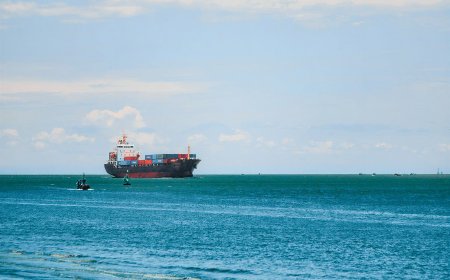
Remittances will also be affected by a prolonged regional conflict. The garment sector is additionally exposed through disruption to global shipping. Bangladesh is also set to graduate from Least Developed Country (LDC) status in November 2026, which will see the gradual withdrawal of preferential trade arrangements -- something the country does not look prepared for at this time.
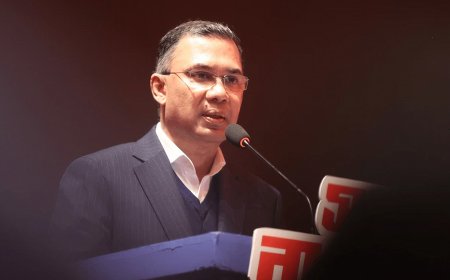
As the FY26-27 budget approaches, Finance Minister Amir Khosru has already indicated that the upcoming budget will focus on stability and inclusive growth while addressing inherited economic challenges. Upon assuming office, the BNP government stated its intention to stabilise the macro-economy, restore institutional strength, and lay the groundwork for attracting sustained investment from both domestic and foreign investors.
A major challenge that the government has to address, and perhaps the most consequential one of all, is the state of the banking sector. NPLs have been rising for over a decade. By September 2025, the share of defaulted loans had risen to nearly 36%, the highest in the world. Much of this increase reflected previously concealed loans finally being reported accurately.
The white paper on the economy commissioned by the Yunus-led Interim Government found that an average of $16 billion was illicitly siphoned out of Bangladesh every year during Sheikh Hasina's tenure, more than double the combined value of net foreign aid and FDI inflows.
Over the last 18 months, the interim government made early progress on banking reform, tightening loan classification timelines and restructuring boards of troubled banks. Sustaining this momentum will require Bangladesh Bank to function with greater integrity, capacity and institutional independence.
While this is not an issue that can be fully resolved through a budget, one would hope to see the new government prioritize the central bank's operational autonomy, particularly its ability to supervise lenders and classify loans without political interference. An empowered Bangladesh Bank is central to restoring confidence in the financial system and reviving private investment.
A related issue the government must address is the quality of revenue mobilization and of development spending. With a tax-to-GDP ratio of only 6.8% in FY2025, Bangladesh continues to lag well behind its regional peers -- India for instance stands at around 11% and Vietnam at 17%.
Only 3% of citizens currently file income tax returns, and the urban informal sector, a significant part of the economy, has remained largely outside the tax net for decades. Total revenue collected grew by only 5.3% during July-January of FY2024-25, falling far short of what is needed to meet annual targets.
The interim government attempted a structural reform of the NBR, splitting it into a Revenue Policy Division and a Revenue Management Division through an ordinance. While the proposal was technically sound, the reform was introduced without adequate consultation, prompting NBR officials to go on strike and demand its repeal.
The BNP government has now inherited the institutional resistance it generated and will need to find a way to manouvre around it. Bangladesh will find it extremely hard to finance its development ambitions unless it significantly improves its tax collection systems and addresses the political economy of doing so, in a system where powerful business lobbies benefit from current arrangements, should not be underestimated.
Quality of spending -- development expenditure -- remains another area requiring reform. The Annual Development Program (ADP) for FY2025-26 was revised down from TK230,000 crore to TK200,000 crore, reflecting both fiscal pressures and implementation shortfalls. The pattern of revising the ADP downward mid-year and then underspending even against the revised figure has recurred consistently. In some ways, it is by compressing the ADP that the government has managed to keep fiscal deficit within acceptable limits, rather than through genuine revenue effort.
There is also the question of the reliability of official statistics. The IG white paper was clear that the former government had systematically overstated growth and manipulated economic data. The World Bank and ADB have projected FY2026 growth at around 4%, against the government's own target of 5.5%. Restoring credibility to official statistics is a pre-condition for sound policymaking, and one would hope that the new government treats statistical integrity as a governance priority, not merely a technical one.
In summary, as one looks ahead to this year's budget, the challenges facing the government are considerable and interconnected -- and requiring urgent reforms that need to be sequenced carefully and persisted with. Bangladesh’s ambitions of a trillion-dollar economy will require a degree of political commitment to good governance and steadfast economic reform that is greater than what either challenge has historically received.
Suvojit Chattopadhyay is with Adam Smith International, and is a governance and public policy professional with over two decades of experience across South Asia and East Africa.