






































































The Delusion of History for the Children of the West
The endurance to hardship, spirit and skills to fight when forced, maturity to restrain, legacy of history to forge their own system of governance rather than blindly copy from the West, are the forte of these old but rich civilizations. They enrich their people not only with their own histories but also with the warring histories of the West, so that they can choose the good from the bad.

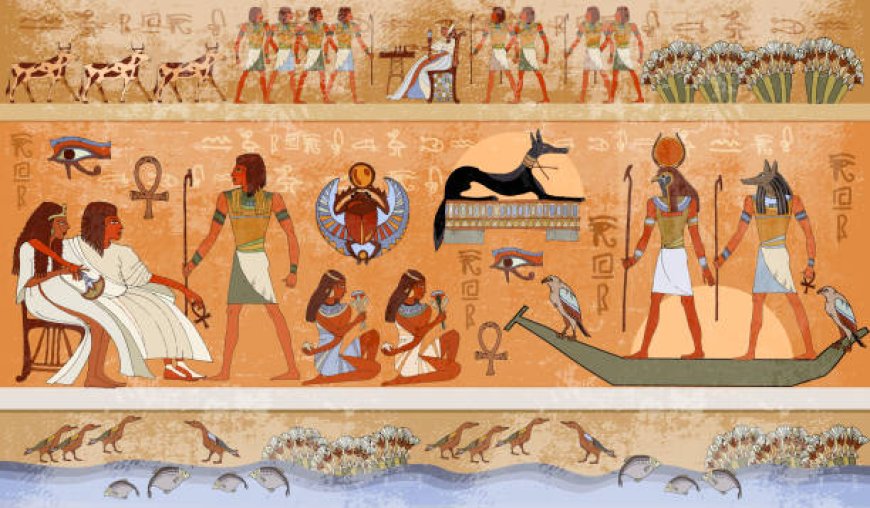
Will Durant mentioned in The Story of Philosophy, that history is the art of choosing out of many lies the one that most resembles the truth.
It is difficult to determine whether the history of the world is more based on truth or lies, more on peace or conflict, and more on progress through modernization or regression. The great philosopher Voltaire said that history is nothing more than a picture of crimes and misfortune; reading the history of the Yorkists, Lancastrians, and many others is much like reading the history of highway robbers.
The study of history in the West when examined is found narrowly focused on Western Europe and the United States. The history includes the Romans in Britain, the Norman Conquest, Henry III, and the Tudors, the American War of Independence, Victorian industrialization, the Battle of the Somme, and the rise and fall of Nazism in Germany, which shape the historical understanding of Western teenagers in schools and colleges.
Anthropologist Eric Wolf narrates the history of civilization, encompassing ancient Greece, which begat Rome; Rome, which begat Christian Europe; Christian Europe, which begat the Renaissance; the Renaissance, which led to the Enlightenment; the Enlightenment, which sparked political democracy; and the industrial revolution. Industry, combined with democracy, in turn led to the United States, which embodies the rights to life, liberty, and the pursuit of happiness.
These serve as the mantras of the West's political, cultural, and moral triumphs -- a flawed perspective that dismisses alternative viewpoints. What the West omitted from the study of history are records of robbery, treachery, murder, and national suicide, forged through their infighting and fighting through imperial projects. They overlooked that history should focus on movements, forces, and masses; not just kings, the human race; not just nations, the progression of the human mind; not just wars.
A thousand-year history of Europe and a few hundred years of American history dominate children's elementary education and are glorified as key contributors to civilization’s progress. The history presented is not representative of the vast civilizations of Mesopotamia, Persia, Assyria, Babylonia, the Indus Valley, or the ancient Chinese civilization of over five thousand years.
The Renaissance, the Enlightenment, the Industrial Revolution, democracy, and the West's triumph over the rest are the only historical narratives children of the West are encouraged to adopt. Modern civilization grew from this record of the West is the popular narrative to push and pursue for the rest of the world to emulate and glorify.
History in the West is, therefore, nothing but a pack of tricks played on the dead to spark a fierce battle for power and for control of the past to suit the wishes of the future. And in the end, with those previews of history, any venture of the West is justified in the minds of the students of the history of the West.
The depth of the histories of other civilizations and their effects on shaping their respective cultures, modernization, human rights, and moral governance are completely ignored in Western history syllabi. The Chinese civilization recorded the history of its 23 dynasties, ending with 22, while the last one, the Qing Dynasty, which spanned from 1644 to 1911, did not rush to reach a conclusion, justifying the prudence of Chinese historians and the depth of history.
The Chinese inventions of gunpowder, the compass, and the printing machine were not kept exclusive to China but were shared with other civilizations, enabling them to progress together. The Chinese glorify themselves for their rich history, but don’t push on the rest of the world as the only signs of their civilizational might being right.
The great metropolises of Harappa and Mohenjo-Daro were established in the Indus Valley over 5000 years ago as wonders of the ancient world. The populations of this civilization had streets that connected to a sophisticated sewage system that wouldn’t be rivalled in Europe for thousands of years. Outside invaders repeatedly intruded on the Indus Valley civilization to extract wealth and knowledge, from gems to mathematics to astronomy, from their rich land and cultural heritage.
The Persians lived off themselves for thousands of years and spurred the Chinese to sell their luxury goods through the Silk Road. The Persians gave the world good taste in everything, from the fruit served at dinner to the stunning miniature portraits to the paper on which scholars write. The marks of the Darius, Cyrus the Great, Parthian, Sassanian, Safavid, Afsharid, and Qajar dynasties of Persian history have shaped today's Iran, which sustained a lone revolutionary government amid the physical hindrance posed by Western powers for more than fifty years.
The endurance to hardship, spirit and skills to fight when forced, maturity to restrain, legacy of history to forge their own system of governance rather than blindly copy from the West, are the forte of these old but rich civilizations. They enrich their people not only with their own histories but also with the warring histories of the West, so that they can choose the good from the bad.
The study of the history of the children of the West and the rest of the world must include history beyond the Romans, the Greeks, the Normans, Henry, the Renaissance, the Enlightenment, the American Revolution, and the Industrial Revolution, so that they can identify rights rather than boast of might. The fact that all the great religions burst into life within these civilizations that gave rise to Judaism, Christianity, Islam, Buddhism, and Hinduism lies outside the history of the West, providing guidance to rest of the world for living a moral and ethical life.
The study of history must mention that for centuries before the modern era, the intellectual centers of excellence of the world, the Oxfords, Cambridges, the Harvards, and the Yales were not located in the West but in Baghdad, Balkh, Bukhara, Samarkand, and Takhsila of Bihar. The devastating war in Iran for weeks and the global attempt to close it for the common good should remind the students of the history of the West that physical might doesn’t win a war against a civilizational nation rich in history and heritage of culture.
The study of rich, large-canvas history from the Persians, Chinese, Mesopotamia, and Indus Valley civilization could evoke the moral psychology of the people of the West to do away with war, live in peace, progress further together, and make the planet safe for the children of the future.
Brigadier General AF Jaglul Ahmed (Retd) is a regular contributor to national dailies. He can be reached at [email protected].