




































































An enforced disappearance can be prosecuted under the ICT Act only when it forms part of a widespread or systematic attack directed against a civilian population. Standalone cases of enforced disappearance committed by state officials fall outside this framework.

Yes, economists may envy physicists and political scientists may envy economists. But, here, in a place as fluid and unpredictable as Bangladesh, there are moments when even the most elegant model benefits from being challenged by a journalist's imperfect, half-cooked antithesis.
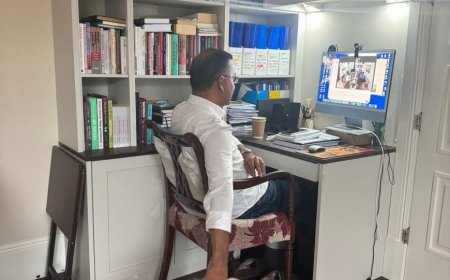
In one simple way, Tarique Rahman stands to be more successful than either of his parents. Neither of them could successfully, peacefully, finish their term and hand over power to the next government. Ziaur Rahman was gunned down by rogue officers. Khaleda Zia faced an implacable foe who made good on her promise of not allowing the former prime minister a moment of peace.

All things considered, Mr. Rahman receives a “meets expectations” grade. The BNP government, as a team, receives a “needs improvement” grade, but not a failing one.

That is how democratic erosion can happen, not only through overt repression, but through laws that centralize power while preserving the appearance of legality.
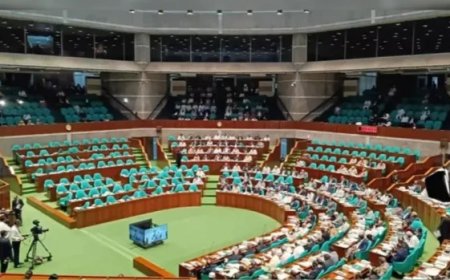
In functional democracies, losers succeed by diagnosing the situation precisely and organizing methodically. The goal is to defend the uncertainty of the next election. If an opposition misdiagnoses a policy defeat as a regime collapse, it loses the ability to speak to a combination of public segments.

The party's political and economic actions are not converging or complementing each other, and instead the party is letting its economic vision lead the governing process without considering the political consequences. This is a risky bet and may not work.

The BNP government has now inherited the institutional resistance it generated and will need to find a way to manouvre around it. Bangladesh will find it extremely hard to finance its development ambitions unless it significantly improves its tax collection systems and addresses the political economy of doing so.

Bangladesh’s government faces a delicate balancing act. Every move in the international arena will be closely scrutinized for signs that the government is “tilting” towards one geopolitical axis or another.

BNP must ensure that the caretaker government system, now revived, is built to last, not as a tool of partisan advantage but as the institutional guarantee that, now and going forward, no government, can close the door on the voters' right to choose their leaders.

What Jamaat's 68 seats do is give the party institutional leverage to shape the answers to questions that matter far more than whether Bangladesh wakes up tomorrow under a theocracy.
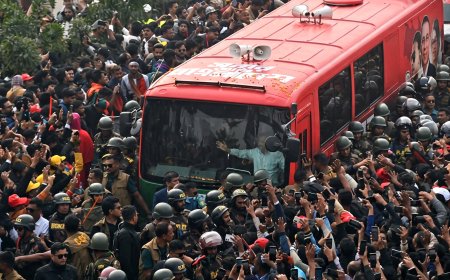
A government that reduces VIP protocol but continues to evict vendors without rehabilitation has merely exchanged one performance for another.

Ensuring accountability is the key, and a state cannot design a system, cannot create an institutional design where the only protection is a party's or an individual’s goodwill. A state’s guiding operational principle cannot be to be ruled by the angels.

That the stability and sustainability of Bangladesh’s renewed tryst with democracy will depend on how maturely Tarique Rahman deals with the thorny issue of Sheikh Hasina and the Awami League.

As the BNP is now the ruling party in Bangladesh, there is a growing expectation that it will implement the commitments it made in its platform. While women represent 50.83% of Bangladesh's population, their rights continue to be threatened by violence, limited political participation, and social restrictions.
There is no better way for the ruling party to signal that it understands this new reality and that recognizes that it is truly a new day in Bangladesh, and that they too have changed their spots accordingly, than for them to quietly walk back the appointment.