



































![A Ledger of the Soul: Navigating the Allah-Bhagavant Nexus in a 19th-Century Puruṣākāra Jñāna Caupara [Gyan Chauper]](https://counterpointbd.com/uploads/images/202608/image_430x256_6a93baa3b09a7.jpg)




















How Do We Keep Commodity Prices Low? Auctions are the Answer.
The logical way forward is for the government to ensure that all large producers of perishable agricultural commodities set up daily auctions. Then government agencies can ensure fair prices by auditing the records of the auctions.


My company, Kazi Farms, is one of the largest producers of broiler chickens in Bangladesh. Our Gazipur office sells about 15,000 live broiler chickens per day.
A major difficulty we had when we started selling chickens was how to price them. The market price of chicken changes every day due to variation in supply and demand.
The supply of chickens from thousands of farmers is variable, as weather and disease outbreaks affect poultry farm productivity.
Consumer demand for chickens is also variable due to seasonal variation in prices of substitute foods like fish and eggs. Live broiler chickens are perishable, so we have to revise prices daily to ensure that the quantity transported to market gets sold.
We were able to solve the problem of daily price discovery by holding online auctions of our broiler chicken. An auction is a mechanism for price bids from competing buyers to decide a price.
In our broiler auction, our selling price is never the highest price bid we receive. We have to sell many chickens to may buyers daily. This means we always have to choose one of the lower bids, to ensure that all the customers who buy on that day will be satisfied.
On the average morning in February 2026, our Gazipur sales office manager might be informed by our farms that 15,000 broiler chickens are ready to be sold.
The sales office manager then requests our different broiler wholesale customers around Gazipur to submit their bids of price and quantity through our smartphone auction app.
Kazi Farms produces only about 4% of the broiler chicken in the country. So each of our wholesale customers also buys from other chicken farmers.
Since the market is competitive, wholesalers bidding in our auction will naturally submit bids which are comparable to the prices at which they are able to buy from other chicken farmers. Since each wholesaler has different alternative chicken sources, each of them generally bids a different price. Our average customer requires about 1,250 broiler chickens per day, which means to sell all our 15,000 broiler chicken we usually need about 12 buyers.
We rank all the customers from highest to lowest bid price, and add up all the quantities until our full quantity of broiler chicken is sold. This means on average we sell all the chicken at the price offered by the 12th highest bidder.
When a single car or a painting is auctioned, only one buyer is required, and the auctioned item is sold to the highest bidder. However, in our case we are selling thousands of chickens, and each customer wants only about 1/12th of our total quantity. So we need to decide on a price which is acceptable to the 12 bidders required to buy the entire quantity.
The workable auction price is the 12th highest bid. It’s impractical to sell at a higher price to one customer and at a lower price to another customer on the same day. All customers will meet at our sales office to collect their chickens, and a customer asked to pay a higher price will obviously be unhappy.
To ensure that all customers collecting broiler chicken on the same day at the sales office are happy, they all pay the same price. So the auction process ensures this by fixing the price at the 12th highest bid, at which the total quantity of broiler chicken gets sold. This auction process results in satisfied customers who come back and bid the following day.
In fact all of Kazi Farms’ egg and chicken sales are a type of a Vickrey-Clarke-Groves auction, named after Nobel prize-winning economist William Vickrey.
These auctions are characterized by multiple bids being accepted from multiple buyers until the quantity to be sold is exhausted (https://en.wikipedia.org/wiki/Vickrey-Clarke-Groves_auction).
In economic terms, auctions are widely recognized as among the fairest and most transparent way to sell goods of variable price.
Unfortunately, until now various Bangladeshi government officials have demonstrated a profound lack of understanding of auctions.
In 2023, Kazi Farms was fined Tk. 5 crore by the Competition Commission for allegedly fixing high prices of broiler chicken (although the fine was later stayed by the courts).
Firstly, it is absurd to accuse a company of manipulating the price if it controls only 4% of the supply.
Secondly, it is difficult to see how Kazi Farms prices were unfairly high when we consistently sell at the 12th highest price bid.
Thirdly, at the time, members of the Competition Commission remarked to the press that our auction process was “strange” as our selling price was not the highest price bid.
They implied that our auction process was manipulated. But the property of all Vickrey-like auctions is that the highest bid doesn’t set the price.
This basic lack of understanding of auctions points to an urgent need to ensure that all members of regulatory bodies like the Competition Commission have a degree in Economics; otherwise it will be difficult to ensure that they have the theoretical background required to make proper judgments.
In the interest of justice, the cases unfairly filed by the Competition Commission against the poultry industry should be dismissed.
Bangladesh is a country where millions of people still suffer from poverty, and so food prices are a political issue. It’s imperative that the government ensures that agricultural commodities are sold at fair prices, but until now there has been no uniform understanding of a mechanism which can ensure fair pricing.
Based on the above analysis, the logical way forward is for the government to ensure that all large producers of perishable agricultural commodities set up daily auctions. Then government agencies can ensure fair prices by auditing the records of the auctions.
Of course, this will require training for government personnel in the economic theories of different kinds of auctions.
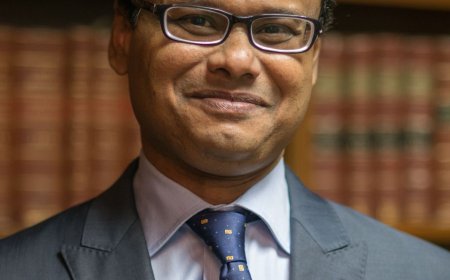
Zeeshan Hasan is a director of Kazi Farms Group.