






























![A Ledger of the Soul: Navigating the Allah-Bhagavant Nexus in a 19th-Century Puruṣākāra Jñāna Caupara [Gyan Chauper]](https://counterpointbd.com/uploads/images/202608/image_430x256_6a93baa3b09a7.jpg)


















10 Questions for Bobby Hajjaj
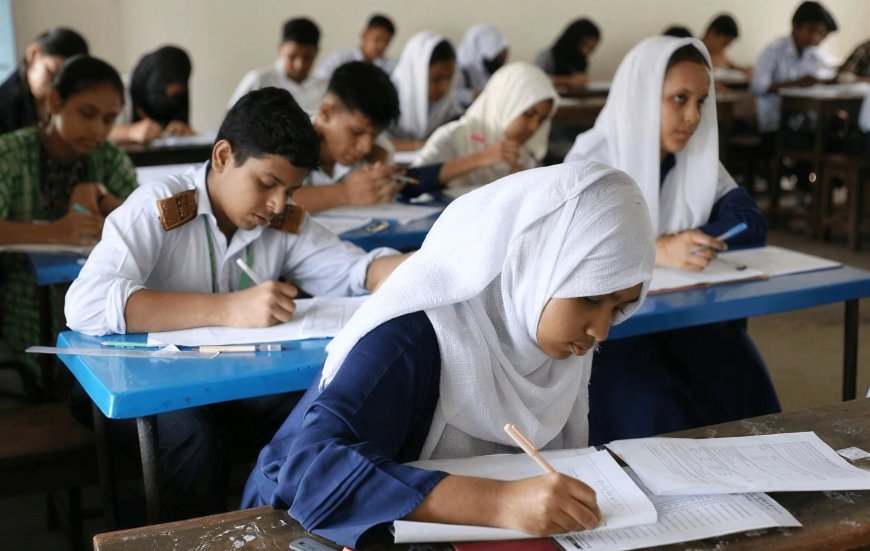
The education system of Bangladesh is not merely a ministry. It is one of the largest social systems in the world. Running such a system is not simply a policy challenge. It is an administrative challenge of almost unimaginable scale.
Dear Mr. Hajjaj:
First of all, allow me to congratulate you on your appointment as the State Minister for Primary and Mass Education.
It is a difficult office to hold at any time. In Bangladesh today, it may well be one of the most demanding responsibilities in government.
I sincerely wish you success in that role, because the success of the education ministry ultimately determines the future of millions of children.
I was also delighted to see that you chose to communicate with the public through an op-ed.
Ministers writing directly to citizens is not common in Bangladesh, and your effort deserves recognition. Public conversation about education policy is essential, especially in a country where parents, teachers, and students often feel that decisions affecting them are made behind closed doors.
But if you will permit me, I would like to begin with a small caution.
According to SimilarWeb data, the website of The Daily Star receives roughly five million readers per month. That translates to an average of about 189,000 readers per day. In a country of roughly 170 million people, this means that perhaps one-tenth of one percent of the population might have read your article.
I write this response in a publiction which perhaps has an even lower readership.
I say this not to diminish your sincere effort to speak to the public. On the contrary, I mention it only to highlight the scale of the problem you are now responsible for solving.
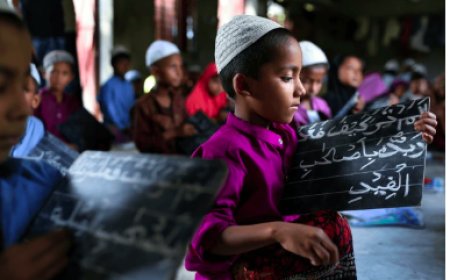
The education system of Bangladesh is not merely a ministry. It is one of the largest social systems in the world. Roughly 32 million school-going children pass through our classrooms every year. They do so on a narrow and densely populated strip of land where infrastructure is limited, public resources are constrained, and institutional coordination has historically been weak.
Running such a system is not simply a policy challenge. It is an administrative challenge of almost unimaginable scale. In that sense, you occupy an office with almost no historical template.
Your article spoke eloquently about responsibility and rebuilding institutions. But what it did not yet provide was something equally important: a vision, a plan, or even the beginnings of a tactical roadmap.
What, precisely, does success in primary education look like for you? Is it improved literacy rates? Better numeracy outcomes? Reduced dropout rates? Greater reading comprehension by grade three? Stronger teacher retention? Improved classroom engagement?
You have yet to specify.
If we do not define success, we cannot measure progress. And if progress cannot be measured, failure becomes almost impossible to diagnose.
Bangladesh’s education system has often suffered from precisely this problem: Ambitious reforms announced without clear benchmarks for evaluation.
For that reason, allow me to suggest a few questions that might serve as a rubric by which parents, teachers, and policymakers can evaluate your tenure.
First, what measurable improvement do you hope to see in foundational literacy and numeracy during your time in office?
Second, what is your target for reducing the primary school dropout rate? At present, roughly 16.25% of students leave primary school before completion. Do you aim to bring that number down to 12%? 10%? 5%? Over what timeline? And if that number does not improve, what happens then? Has the government discussed what constitutes unacceptable failure in this area?
Third, how will you measure whether classroom learning has improved rather than merely classroom attendance? Bangladesh has been successful in expanding enrollment, but enrollment and learning are not the same thing.
Fourth, how will you ensure that Bangladesh has a single coherent vision of education from pre-kindergarten through grade 12? Your ministry oversees education from pre-K through grade five.
Grades six through 12 fall under the Ministry of Education, currently headed by Minister A. N. M. Ehsanul Hoque Milan. In practice this means two ministries, two secretaries of equal rank, and two administrative chains governing one educational pipeline.
When I served on the Curriculum-2022 development effort, I witnessed firsthand how this fragmentation can undermine coherence. I was responsible for designing the Digital Technology curriculum across grade levels. But due to bureaucratic conflict between the two ministries, the pre-K through grade five portion of that curriculum had to be discarded.
The final design effectively assumed that students would arrive in grade six having learned nothing about digital technology. It was not a pedagogical decision. It was an administrative compromise. So how will you and the Education Minister ensure that these two halves of the system operate with a coherent strategy rather than as parallel bureaucracies?
Fifth, what is your position regarding the major policy frameworks shaping Bangladesh’s education system today? The National Education Policy 2010, the Curriculum Reform of 2022, and the emerging Consultation Committee Report on Secondary Education 2026 all point the system in somewhat different directions. Teachers and parents deserve clarity about which principles will guide the system going forward.
Sixth, what is your plan for improving the data infrastructure that supports education policy? BANBEIS remains the primary national dataset on education, yet its data publication format is not machine-readable or API-friendly. This makes it unnecessarily difficult for independent researchers and policy analysts to verify or build upon the data using modern analytical tools.
At the same time, newer platforms such as the Noipunno server are collecting additional operational data. Has the government clarified how these datasets relate to each other and which one policymakers should treat as authoritative?
Seventh, will your ministry make pre-shipment and post-landing inspection reports for primary textbooks publicly available? Parents and teachers have a right to know the quality evaluation of the materials used in classrooms.
Eighth, will you introduce a teacher-first administrative culture? For years we have heard stories of teachers being intimidated or dismissed by education officers during training sessions or policy discussions. Whether every story is accurate is less important than the perception that teachers often feel unheard.
Yet teachers are the only actors in the system who remain for 30 or 40 years. Ministers change. Secretaries rotate. Policies evolve. Teachers remain. Will your ministry revise its rules of business to ensure that administrative structures exist to support teachers rather than intimidate them?
Ninth, will the government establish regular, high-quality surveys of parents and teachers measuring their confidence in the education system and in grassroots education administration? And will those survey results be made public?
Tenth, will your ministry voluntarily adopt higher standards of financial transparency? You wrote that governance after July 2024 cannot be “business as usual.” Would you consider publishing regular wealth and asset declarations under oath for yourself and senior ministry officials?
Finally, how will you address the persistent allegations of bribery in teacher transfer and posting decisions -- an issue that former Planning Adviser Wahiduddin Mahmud has publicly identified as one of the most corruption-prone areas in the education sector?
Let me end on a hopeful note. The entire country is rooting for you. The expectations placed upon your office are enormous. The pressure will be relentless. And the resources available to you will almost certainly fall short of what the task truly requires.
Educating tens of millions of children in a densely populated developing country is one of the hardest administrative challenges any government can undertake. In that sense, you have accepted a responsibility for which there are very few successful examples anywhere in the world.
I sincerely wish you success. But success in this role will depend on one thing above all else: Communication. Not only with the readers of English-language newspapers. But directly with the parents and teachers who live inside the education system every day.
Parents want to know what is happening to their children’s future. Teachers want to know whether the system respects their professional judgment and understands the realities of their classrooms.
And if I may offer one piece of unsolicited advice: When you hear complaints about teachers coming through administrative layers, pause before accepting them at face value. Teachers are often the easiest targets of bureaucratic frustration. But they are also the people who carry the system on their shoulders year after year. They are the unsung heroes of Bangladesh’s education system.
If you wish to understand what is happening inside our schools, speak to them directly. Listen carefully to their frustrations, their suggestions, and their quiet resilience. Education officers may supervise institutions, but teachers open the door to classrooms -- and to the families behind those classrooms.
Serve them well. If you want to change the lives of your students, begin by improving the lives of your teachers. Do that, and the rest of the system will begin to change with them. I wish you wisdom, courage, and success in the difficult work ahead.
Omar Shehab is a theoretical quantum computer scientist at the IBM T. J. Watson Research Center, New York.