


































![A Ledger of the Soul: Navigating the Allah-Bhagavant Nexus in a 19th-Century Puruṣākāra Jñāna Caupara [Gyan Chauper]](https://counterpointbd.com/uploads/images/202608/image_430x256_6a93baa3b09a7.jpg)




















The Long Road Home : Tarique Rahman Returns
He will be judged relentlessly -- by the standards set by his parents, both as leaders and as human beings. This is not merely the end of a prolonged absence abroad; it marks the closure of a painful chapter shaped more by political banishment than personal choice.

Shakespeare’s plays are replete with tragic and triumphant tales of exiled kings and princes who ultimately return home to reclaim what is rightfully theirs. History, too, offers many living examples of leaders who, after long years of exile, made consequential returns to their homelands.
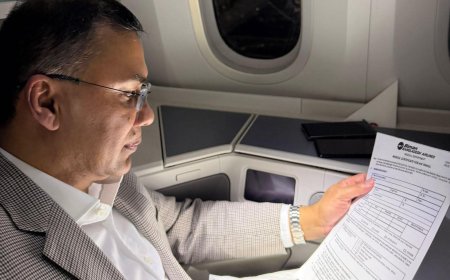
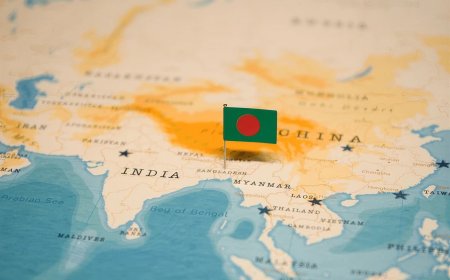
In this context, the scheduled return of Mr. Tarique Rahman -- the eldest son of the assassinated President General Ziaur Rahman, Bir Uttam, and Begum Khaleda Zia, three-time Prime Minister of Bangladesh -- carries a significance that goes far beyond a routine homecoming. After eighteen long years in enforced exile in London, Mr. Rahman is expected to return to Bangladesh on the 25th of this month with his wife and daughter.
This is not merely the end of a prolonged absence abroad; it marks the closure of a painful chapter shaped more by political banishment than personal choice.
Mr. Rahman’s exile followed a period of vindictive political persecution, driven by a regime intoxicated with power -- a power it had ascended through the very democratic ladder provided by his mother’s leadership. The betrayal of Mr. Rahman, Begum Zia, and their party, the Bangladesh Nationalist Party (BNP), stands as a classic illustration of the old adage: to foul the nest that once nourished you. A painful irony remains that some senior army officers, whose careers had advanced through promotions and key postings under Begum Zia, were the ones later contributed to the prolonged ordeal faced by her and her son.
Forced to leave the country in his mid-forties, Mr. Rahman had been envisioning his future role in national life when events unfolded with tempestuous speed, leaving behind uncertainty and rupture. Today, he returns as a man in his sixties -- matured, tempered, and shaped by the crucible of hardship endured in a foreign land, and by the anguish of prolonged separation from an ageing and ailing mother. Beyond the noise of politics, publicity, and controversy lies a deeply personal suffering -- known fully only to him, his family, and his closest confidants.
Those of us who watched this tragedy unfold from afar can empathise, but we cannot truly comprehend the silent torment he carried within.
As party supporters and citizens await his return with intense anticipation, Mr. Rahman himself must be navigating an overwhelming tide of emotions, confronting an uncharted future. During the eighteen years of his absence, Bangladesh has passed through severe trials -- marked by institutional decay, moral erosion, and deliberate political destruction. The nation’s fabric has been strained not only by authoritarian governance but also by the complicity of local cronies and the pressure of hostile external interests.
From exile, Mr. Rahman could only watch these developments unfold through digital and electronic media -- an experience that compounds anguish, as distance strips one of the ability to act. His suffering was further intensified by the cruel reality that he was denied the opportunity to remain beside his ailing mother, while she herself was barred from seeking treatment abroad.
Now that his return is confirmed, one may reasonably assume that Mr. Rahman has undertaken deep and honest soul-searching -- reflecting on his past, the lessons of exile, and the role he may be called upon to play in the country’s future. He returns to a Bangladesh that has undergone political convulsions over the past eighteen months and stands fragmented rather than cohesive -- surviving largely on its innate resilience and the steady hand of leadership attempting to steer it through turbulent waters.
Mr. Rahman carries a formidable legacy. His father was not only the declarer of Bangladesh’s War of Liberation but also a widely respected President; his mother, a courageous leader who served three times as Prime Minister, surmounting mountains of challenges.
Such a legacy offers both opportunity and burden. It invites hope, but it also demands accountability. He will be judged relentlessly -- by the standards set by his parents, both as leaders and as human beings. Every step he takes will be scrutinised; caution and wisdom will be indispensable.
The path ahead will undoubtedly be strewn with thorns. Vigilance will be required -- not only against external threats, but also against the proverbial Trojan horses within. No doubt, his return will enthuse followers and part workers, boosting their morale and energy. But he should not put his guards down. History reminds us that politics is often haunted by figures like Brutus or Mir Jafar, whose betrayals changed destinies. As Mr. Rahman prepares to board his flight home, he is no doubt aware of the rumours, conspiracy theories, and manufactured narratives that already surround his return.
Mr. Rahman, as you step once more onto the soil of your birth -- land from which you were once expelled in ignominy -- it is natural to imagine the weight of emotion you will carry. Yet your return has come to symbolise hope for many: hope for unity, stability, peace, and progress. A large section of the nation looks to this moment with expectation.
May Allah (SWT) protect you from all harm and guide you toward wisdom and righteousness.
I conclude with Nelson Mandela’s poignant words to President Bill Clinton:
A leader’s strength is not measured by how often he falls, but by how he rises after falling.
Ashraf Ud Doula is a retired Major, freedom fighter, a retired Secretary to the Government, and a former Ambassador of Bangladesh. He can be reached on his email: [email protected].