































































Child Abuse, Religious Power, and the Silence of Institutions
A society in which the “honour of the huzur” matters more than a child’s cry has not yet learned justice. A state in which poor families are afraid to seek justice has not yet learned equal protection.


"Settlement of the case is ongoing on humanitarian grounds."
What a ridiculous, cruel, and profoundly depressing statement. That one sentence alone exposes, all at once, the reality of child abuse in Bangladesh, the power of religious institutions, the helplessness of poor families, and the limits of state justice.
In Bangladesh, we use the word “humanity” in a very strange way. The way “humanitarian grounds” is being invoked here has nothing to do with actual humanity. Time and again, we see compassion extended to the perpetrator, while silence is imposed on the victim.
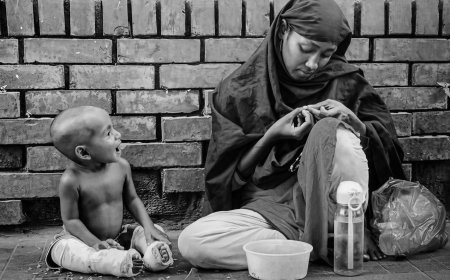
And yet, if anyone deserves humanity, it is that nine-year-old child who was afraid to go to the madrasa, who could not tell his mother what was happening to him, and who slowly began to change.
This is the part that unsettles me most. Because this is not simply about one case; it is about Bangladesh’s social structure itself. It is a structure in which even the rape of a child becomes a matter for “settlement” if the accused is a huzur, if he has “taught the child for many years,” if the family is poor, if local influential people suggest that it is better to resolve the matter quietly.
What the law recognizes as a crime against the state, society reduces to a private mistake. And power operates precisely through that reduction.
This is why I would say that compromise in cases of child sexual abuse is not a moral virtue; it is fundamentally a power-protecting mechanism, where institutional reputation, religious authority, and class power come together to suppress a child’s claim to justice. If we see this incident merely as an isolated crime, we will be minimizing the real problem.
This is a pattern. Madrasa teacher, residential or non-residential student, poor family, local mediation, fear of going to court, and finally “forgiveness,” this pattern repeats itself across many cases of child abuse in Bangladesh.
Especially when abuse occurs inside a religious institution, the accusation does not remain directed at one individual; it comes to be seen as an accusation against the institution, the religious image it carries, sometimes even the wider community.
As a result, the victim’s family is quickly isolated. They seek justice, but in seeking justice they themselves become socially accused. Look at the Noakhali incident: after allegations of sexual harassment were raised, justice was not merely denied; the victim’s family home was vandalized, they were assaulted, and the moral terror carried out in the name of “Tawhidi jonota” was passed off as public outrage.
I keep returning to one question: are children’s safety and dignity in this country really so much smaller than the honor of institutions?
A family went to the police. That, in itself, became their “crime.”
What does that tell us? It tells us that in many parts of Bangladesh, the real language of social control is still not law, but informal religious power, local patriarchal authority, and the fear of the crowd.
In Max Weber’s terms, where the state should hold the monopoly of legitimate violence, in practice the social permission to intimidate and punish is dispersed among religious groups, mobs, and networks of institutional loyalty. The justice system exists on paper, but in reality, victimized families understand that before they can fight in court, they must first fight society.
I am not speaking about this only from a distance. As part of my policy advocacy research on adolescent education and anti-sexual harassment policies in educational institutions, I observed different educational settings in Bangladesh, especially madrasa institutions, and interviewed both teachers and students. What I found was deeply troubling.
They are often far removed from mainstream knowledge on sex education, sexual harassment, consent, bodily autonomy, and violence prevention. Nearly everything is interpreted through the language of religious moral guidance. But they are often unable to connect that moral discourse to practical problems.
As a result, there is no meaningful institutional language for addressing actual abuse, misuse of power, grooming, shame, or silence. That is where the danger lies. When sexual violence is seen only as a question of morality, rather than as a matter of rights, safety, psychology, and institutional accountability, the problem is concealed rather than solved.
Moral instruction alone cannot prevent abuse if there is no practical understanding of what consent is, what harassment is, what safe reporting means, or what trauma does to a child. In that context, religious language ceases to function as protection and instead becomes a structure of silence.
In my research, I have often seen teachers understand sexual harassment and abuse not as a policy issue, but as a character issue. In other words, the questions that should matter most, how the institution will prevent abuse, how it will respond, how it will report, how it will protect the child, are absent.
Instead, the focus shifts to modesty, morality, sin, virtue, and individual behavior. But sexual violence is not merely a morality problem; it is a power problem, a safeguarding problem, and an institutional failure. Without that understanding, no child can truly be safe. The legal point here is also very clear. Rape, especially the rape of a child, is not a compoundable offense.
Why? Because the law recognizes that families are not always in a position to make free decisions. A family may be poor. They may be frightened. They may be socially pressured. They may feel compelled to bow before religious authority. They may collapse under the emotional, procedural, and financial burden of pursuing justice.
So if the state says: “Alright, the family has forgiven him,” then the state is effectively making the child’s rights dependent on the family’s circumstances.
But one of the great achievements of modern law was precisely to separate the rights of children, women, and vulnerable people from the will of families, communities, or powerful local actors, and to place those rights under state protection.
From that perspective, the language of “settlement” is not only a legal weakness; it is the return of pre-modern social control. But the problem does not end there. The silence around sexual violence in our culture is even deeper when the victim is a boy. The mother’s astonishment, “I had heard this happened to girls, but this happened to my son”, reveals not just personal grief, but our collective ignorance.
We still tend to understand sexual violence through gendered stereotypes. As a result, abuse against boys, their trauma, their shame, their crisis of identity, remain deeply under-discussed.
And yet developmental psychology tells us that between the ages of six and twelve, a child’s moral reasoning, trust formation, bodily autonomy, and sense of self are all taking shape. If at that age the child’s body is not kept safe, but is repeatedly violated by teachers, peers, or religious authority figures, the damage goes far beyond the incident itself. The child does not simply suffer an event; he begins to lose trust in his own body, in relationships, in language, and in the world around him.
This is precisely why abuse within a religious institution is even more devastating. If the perpetrator were “only” a teacher, it would still be a horrific crime. But when he is a huzur, he is not merely a figure of knowledge; he also occupies a position of moral authority. That doubles the harm. He violates the child’s body, and at the same time poisons the very structure of trust and belief.
I often think about the fact that historically, the origins of madrasa education in Bengal were not like this. In pre-colonial and colonial Bengal, madrasas were centers of theology, language, philosophy, fiqh, and moral learning. Even the Deobandi tradition, in its earlier phase, placed strong emphasis on knowledge and moral discipline.
But over time, especially through the Pakistan period, later processes of Islamization, regional politics, Middle Eastern funding, and the opportunistic policies of the state, many madrasas shifted away from being spaces of knowledge and became spaces for reproducing ideology.
I am not saying that all madrasas are the same, or that all teachers are abusive. That kind of simplification weakens analysis. But it is also true that a lack of oversight, limitations in curriculum, the absence of child protection structures, and the unquestioned social status of religious authority have together created an institutional environment where abuse can be hidden easily, and where demands for justice are met with victim-blaming and retaliation.
The problem is not only individual pathology; it is also structural enablement. The state has failed catastrophically here. It has not provided structural solutions to poverty, it has not built effective systems of child protection, and it has not broken its pattern of political compromise with religious institutions.
As a result, we are left with a dangerous duality: on the one hand, the government speaks about combating extremism; on the other hand, it legitimizes educational systems without structural reform, even when many of those systems do not make critical thinking, science education, child psychology, constitutional morality, or human rights education mandatory.
This dual policy is deeply dangerous. On the one hand, the state says child protection matters. On the other hand, in institutions housing thousands of children, it fails to establish effective independent monitoring, complaint mechanisms, safeguarding protocols, psychological support, or mandatory reporting systems.
So abuse happens, pressure follows, settlements are attempted, and then a few years later we are outraged by yet another case. This repetition is not accidental. It is the outcome of political co-optation.
Successive governments have managed religious leadership as a matter of convenience, sometimes using it, sometimes tolerating it, sometimes legitimizing it, sometimes repressing it. What they have consistently failed to do is pursue child-centered reform.
For me, perhaps the most devastating part was the victim mother’s words: “I work for a living; I do not like running around courts ... after spending money, they will still get out of jail.”
In that one sentence lies the entire lived experience of poor people’s relationship to the justice system in Bangladesh.
She may not know legal doctrine, but she understands power. She already knows that justice is expensive, slow, humiliating, and uncertain. So she says, “God is above.”
We often read that as religious comfort. But sociologically, it is the language of state failure. When people say God will judge, they often mean the state will not protect them. We also have to name the cultural hypocrisy here.
As a society, we talk endlessly about religion, morality, modesty, veiling, and character. But we remain silent about bodily autonomy, consent, abuse reporting, and trauma-informed care. We are busy protecting “honor,” but not children. We want to preserve institutional reputation, but we do not want to take responsibility for rebuilding the shattered inner world of an abused child.
A society where a rapist receives sympathy because he is a huzur, while a victimized family is attacked for filing a case, is a society whose moral foundation has already rotted, no matter how pious its language sounds.
I want to say this very clearly: covering up child abuse in order to protect the “honour” of a madrasa is not protecting Islam; it is disgracing Islam itself. Classical Islamic jurisprudence also recognized the importance of accusation, evidence, judicial process, and lawful authority.
It never treated grave offenses as things that could simply be erased through personal forgiveness or social compromise. What we are seeing now is not religion; it is the instrumentalization of religion for the protection of power.
So what is needed?
First, any institutional attempt to pressure families into withdrawing or settling child sexual abuse cases must come under strict legal scrutiny.
Second, all residential and non-residential religious educational institutions must have mandatory child safeguarding policies, background checks, complaint desks, independent inspections, and trauma support systems.
Third, there must be broader social education around sexual abuse of both boys and girls, so that silence and shame no longer dominate.
Fourth, criticism of religious institutions must stop being dismissed as anti-religious hostility. No institution can remain morally credible without accountability.
A society in which the “honour of the huzur” matters more than a child’s cry has not yet learned justice. A state in which poor families are afraid to seek justice has not yet learned equal protection.
And a culture in which “settlement on humanitarian grounds” sounds normal in a child rape case is a culture in urgent need of rewriting its very definition of humanity.
Dr. Lubna Ferdowsi is an academic and researcher based in England.