


































![A Ledger of the Soul: Navigating the Allah-Bhagavant Nexus in a 19th-Century Puruṣākāra Jñāna Caupara [Gyan Chauper]](https://counterpointbd.com/uploads/images/202608/image_430x256_6a93baa3b09a7.jpg)




















The State and the Deep State in Bangladesh
Even if we develop our state institutions, there is no guarantee that a ‘Legal Autocrat’ or ‘Constitutional Autocrat’ will not appear in future. The stronger the State, the stronger a Constitutional Autocrat is and the more it may exercise power to prey the public. State becomes a Constitutional handle to a Constitutional Dictator or Fascist.

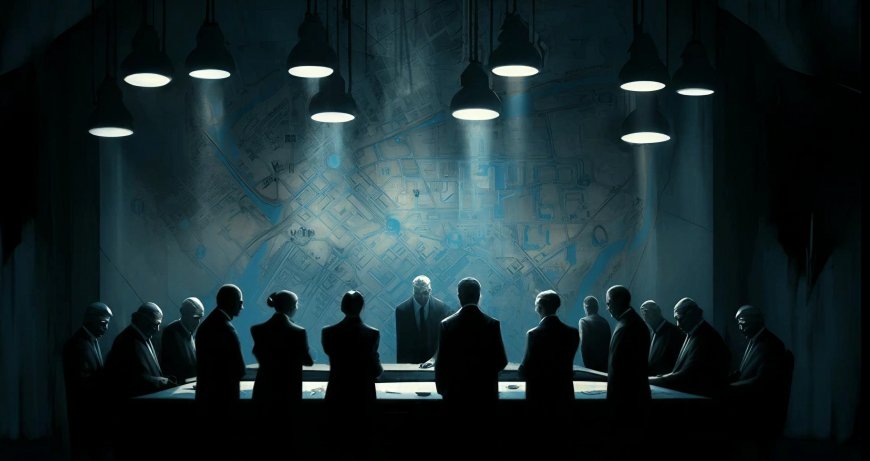
The Deep State remains a polarizing concept. To some, it is a necessary "stabilizer" that prevents radical politicians from destroying a nation's foundations. To others, it is the ultimate threat to democracy -- an unelected elite that renders the ballot box meaningless.
A Deep State is a clandestine network of entrenched members of the government, military, intelligence agencies, private interests, and sometimes foreign forces, who collaborate and cooperate to control a state and its government. It is an unelected body of forces and establishments to back stop the failures of the politically elected government.
Unlike the "bureaucracy," which follows established laws and procedures, a Deep State operates in the "grey zones" of legality. It functions on the belief that the permanent interests of the state, national security, economic stability, or geopolitical alignment are more important than the temporary whims of elected officials or the voting public. While the manifestation of a Deep State varies by country, they typically share four defining traits:
- Permanence: While presidents and prime ministers are cycled out via elections, Deep State actors remain in power for decades, providing "institutional memory."
- Secrecy: Operations are conducted through back channels, classified programs, and informal networks that are shielded from public or judicial oversight.
- Autonomy: These entities operate with a high degree of independence, often ignoring or undermining the directives of elected leaders if those directives conflict with the network’s goals.
- Resource Control: They typically command significant "hard power" (the military and police) and "soft power" (the ability to leak information to the media to influence public opinion).
Before talking about Deep State in Bangladesh, look at similar concepts in ancient Rome, the Praetorian Guard served as an early prototype. Originally the emperors' bodyguards, they eventually became the kingmakers of the Empire, assassinating leaders they disliked and auctioning off the throne to the highest bidder.
Similarly, in the Ottoman Empire, the Janissaries an elite military caste exerted such influence that they could depose Sultans who attempted to modernize the military or curb their privileges.
The modern iteration of the Deep State solidified after 1945, driven by the Cold War.
As the world divided into superpowers, many nations felt the need for permanent, secretive security apparatuses that could act faster than a democratic legislature. Other mentionable modern Deep States hailed from Turkey, USA, and Italy.
The "Derin Devlet" (Turkey): The term actually originated here in the 1970s. It described a coalition within the Turkish military and intelligence services tasked with protecting the secular nature of the republic against communism or Islamism, often through "dirty war" tactics.
The United States: Post-WWII, the creation of the CIA, NSA, and the "Military-Industrial Complex" (a term coined by Eisenhower) led to a massive expansion of the administrative state. Critics argue that the continuity of foreign policy across different administrations suggests a "permanent government" that prioritizes global hegemony over domestic electoral mandates.
The P2 Lodge (Italy): In the 1980s, Italy discovered a secret Masonic lodge (Propaganda Due) that had infiltrated the highest levels of the military and media.
Let’s look at the different models of Deep State across globe and history.
The Institutional Deep State Model: USA and UK are of key interest among political historians. In Western democracies, the Deep State is often viewed as a "permanent government."
USA: Comprising the "alphabet agencies" (CIA, FBI, NSA) and the military-industrial complex, the US Deep State prioritizes global hegemony and national security continuity. It operates through the administrative state, often acting as a "check" on presidents who attempt radical shifts in foreign policy.
UK: The British version is subtler, often referred to as "The Establishment." It consists of senior civil servants (the "Mandarin" class), intelligence services (MI6/MI5), and the City of London’s financial elite, focused on maintaining the "rules-based order" and traditional British influence.
The Military-Arbiter Model: Pakistan and Bangladesh
In South Asia, the Deep State is not hidden behind bureaucracy; it is the primary power broker.
Pakistan: The military and its intelligence wing, the ISI, are widely considered the "state within the state." They control the country's foreign policy and internal security, often intervening in the civilian political process to ensure their institutional interests remain supreme.
Bangladesh: Historically, the military has played a similar role as a periodic arbiter. Following the 2024 uprising and the subsequent interim government, the Deep State has faced a period of re-alignment. Observers note a struggle between entrenched pro-secularist bureaucratic networks and new factions emerging after the fall of the long-standing Awami League regime.
The Integrated State Model: Russia and China
In authoritarian models, the "Deep State" and the "Official State" are often one and the same.
Russia: Power is concentrated in the Siloviki -- the elite security and military personnel, many of whom share Vladimir Putin’s KGB background. Here, the Deep State is not a shadow entity but the actual backbone of the regime.
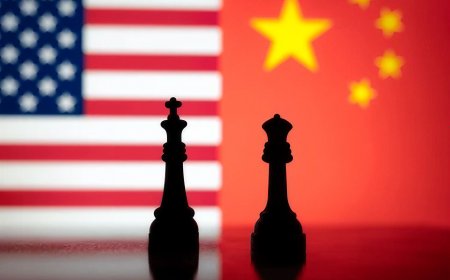
China: The CCP (Chinese Communist Party) serves as the ultimate Deep State. Through the Central Military Commission and internal disciplinary bodies, the party ensures that no official or private entity (like big tech) operates outside its ideological control.
The Democratic Deep State Model: India and Europe
India: Discussion often centers on the "Lutyens' Delhi" elite or permanent bureaucracy. However, in recent years, critics and supporters alike point to an ideological alignment between the state apparatus and the RSS (Rashtriya Swayamsevak Sangh), suggesting a Deep State that is cultural and ideological as much as it is administrative.
Europe (EU): At the supranational level, critics of the EU describe the Brussels bureaucracy as a Deep State. They argue that unelected technocrats in the European Commission hold more power over European life than national parliaments, pushing for "ever closer union" regardless of local elections.
The Deep State is a universal phenomenon, yet its character depends on a nation's history. While the West deals with a "state within a state," countries like Russia and China operate as a "state as the state."
Advantages and Disadvantages of Deep State:
Policy Continuity: A Deep State provides "institutional memory," ensuring that critical national security and foreign policies do not fluctuate wildly with every election cycle.
Technocratic Stability: Permanent bureaucrats and intelligence officials often possess specialized expertise that temporary political appointees lack, preventing amateurish mistakes in complex governance.
Crisis Management: In times of extreme political polarization or vacuum, an entrenched administrative layer can keep the essential machinery of the state -- like the economy and defense -- running.
Cons
Democratic Deficit: The primary criticism is that it bypasses the "consent of the governed." When unelected officials ignore or sabotage the mandates of elected leaders, the power of the vote is nullified.
Lack of Accountability: Operating in the "grey zones" of legality, Deep State actors are rarely held responsible for failures, as they are shielded by classification and secrecy.
Stagnation: Because these networks protect the status quo, they often block necessary radical reforms, leading to systemic rot and public disillusionment.
Before discussing Deep State in Bangladesh, it is imperative to look into its mother country’s state and 1971.
The 1971 Crisis
The Deep State’s refusal to honor the 1970 election results, where the East Pakistani Awami League won a clear majority, led directly to the civil war. The military's belief that it alone knew what was best for "national integrity" resulted in Operation Searchlight, widespread atrocities, and the eventual dismemberment of the country, leading to the birth of Bangladesh.
From the military’s own viewpoint, they saw themselves as the only force capable of holding together two non-contiguous wings against "external conspiracies," even if their methods eventually backfired.
From 1971 to Date
The military's continued dominance has stunted civilian democratic growth. Through "hybrid regimes," the Deep State has been accused of "engineering" elections, controlling the media, and prioritizing defense spending over education and health. This has contributed to chronic economic instability and a "crisis of legitimacy."
Supporters argue that the military remains the only disciplined institution in a country plagued by corrupt political dynasties and extremist threats. It provides a security umbrella for Pakistan’s nuclear assets and acts as a final arbiter when civilian political infighting threatens to paralyze the state.
The Deep State evolution in Bangladesh’s big neighbor India is interesting and often ignored by analysts. Historically, India’s "Deep State" was rooted in the "Steel Frame" of the British Raj -- the Indian Civil Service (ICS). Post-independence, this evolved into the IAS and IPS. For decades, this permanent executive was viewed as a stabilizer.
However, during the Emergency (1975-1977), the line between the state and the ruling party blurred significantly as intelligence agencies and police were used to suppress dissent. This period established a precedent for the "politicization" of the security apparatus, where agencies like the CBI and IB began to be used as tools for political leverage.
The Modi Government and the "New" Deep State
Under Prime Minister Narendra Modi, the discourse around the Deep State has shifted in two directions:
Allegations of "Saffronization": Critics and investigative journalists like Josy Joseph argue that a "new" Deep State has emerged. This involves the ideological alignment of the permanent bureaucracy, investigative agencies (ED, NIA, CBI), and the judiciary with the RSS (Rashtriya Swayamsevak Sangh). This network is accused of bypassing traditional democratic checks to sideline political opponents and activists.
The "Foreign Deep State" Narrative: Conversely, the Modi government and its supporters often use the term "Deep State" to describe external influences. They argue that a transnational network of foreign NGOs, billionaire philanthropists, and Western media outlets works to destabilize India’s economic growth and sovereignty by amplifying internal divisions.
Democracy, Diversity and the Deep State are India’s greatest strength -- its pluralism and diversity of "colour" (representing its vast array of ethnicities, castes, and religions) -- is often the primary battleground for Deep State activities.
Diversity vs. Homogeneity: A classic Deep State usually seeks a monolithic, predictable state. In India, the tension lies between the country's inherent diversity and an ideological push for a more centralized, homogeneous national identity.
Critics argue that when the Deep State becomes ideologically driven, it begins to view India’s diversity (especially religious minorities) as a "security threat" rather than a democratic asset.
Democratic Resistance: Unlike in some other nations, India’s democracy is incredibly resilient. The "Deep State" in India must contend with a highly active (though pressured) civil society, a vibrant multi-party system, and a constitution that explicitly protects diversity.
In summary, the Indian Deep State is currently in a state of transformation -- moving from a neutral, technocratic "Steel Frame" toward a more ideologically aligned "Saffron State," while simultaneously battling what it perceives as an international Deep State aimed at curbing India's global rise.
The Bangladeshi Deep State?
The political landscape of Bangladesh has long been defined by a "fickle and fragile" democratic process, characterized by zero-sum politics, dynastic transitions, and periodic systemic collapses. In the wake of the July 2024 Revolution, which saw the ousting of a long-entrenched regime, the question of a "Deep State" has moved from the shadows into the center of national debate.
The revised question is: Does Bangladesh Need a Deep State to Backstop Failures?
The argument for a Deep State in a fragile democracy like Bangladesh is usually rooted in the need for institutional continuity. Proponents of this view -- often found within the military and the senior bureaucracy -- argue that Bangladeshi politicians have historically prioritized partisan vengeance over national stability.
The "Stabilizer" Argument: When political parties fail to agree on basic electoral frameworks or when street violence paralyzes the economy, a Deep State (historically the military) acts as a "backstop." It prevents the total disintegration of the state apparatus.
The "Stagnation" Counter-Argument: Critics argue that the existence of such a backstop is exactly why democracy remains "fickle." When politicians know that a "permanent establishment" will eventually step in to clean up the mess or mediate a crisis, they have little incentive to develop the compromise-based culture necessary for a mature democracy.
The Players in Deep State Bangladesh
In the Bangladeshi context, the Deep State is a multi-layered entity. It is not a single office, but a network of interests:
The Military Intelligence Apparatus: The DGFI (Directorate General of Forces Intelligence) has traditionally been the heart of the shadow government, monitoring political movements and influencing judicial or electoral outcomes.
The "Steel Frame" Bureaucracy: Senior members of the Bangladesh Civil Service (BCS) who maintain the machinery of the state regardless of which party is in power.
The Business Oligarchy: A small group of industrial titans who fund political parties and, in exchange, influence economic policy and banking regulations from behind the scenes.
The Judiciary: Historically, certain elements of the higher judiciary have been utilized to provide legal "cover" for extra-constitutional shifts in power.
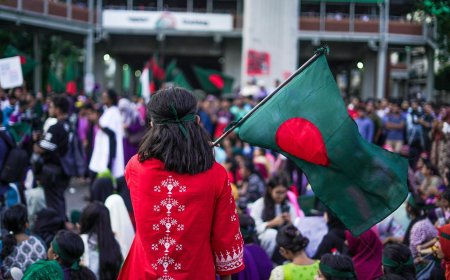
The 2024 Revolution introduced two new, potent actors into the power dynamic: The Anti-Discrimination Student Movement and various elite groups or councils (often referred to as Gono Parishad or Citizens' Councils).
Traditionally, a Deep State is "deep" because it is permanent and unelected. The student leaders of the July Revolution currently occupy a unique space. While they are not part of the traditional bureaucracy, they have exerted "veto power" over government appointments and policy directions.
Potential as a Deep State: If these student bodies transition into a permanent, unelected oversight mechanism -- monitoring the "purity" of the revolution and intervening in the functions of the interim or future elected governments -- they would effectively become a "Revolutionary Deep State."
Their role would be to ensure that politicians do not revert to the "old ways," acting as a moral and physical check on the official state.
An elite group like a Gono Parishad -- consisting of intellectuals, jurists, and civil society leaders -- is almost the definition of a technocratic Deep State.
The Guardrail Role: In a fragile democracy, such a council can act as a "National Security Council" or a "Guardianship Council." If they are given the power to disqualify candidates, review legislation, or oversee the military outside of the parliamentary process, they become part of the Deep State architecture.
The Risk: While they might provide "intellectual backstopping" for politician failures, they run the risk of becoming an unelected "Politburo" that stifles the very democratic pluralism the July Revolution sought to achieve.
Bangladesh is currently at a crossroads. The old Deep State (the pro-Awami League bureaucracy and intelligence networks) is being purged, but the vacuum is being filled by a new configuration.
Even if we develop our state institutions, there is no guarantee that a ‘Legal Autocrat’ or ‘Constitutional Autocrat’ will not appear in future. The stronger the State, the stronger a Constitutional Autocrat is and the more it may exercise power to prey the public. State becomes a Constitutional handle to a Constitutional Dictator or Fascist.
A "backstop" may be necessary to prevent a slide back into autocracy or chaos, but if the student bodies and elite councils become permanent fixtures that operate outside of electoral accountability, they will simply become the "New Deep State."
Do the neutral patriot commoners in Bangladesh, accept or even expect the Deep State in Bangladesh?
It is debatable but the trendy answer is Yes. Why do we cheer the armed forces to take charge after the Government head flees amidst a student protest or a political civil unrest peaks or a second revolution by pro-right-religious parties would break out? Who did we rely to quell the ISIS Gulshan Attack?
Is it just the armed forces in the Deep State in Bangladesh? No. The armed forces and DGFI are collaborated, corroborated and even directed by civil collaborators: Wealthy who owns the media houses and banks, bureaucrats, judiciary top positions and foreign forces.
The previous PM Hasina found India to lead the Deep State formation while post-July-revolution Government head Yunus allegedly, but most likely, availed blessings of USA.
2026 Mantra: Get the State and Deep State
The 2026 Government looks to be a winner-takes-all Government but it is not. The opposite forces have a foot in the Deep State -- recruits in the armed forces, wealthy with media houses and banks, civil servants and bureaucrats and pro-July forces, and at least one foreign force in the name of Turkey.
Only last month, the son of Turkish President visited Islamic Student Party’s event.
Trump did not get hold of Deep State in his first term, which Steve Bannon conceded later. In the second term, the Right-MAGA-Heritage started the term by downsizing the civil servants, bureaucrats and the pro-establishment forces and by defying the norms set out from Regan-Carter era.
But they are keeping the wealthy and Wall Street. Anne Burford of Regan administration infamously wrote Washington is too small to be a State.
Hasina got hold of State by two-third majority of people mandates and subsequently then the Deep State comprising of the armed forces, DGFI, wealthy, media houses and banks, bureaucrats, Supreme court and a loyal foreign friend India.
After taking oath as the new PM, she demanded her loyal staff and relatives to take control of the ‘uttor para’, referring to the cantonment HQ of the Bangladesh armed forces. She deliberately always held the head position of the defense ministry.
After Hasina, the Yunus Government surmounted the Deep State shadow by USA until Biden lost the election in 2024 and then by the pro-July revolutionary forces which allowed right religious patronage.
He survived and only just completed his reforms. But he did not have the bureaucrats or armed forces at his side. His tenure was limited with an unremarkable closure as he did not greed power or politics.
The alliance of the religious right forces did not get the State by people’s mandate, however, it’s trying to subtly promote and leverage an alternative version of Bangladesh’s Deep State -- by nourishing its recruits in armed forces, judiciary, universities and civil services, steady financial flow from foreign parties, keeping akin to wealthy, banks and media houses (only exceptions are the media houses that were set fire in days before the election in 2026). And it is keeping and growing the pro-July revolutionaries, student forces, civil militancy mobs.
Given the information, discussion points and opinions above, let’s ask the question again: Do we need a Deep State?
For this testing phase of Bangladesh politically and geo-politically -- Yes. The new Government must have a good handle of State and Deep State. It must also prevent the opposition or any other local or foreign forces to form or leverage a Deep State.
Our democratic politicians and political agents unwittingly risk the State times and again. That risk peaks from both the Islamic Right revolutionary aspirants but the incumbent Government with two-third majority, which even the good new Prime Minster may not be able to control. The incidents by BNP’s roots and MPs in some areas after election is a testament of this opinion.
The Deep State option better be on and as a back stopper. People accept it, they cheer the Deep State in taking control in the social and political disasters. On the other hand, an invisible and unelected force is not good for a democracy. Hasina became the ‘state’ and ‘deep state’ as most authoritarians do in China, Russia, Hungary or Vietnam do, but she perished.
What will the new Prime Minster resolve to? The State and Deep State do not necessarily have to be antidotal -- they may be complimentary. Either way, it’s a balance that Bangladesh, its people, its Government and its new Prime Minister must aim to achieve as a priority.