


































































The Other Nightingale
Audiences heard something unprecedented: A female voice that did not ask permission to be happy. To a socialist India grappling with the early tremors of globalized pop culture, Asha Bhosle was the unmistakable sound of modernity.

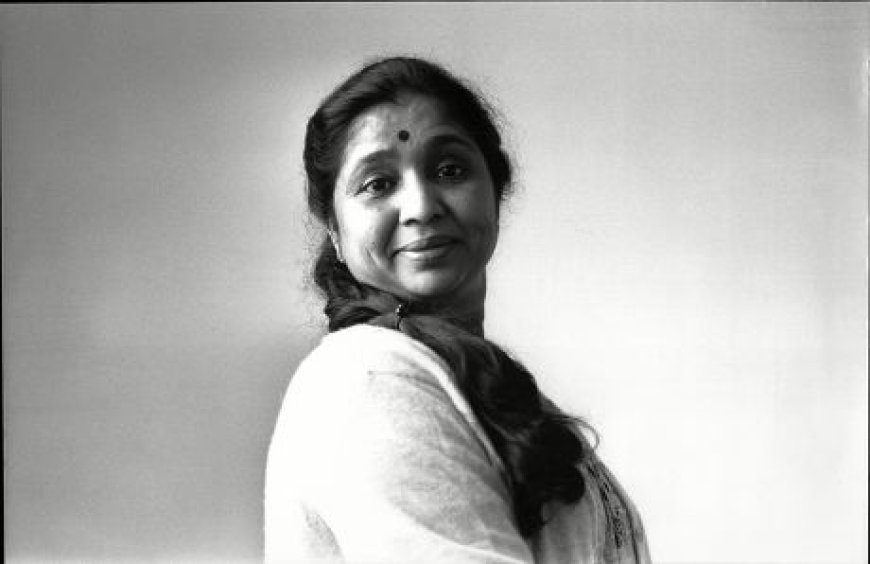
Asha Bhosle, the versatile voice of Indian cinema, died on April 12, aged 92.
In the construct of Indian cinema, especially those fed mine and earlier generations, the heroine and the vamp occupied entirely different wings of the mansion. For decades following India’s independence, the Bollywood heroine was a paragon of trembling virtue, her desires safely cloaked in metaphors of rain and chirping birds.
The vamp, by contrast, lived in smoke-filled cabarets, her eyelids heavy with glitter, pouring whiskey and ruining men.
This moral dichotomy required a sonic equivalent. The heroine needed a voice of crystalline purity, untouched by earthly grit. She was voiced, almost exclusively, by Lata Mangeshkar.
The vamp, the dancer, the woman of the world, required something else -- a voice that knew what a nightclub felt like at three in the morning, a voice that could bend, flirt, and sigh. That voice belonged to Lata’s younger sister, Asha Bhosle.
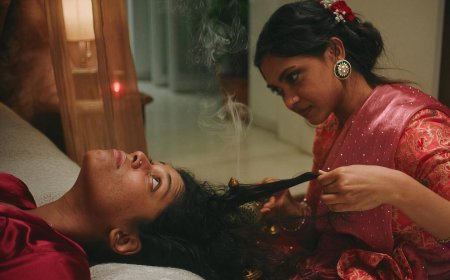
I heard (and watched) one such rendition, Piya Tu Ab To Aaja (loose translation,’ Come to me now, my love'), for the first time, a quintessential cabaret number, originally recorded for the film Caravan (1971), exquisitely expressed on screen by Helen, in 1994 when I was well out of parental control.
In sophomore year, miles away from home in a south Indian city, when another icon of Bollywood music RD Burman had just passed, rather early at 54 years, making the entire subcontinental population devour his music, almost incessantly till to date.
The suggestive sounds in the song, while portrayed on screen by Helen who was playing as Monica, breathing quickly at intervals seemingly exuding pleasure and pain at the same time, was voiced by Asha Boshle. This specific ‘breathing noise’, while may be a bit perplexing to a ‘mostly naive’ youth, was incredibly melodious with the music and rhythm of the song.
Watched on by a disbelieving Asha Parekh (the heroine), who just discovered that her husband and Helen were having an affair, the song also featured RD Burman towards its climactic end, winning Asha the Filmfare award for Best Female playback in 1972.
That year and the passing of RD Burman opened a flood gate of musical experience for me. Until then, while I was familiar with some of the everlasting hit numbers, I paid little attention to the details such as who is the singer, lyricist, composer and in which movie.
But I was in the right place at the right time: There were HMV (a gramophone company) shops, and 24/7 music channels with the advent of cable TV letting me search and explore this music genre. I would encounter many popular Hindi movie music composed before my birth and pre-adult life.
Back to Asha’s songs. In the same year (1971) by the same composer was Dum Maro Dum ('Puff, take a puff') from the film Hare Rama Hare Krishna. It was a film from the hippy era, I would later discover. In a sublime picturization, the audience saw Zeenat Aman (acted as Janice in a hippiesque attire) smoking hashish and swaying hypnotically.
Yet of all of Asha's songs most endearing to me was and still is: Chura Liya Hai Tumne Jo Dil Ko (‘This heart that you've stolen’). Again, by the same composer around the same time 1973. The song gained cult status in the last three decades.
That was also a time when Manmohan Singh, the prominent economist and later an ex-Indian Prime Minister, opened up the economy letting foreign businesses flood the market. Such as MTV or Music Television, an American cable tv channel which needed to feed a large Indian middle class -- naturally, the era of remakes and deshi music videos featuring popular numbers from the past was born.
Burman and Bhosle both were heavily represented in them, among other musical luminaries of the 1960s to 80s.
In a cinema industry where playback singers are invisible, not seen on screen but commanding a devotion that rivals, and sometimes eclipses, that of the movie stars themselves, Asha Bhosle reached the pinnacle. Yet, like many successful artists, her path to apex was tough, not least due to competition and composers’ preference for her elder sister, Lata who sang for stars like Nargis, Madhubala, Meena Kumari and many more.
Cursory websearch would reveal interesting details of her struggle, that she had to learn to sing anything. If a scene required a village folk tune, she sang it. If it needed a bhajan (devotional song), she delivered. If a scene featured nightclubs or cabaret, she provided the sultry vocal gymnastics. This enforced versatility became her greatest weapon. Asha’s voice grew adaptable and emotionally dexterous.
She eloped with Lata’s secretary when only 16 years old and had to endure a troubled marriage, return to her family with three children to feed, but evidently found the limelight and livelihood.
Pancham and the Psychedelic Seventies
Apparently, it was OP Nayyar -- a composer favouring heavy, rhythmic beats that mimicked the clip-clop of a horse-drawn tonga -- who first unlocked her potential. In films like Naya Daur (1957) and Howrah Bridge (1958), they delivered breezy, sensuous hits such as Aaiye Meharbaan (‘Come, my generous one’).
Nayyar pushed her to lower her pitch, breathe into the microphone, and smile while she sang. Audiences heard something unprecedented: A female voice that did not ask permission to be happy.
Yet it was RD Burman, affectionately known as Pancham, who elevated her to a cultural icon. (Like many others, I found myself wholly immersed in his sprawling catalogue upon his death in 1994). He was a musical omnivore.
Keeping up with the time, as 1970s Indian cinema pivoted toward louder, action-driven plots teeming with angry young men and Westernised anti-heroines, he injected Bollywood with jazz, bossa nova, Latin rock, and disco.
Marrying in 1980 after years of collaboration, Asha and Pancham forged a partnership of spectacular synergy. Together, they redefined vocal technique. She experimented with giggles, sighs, breathlessness, and sudden octave drops, deploying her voice as a nimble instrument woven seamlessly through his heavy brass, wah-wah pedals, and electric basslines.
To a socialist India grappling with the early tremors of globalized pop culture, Asha Bhosle was the unmistakable sound of modernity.
Ever Versatile
Great artists leave a multitude of impressions, but Asha’s defining asset was her staggering versatility. Like her peers, she sang in dozens of Indian tongues; she effortlessly spanned the chasm between buoyant pop and the classical ghazal within the Hindi-Urdu repertoire.
Take her collaboration with the composer Khayyam for Umrao Jaan (1981), the tale of a tragic 19th-century Lucknow courtesan. By dropping below her customary pitch, Asha perfectly captured the character's melancholic grace.
The resulting ghazals -- intricate, Urdu-laced ballads such as In Aankhon Ki Masti (‘For the intoxicating beauty of these eyes’) -- were a masterclass in restraint. Devoid of breathy sighs, the delivery laid bare a profound, aching vulnerability.
The performance earned her a National Film Award, proving conclusively that Bollywood’s resident bohemian was also a classical titan. A second award followed in 1987 for Mera Kuch Saamaan (‘A few belongings of mine’), a fiercely complex, free-verse triumph composed by RD Burman.
Perhaps the most astonishing aspect of Asha Bhosle’s career was her refusal to age out of the industry. In Bollywood, heroines are routinely discarded when they turn thirty. Playback singers enjoy longer shelf lives, but they too eventually sound out of place on the faces of teenage debutantes.
In 1995, at the age of 62, she sang for A.R. Rahman in the film Rangeela. The songs, written for the 21-year-old actress Urmila Matondkar, were peppy, high-octane pop numbers. Asha’s voice sounded fresher, more vibrant, and more youthful than singers a third her age. She ushered in the MTV era in India, to release indie-pop albums that dominated the charts in the late 90s.
To look back at the sweep of Asha Bhosle’s life is to observe the story of modern India itself. She was born under the British Raj, found her footing in the austere, socialist years of the newly independent republic, provided the soundtrack to the turbulent 70s, and sailed effortlessly into the booming, globalized India of the 21st century.
When a playback singer dies, the loss is strangely intimate. Unlike actors, whose physical decline is documented on screen, a playback singer's voice remains trapped in amber. When we, the so-called deshis, would play Piya Tu, for a few minutes, it would be 1971 again. The brass will blare, the bass will groove, and a voice -- warm, inviting, and dripping with life -- will ask the listener to lean in a little closer.
As I took solace in 2022 in passing of the nightingale, Lata, Asha Bhosle too built a magnificent, enduring cabaret of the human heart, and the music playing inside it will never truly stop.
Irfan Chowdhary is an opinion writer. He has written for Bangladeshi dailies and South Asian platforms.