

































































30 Billion Reasons Bangladesh Needs a Ministry of Remittance
The workers did their job. Now the state needs to do its part. Our remittances are as big as our garments. So why does one get a ministry and the other get a circular?

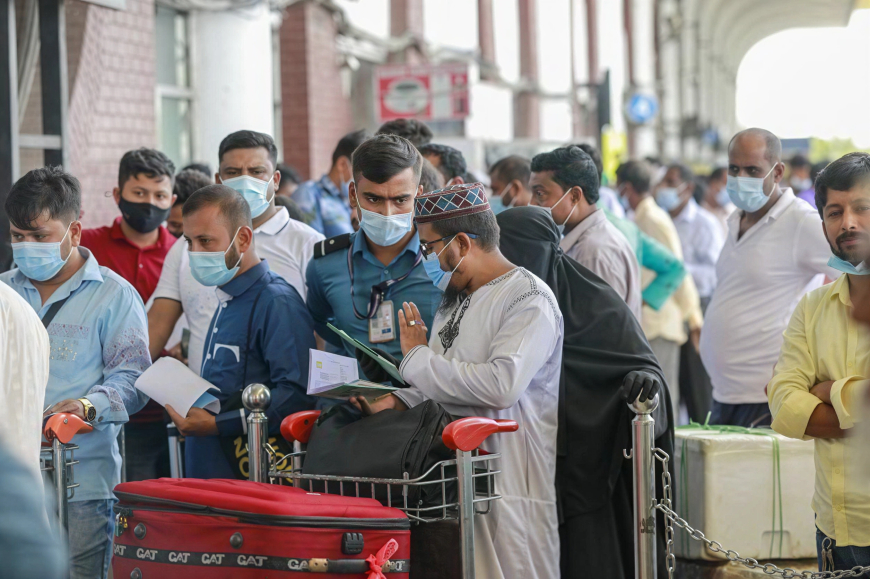
Bangladesh crossed thirty billion dollars in remittances last year. First time in history. A 25% surge over the year before. Bangladesh Bank issued a statement. The Finance Minister expressed gratitude to our overseas workers. A few economists wrote columns. And then, as is often the case in Dhaka, everyone moved on.
Nobody asked the obvious follow-up question: If remittances now finance nearly half of our total import bill, almost match our entire garment export revenue, and have proved more resilient through every crisis -- pandemic, political upheaval, currency shock -- than any other income source the country has, why do we treat them as a footnote?
I have spent years establishing remittance channels for Bangladeshi diaspora communities across the UAE, the European Union, North America and Australia. I have sat in dormitory blocks in Sharjah with construction workers who send $300 home every month -- not as discretionary income, but as the load-bearing number of an entire household. School fees. Medicine.
The instalment on the migration debt they arrived with was carried by them when they arrived at this money and what it does. And I know that the institutional architecture in Dhaka treats it as though it barely exists.
Let me state the structural problem plainly. Bangladesh’s remittance economy is currently managed by five separate ministries -- Expatriate Welfare, Finance, Foreign Affairs, Home Affairs, and Bangladesh Bank -- none of which have the full picture, and none of them are accountable for the whole.
The Ministry of Expatriate Welfare knows how many workers left Bangladesh and whether they received pre-departure training. It has no authority over exchange rate policy.
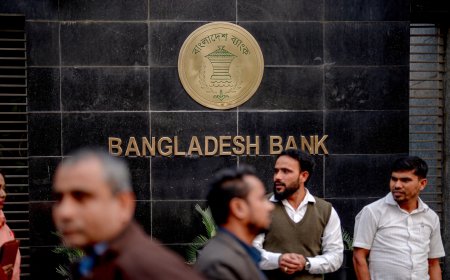
Bangladesh Bank sets the 2.5% incentive but has no visibility into why workers in a specific corridor prefer the hundi operator at the dormitory door over a licensed bank.
The Finance Ministry designs investment bonds for the diaspora but has no mechanism to market them to a nurse in East London or a welder in Dammam.
Nobody owns the question. So nobody answers it.
Compare this to what we give our garment sector. BGMEA. A dedicated ministry. Bilateral trade negotiators. Duty drawback schemes. Export promotion infrastructure. The RMG sector generates roughly $38 billion a year and receives, quite rightly, serious institutional attention.
Our remittances are now $30 billion -- generated not by factory owners with access to Trade Ministry officials, but by 8 million workers who left home and built, with their labour and sacrifice, an invisible export industry that props up our balance of payments every single month.
They deserve the same seriousness.
“The workers did their job. The state did not do its job"
I want to address the hundi question directly, because the conventional framing around it is almost entirely wrong. The official position across multiple administrations has been that the hundi is an enforcement problem -- crack down on operators, make the legal risk high enough, and redirect the flows. After the political transition of July 2024, formal channel share jumped from around 62 to 87%. So the argument goes: Enforcement works.
What actually happened is that the political networks protecting specific hundi operators collapsed. The product did not get worse. The underlying reason workers use informal channels -- speed, zero fees, rural reach, no app that crashes on a cheap handset, and cash delivered at home rather than at a bank branch 30 kilometres away -- none of that has changed. When those protections reconstitute themselves, as they will, the flows will shift again.
You cannot police your way to a $40 billion remittance economy. You have to build a formal product that is genuinely superior to the informal one. That requires product thinking, regulatory imagination, and an institution with the mandate to drive both.
Bangladesh Bank’s Real-Time Gross Settlement system now processes transfers in under four hours.
That is a real achievement. But settlement infrastructure without a consumer-grade front end -- fast, zero-fee, accessible in Bangla on a low-cost phone, it is a road with no on-ramps. The engineering is there. There is no political will to complete the product.
What Bangladesh needs is a Ministry of Remittance and Diaspora Economy. I am not arguing for bureaucratic expansion. I am arguing for institutional honesty. A ministry that owns the exchange rate-incentive-channel policy interface. A ministry that can fast-track licensing for zero-fee digital operators and build a regulatory sandbox for remittance innovation. A ministry that designs diaspora investment bonds and actually markets them through community channels in the Gulf, in Europe, in North America, in Australia -- the way India has done with its NRI investment ecosystem for decades.
Bangladesh requires a focused administrative engine to bridge the per-capita revenue divide between our labourers and those from the Philippines. That $1,700 annual deficit in individual earnings is not merely a number; it is a profound failure of skill development and collective bargaining leverage. Closing this gap is a structural imperative that demands more than a memo -- it demands a full institutional response.
The record of FY2025 was real. I do not diminish it. But it was built partly on political accident -- on the disruption of informal networks that did not defeat them so much as temporarily disorganize them. The next ten billion dollars in remittances will not come from accident. It will come from the kind of deliberate institutional investment that Bangladesh has, until now, been unwilling to make.
Eight million workers woke up this morning in the Gulf, in North America , and in Europe and sent money home. They did not ask for recognition. They asked, implicitly, for a state that takes their contribution seriously enough to build something worthy of it.
The workers did their job.
Now the state needs to do its part.
Our remittances are as big as our garments. So why does one get a ministry and the other get a circular?
Sudarshan Suvashish Das is General Manager of Regional Markets (Asia, Africa and Middle East) at Ding, a global digital marketplace platform.