


























































The River Doesn't Forget
The people living along the southwest's rivers want the river back. A barrage and a river are different things.
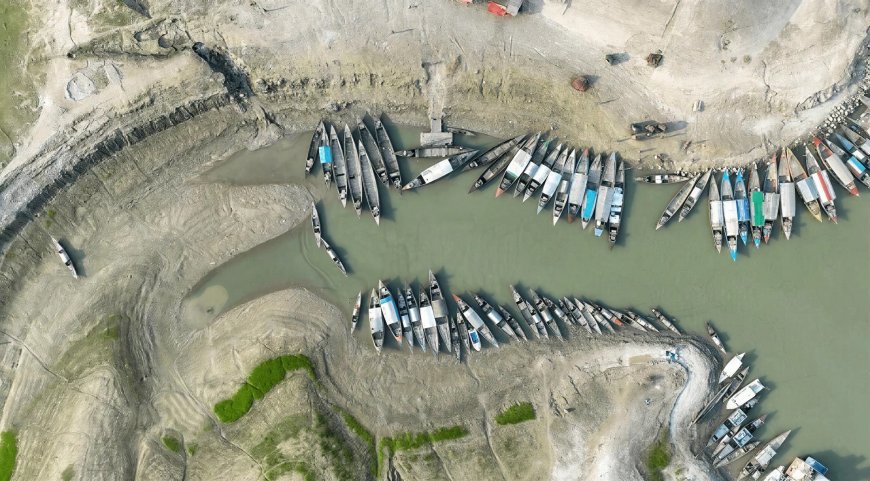
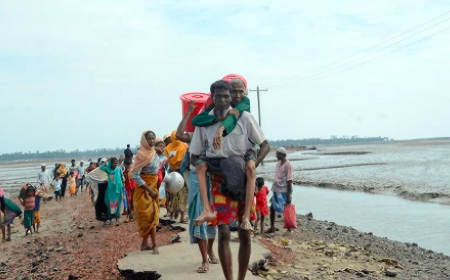
There is a particular kind of grief that people of the Bengal delta carry quietly -- the grief of a river that has left.
Ask anyone who grew up along the Gorai in the 1980s. They'll tell you about the ilish that came upriver in monsoon, fat and silver, so plentiful that nets tore under the weight. The way the river smelled in March: Cool, faintly mineral, alive. And the boats. There were always boats.
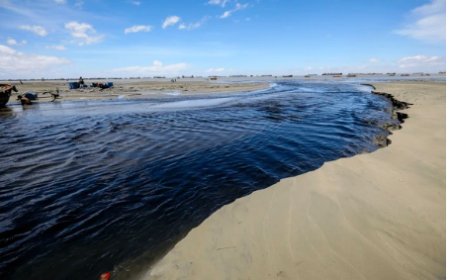
Ask them about March today. The Gorai barely flows in the lean season now. What's left is a slow, saline crawl where a river used to be. The fishermen's children have moved to Dhaka. The boats are gone.
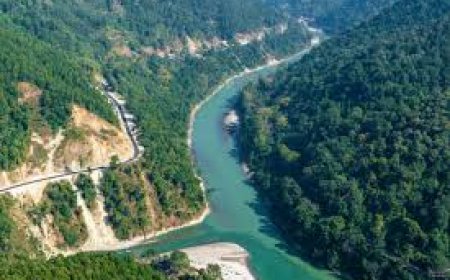
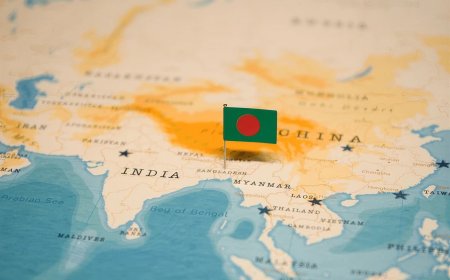
This is the wound the proposed Padma Barrage by the government promises to heal. Store nearly three billion cubic metres of water. Push back the salinity swallowing Khulna and Satkhira. Revive the Sundarbans' freshwater balance. Restore the southwest, 37% of Bangladesh's landmass, to something resembling its former self.
The promise is real, but so is the problem. Nobody in the ECNEC approval room seems to have asked loudly enough: Where is this water actually coming from?
Bangladesh's rivers are not infrastructure. They are the organizing logic of an entire civilization. The nouka, the beel, and the char are not folklore and tourism material. Rivers are the grammar of how people in this delta have lived, moved, farmed, and buried their dead for centuries. The delta itself is built from sediment that rivers carried down from the Himalayas over millennia, and it stays afloat the same way. Remove the sediment, and the delta doesn't just shrink; it drowns.
In the 1960s, the major rivers brought roughly 200 crore tons of sediment into Bangladesh each year. That figure has since fallen to somewhere between 60 and 100 crore tons. Farakka is the main culprit, trapping an estimated 30 to 60 crore tons annually since 1975.
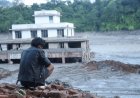
The downstream consequences are well-documented, even by Indian scientists, some of whom have called Farakka a fundamentally flawed decision. Around 100 square kilometres of land is gone in Murshidabad. 50,000 homes reportedly destroyed. Movements in West Bengal and Bihar have demanded its removal.
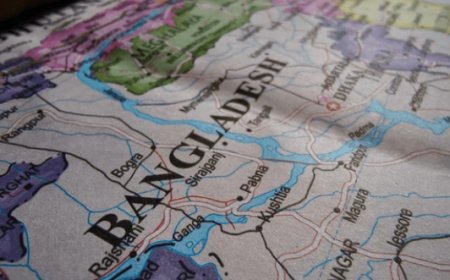
Bangladesh now proposes to build something structurally similar on the same river at Pangsha in Rajbari for Tk 50,000 crore, roughly what the Dhaka Metro cost.
Sit with the numbers for a moment. The Padma carries between 350 and 525 billion cubic metres of water into Bangladesh every year. The barrage will store 3 billion cubic metres. A single day's flood discharge can be twice what the barrage is designed to hold over three months.
Yet the project claims this storage can irrigate 19 lakh hectares of farmland. Credible hydrological estimates put the water requirement for that at anywhere between 9 and 26 billion cubic metres. If every stored drop goes to irrigation, there is nothing left for fish, for navigation, for the river's own biological survival.
The Teesta is worth recalling here. The Teesta Barrage was built on similar logic. There is no water-sharing treaty with India on the Teesta, and in the lean season the river arrives in Bangladesh as little more than a memory of itself. The barrage manages scarcity; it does not manufacture water.
The Ganges Water Sharing Treaty expires this year. It was already imperfect. Bangladesh failed to receive its treaty-guaranteed share roughly 52% of the time over a 20-year study period, and nearly 65% of the time during the most critical lean-season window. If the flow at Farakka drops to 50,000 cusecs, Bangladesh gets 25,000, not the 35,000 it anticipated. The shortfall is completely Bangladesh's to absorb.
So Bangladesh is preparing to spend Tk 50,000 crore on a barrage whose dry-season performance depends entirely on upstream releases it does not control, under a treaty that is expiring, from a neighbor that has not consistently honored even the existing arrangement. That is a bet, dressed up as a development project.
The people living along the southwest's rivers want the river back. A barrage and a river are different things.
What actually helps is less photogenic. Renew the Ganges Treaty with a minimum flow guarantee -- like the 1977 agreement had, and the current one conspicuously lacks -- covering all 12 months rather than just the dry season. Accede to the UN Watercourses Convention so Bangladesh can argue its case in international forums from a position of legal standing.
Build a basin-level diplomatic framework that brings Nepal in; the Koshi basin could hold cooperative reservoirs releasing dry-season water into the Ganges, which would be an actual upstream solution rather than a downstream band-aid.
Domestically, we should dredge the Gorai-Madhumati system seriously, restore abandoned canals and encroached waterways, convert some coastal polders into seasonal embankments so water and sediment can re-enter the land for part of the year. Treat dredged sediment as the resource it is, for raising low-lying coastal land, for the delta's own slow self-repair.
None of this cuts a ribbon well. None of it makes a good drone shot. None sells on social media.
The Bengal delta was not assembled by announcement. It was built over thousands of years by sediment, by time, by water that knew where it was going. The people who live along it have always known this, in the way that people who depend on something for survival tend to know it, not as policy, but as fact.
A barrage cannot create water. And without the diplomatic groundwork to guarantee what that barrage needs to function, Tk 50,000 crore buys Bangladesh a magnificent valve at the end of an uncertain pipe, built in hope, hostage to decisions made in another capital. Where have we heard this story before?
The river has a long memory. It will not be fooled by the concrete.
Faruq Hasan is a development worker and a political analyst.