
































































The Audacity of Truth: Mahatma Gandhi’s Idealism in the Age of Expediency
Mahatma Gandhi reminds the leaders of our generation that the true health of a nation or a country’s success is not measured or judged by its financial wealth or by the growth of its richest citizens, but by the safety, dignity, and care it provides to its poorest and most vulnerable people.

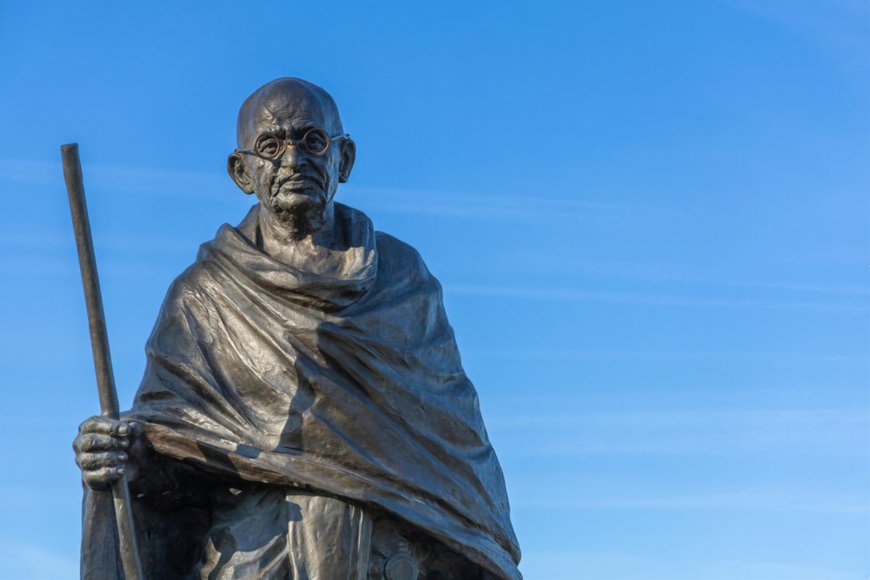
We live in an era where political leadership is often measured by the surge of a social media status, the sharpness of an audio or video clip, or the crude exercise of economic and armed domination. We are told that politics is a game of expediency, an arena of compromise where the hardheaded always defeats the righteous.
Yet, as we look around a world fractured by polarization, conflict, and a systemic trust deficit, we must ask a fundamental question: Is idealism, optimism or morality a weakness or is it the ultimate form of courage or audacity?
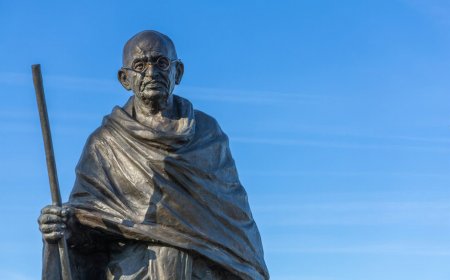
Over many decades, one individual has stood as a defiant answer to this very question: Mahatma Gandhi. Today, the philosophical principles and idealism of the great Mahatma Gandhi are not outdated relics of the past, but the exact blueprint required for modern leadership.
Mahatma Gandhi’s first great revolution was changing the currency of power. During his time, power belonged to empires and armies.
Mahatma Gandhi flipped this script by introducing moral authority through Satyagraha, which means the insistence on truth. He proved that a leader's true strength does not come from the ability to enforce obedience, but from the willingness and preparedness to suffer alongside his people, which means empathy or compassion.
For the leaders of our time, this is a profound challenge. Today’s citizens are deeply pessimistic or cynical, weary of leaders who act out of political expediency.
When we see contemporary leaders who command authority not through fear, but through transparency, humility, inclusivity and alignment with ethical and moral standards, we see the shadow of Mahatma Gandhi.
He taught us that power without principles is a social sin, and that true authority or power is earned through service delivered to the people, not seized through force.
Second, Mahatma Gandhi redefined peace. He showed the world that Ahimsa or non-violence, is not a weapon for the weak. It is a highly strategic, active, and potent weapon for the brave.
The world witnessed Mahatma Gandhi’s idealism catch fire in the 20th century. Mahatma Gandhi's philosophy did not die with him; instead, it rapidly spread, gained massive popularity, and inspired global movements during the mid-to-late 20th century.
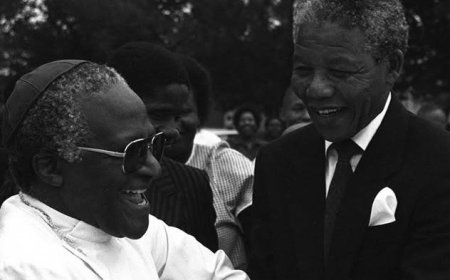
It steered Dr. Martin Luther King Jr. as he marched across Selma in the USA. It catalyzed Nelson Mandela’s framework to heal a deeply divided South Africa without plunging it into a bloodbath.
In our world today, where global conflicts rage and digital echo chambers demonize other, where people only see opinions that agree with their own, Mahatma Gandhi’s approach offers a lifeline.
He always maintained a deep faith within, that every human being, even a cruel oppressor or enemy possesses an inner conscience and the capacity for moral goodness, and thus he always left the door open for dialogue, he never refused to talk to his enemies, always remained keen to negotiate and find a peaceful solution.
Contemporary leaders who refuse to divide people into competing ‘us vs. them’, who refuse to camp based on race, choice of party or religion or avoid exploiting social divisions for quick political gain, consciously choose to unify the society, choose negotiation over retaliation, and most importantly they understand that long-lasting peace cannot be built on the graveyard of their opponents, they are the ones practicing the highest form of Mahatma Gandhi’s school of statesmanship.
Perhaps Mahatma Gandhi’s most enduring gift to governance is a simple tool known as his "Talisman" which is a moral compass or a guiding rule for the people with power.
Mahatma Gandhi dared and constantly questioned the motives of the people with power: “Will the step you contemplate be of any use to the poorest and to the weakest man whom you may have seen?”
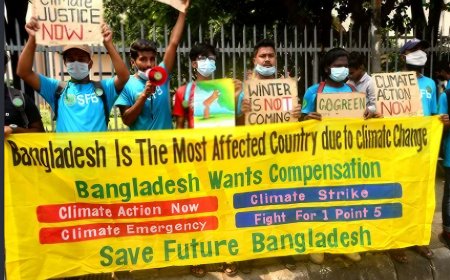
To put it in today's words, this is the philosophy of Sarvodaya, which means welfare for all. When modern leaders design policies for universal health coverage, fight for climate justice, or build social safety nets, they are answering this call.
Mahatma Gandhi reminds the leaders of our generation that the true health of a nation or a country’s success is not measured or judged by its financial wealth or by the growth of its richest citizens, but by the safety, dignity, and care it provides to its poorest and most vulnerable people.
Today, we may deliver an urgent moral call to action. Following Mahatma Gandhi’s philosophy is not about replicating his physical appearance or his lifestyle choices, rather, it is about adopting his deep moral and ethical principles. It is about a firm commitment to human dignity, truth, and justice.
The most impactful and unforgettable leaders in history are those who truly bend the arc of history, are not the ones who conformed to the cynicism of their times.
They are the ones who had the audacity to be idealistic, had the audacity to believe that love could defeat hate and that non-violence and moral courage could overthrow empires.
Society may have called them unrealistic dreamers, but they ended up changing the world. We may demand this standard from the leaders of our generation, and may strive for it ourselves too.
Because in a world darkened by conflict, the light of truth is still the brightest beacon we have.
Barrister A B M Hamidul Mishbah, is a practicing Advocate at the Supreme Court of Bangladesh, Managing Partner of OLD BAILEY Chambers and Founder of Bangladesh Intellectual property Forum.