



























































Mnemonicide of a Crocodile
When a person dies at a railway crossing, we do not abolish the railways. When a pilgrim is trampled at a religious gathering, we do not demolish the shrine. We install gates. We create safety protocols. We manage risk. In Bagerhat, none of this was attempted.
The video haunts me. Not the one of the child -- that is a private horror, a family’s universe collapsed into a pond -- but the one that came after.
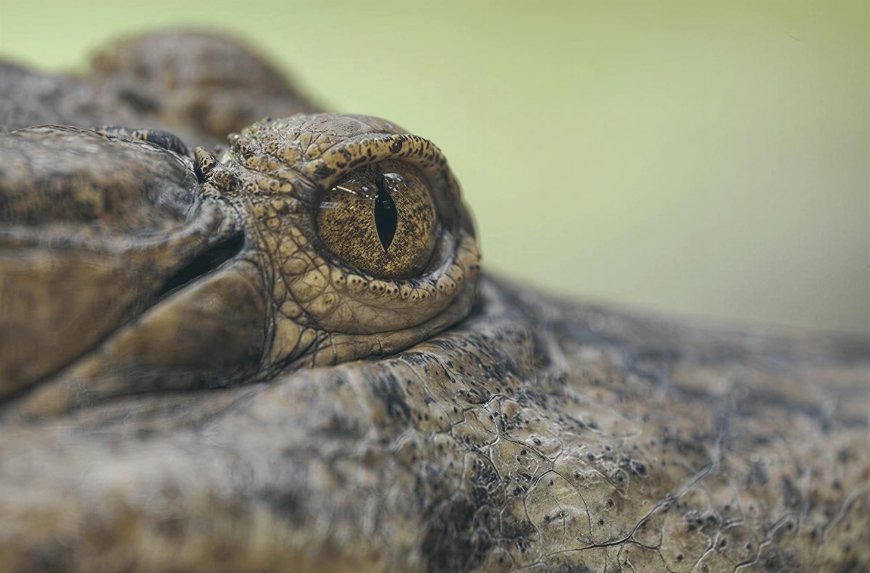
A saltwater crocodile, nearly ten feet long, dark and ancient-looking, is trussed in coarse rope on the bank of the Thakur Dighi. Its jaws are bound shut. Its legs are lashed against its body. It thrashes, a great muscular twisting against the cords, and the crowd of thousands presses in with phone cameras raised.
Fire service personnel in orange vests heave the creature onto a truck. A snake rescuer directs the operation. Somewhere, watching, is the Deputy Commissioner of Bagerhat. This is not a rescue. This is an expulsion. This is the end of a 600-year-old dream.
The crocodile was the last of its kind. For centuries, the pond at the Khan Jahan Ali shrine in Bagerhat was home to a pair of saltwater crocodiles -- apex predators of the Sundarbans mangrove forest, living not in the wild but in a freshwater tank dug by a 15th-century saint. Locals reportedly called them Dhola Pahar and Kala Pahar, the White Mountain and the Black Mountain, names that evoke the mythical twin peaks that frame the horizon of Bengali folklore.
One of the pair died earlier. The other, the dark one, the survivor, was the last living syllable of that sacred dyad. On June 1, 2026, it was bound, removed, and exiled to a breeding centre in the Sundarbans. The pond is now silent. The tradition is extinct.
The Tragedy and the Question of Proportion
Let me be clear about what preceded this. Days earlier, a seven-year-old boy named Alif was bathing in the shrine’s pond during a family visit. The crocodile attacked and killed him. There is no minimizing this. A child is dead. A family is shattered. Their grief is sacred and non-negotiable.
But grief, when weaponized by a crowd and amplified by a panicked administration, can produce its own violence. And we must ask the question that a responsible state should have asked before acting: In 600 years, how many have died? We know of a 2025 incident where a man’s leg was severed. We know of Alif. There may be others lost to oral history. But over six centuries of co-presence -- pilgrims bathing, feeding, living alongside these creatures -- the record suggests a relationship of remarkable, almost miraculous, restraint.
When a person dies at a railway crossing, we do not abolish the railways. When a pilgrim is trampled at a religious gathering, we do not demolish the shrine. We install gates. We create safety protocols. We manage risk. In Bagerhat, none of this was attempted. No fencing was proposed. No regulated bathing zones were demarcated. The only solution the district administration could conceive was elimination -- the permanent, irreversible destruction of a living heritage. This was not public safety. This was public vengeance dressed in administrative language.
What Was Lost: The Living Archive
To understand the magnitude of this elimination, one must understand what the crocodile was.
The Khan Jahan Ali shrine is not merely a Sufi mazar. As historian Richard M. Eaton has documented in The Rise of Islam and the Bengal Frontier, Khan Jahan Ali was a civilizational pioneer -- a figure who, in the fifteenth century, led the clearing of the Sundarbans’ mangrove forests and the establishment of permanent human settlements.
The massive freshwater tanks he dug, including the Thakur Dighi, were feats of ecological engineering that made life possible in a saline delta. And into one of these tanks, the saint introduced saltwater crocodiles.
This was not a whimsical act. In the cosmology of the Bengal frontier, the crocodile was the apex terror of the surrounding wilderness. To bring it into the heart of the settlement and command it to live peacefully among devotees was a demonstration of baraka -- the saint’s spiritual sovereignty over the wild.
The crocodile was a living contract between Khan Jahan Ali, the community, and the terrifying mangrove. To sit by that pond and see the dark form basking on the bank was to witness the fifteenth century breathing in the twenty-first. It was a miracle performed daily, for free, for anyone who cared to look.
The crocodile captured in that video was not a wild animal that had wandered into the wrong place. It was, according to reports, born in that pond. It had lived there for an estimated forty to fifty years. It was part of a locally adapted lineage, a unique biocultural phenomenon with no parallel anywhere in the world.
Its body held the memory of the pond’s water chemistry over decades. Its behavior -- surfacing at feeding times, habituated to the azan and the murmur of pilgrims -- was a stored, embodied performance of a six-hundred-year-old interspecies ritual. This creature was not a pet. It was not a zoo exhibit. It was a living archive. And we have burned it.
Mnemonicide: A Framework for the Invisible Crime
We have words for some kinds of destruction. Homicide is the killing of a human. Ecocide is the killing of an ecosystem. But what do we call the killing of memory itself? I propose mnemonicide.
The French historian Pierre Nora distinguished between milieux de mémoire -- living environments of memory where the past is enacted through ritual, body, and place -- and lieux de mémoire -- constructed sites of memory, like plaques and museums, built precisely because the living memory has died.
The Thakur Dighi, with its resident crocodiles, was a milieu de mémoire. The memory of the saint, the delta, the tamed wild, the syncretic Islam that needed no mosque-alone orthodoxy -- all of it was stored in the simple, daily act of seeing the crocodile and being seen by it.
The DC’s order executed a mnemonicide on this milieu. The crocodile was de-animated -- reclassified from a sacred guardian into a “dangerous animal.” It was expelled, severing the central node of the memory ecology. The rituals associated with it -- feeding, watching, telling stories, feeling awe -- have been forcibly terminated.
What remains is, at best, a future lieu de mémoire: A plaque that will read, “Here lived the sacred crocodiles of Khan Jahan Ali, removed for public safety in 2026.” The memory will be embalmed in text, something to study, not to live. The pond will hold water, fish, and a silence that will stretch across generations. This is not just loss. This is forced amnesia imposed by the state.
The Legal Autopsy
If the cultural loss is invisible to many, the legal violations should not be. They are stark, documented, and indefensible.
First, the saltwater crocodile (Crocodylus porosus) is a protected species under Bangladesh’s Wildlife (Conservation and Security) Act, 2012. The capture, possession, and relocation of any scheduled animal without explicit permission from the Chief Warden of Wildlife is a criminal offense.
The Forest Department, which holds this statutory authority, was reportedly informed of the capture, not consulted for permission. The operation was led by the police, the fire service, and a snake rescuer.
Second, the Khan Jahan Ali shrine complex, including its tanks, is a protected archaeological site under the Antiquities Act of 1968. Any major alteration to a protected site -- and the permanent removal of a centuries-old integral feature certainly qualifies -- requires consultation with and approval from the Department of Archaeology. There is no evidence this was sought or granted.
Third, even within the informal governance of the state, there was reportedly a moratorium: the Forest Department had previously decided, after the 2025 leg-severing incident, to leave the remaining crocodiles undisturbed and instead release more fish into the pond, explicitly recognizing their historical and traditional significance. The DC’s order overrode even his own state’s prior, more considered judgment.
The inescapable conclusion is that a mid-level bureaucrat, facing a grieving and agitated crowd, issued an oral order that violated at least two national laws and overturned an existing departmental consensus. He did not have the legal authority to do what he did. But he did it anyway.
And no part of the state apparatus -- not the Ministry of Culture, not the Ministry of Environment, not the Ministry of Religious Affairs -- has publicly challenged him. This is not governance. This is the exercise of raw, unaccountable administrative fiat.
The Hidden Script
This brings me to the question that keeps me awake. How is it possible that a single Deputy Commissioner can end 600 years of history, ecology, culture, and religion in a single afternoon? The answer, I have come to believe, is that the DC was not acting alone. He was reading from a hidden script.
James C. Scott, the political anthropologist, wrote about how modern states “see” in a way that flattens complex, illegible realities into simple, manageable problems. A sacred, multispecies memory ecology becomes, in the state’s eye, a “hazard.” Removal is the only legible response. But there is something more at work here than bureaucratic simplification.
Bangladesh, since the political rupture of August 2024, has witnessed a surge in majoritarian violence against religious minorities and their cultural expressions, including repeated attacks on Sufi shrines. These attacks have been met with a muted, often complicit, state response.
A signal has been sent, and local administrators across the country have learned to read it clearly. The hidden script goes something like this: Syncretic, enchanted, heterodox traditions are expendable. When a mob demands their erasure, compliance is safer than protection. The law can be suspended. Heritage can be sacrificed.
A Sufi saint’s crocodile is, in the final calculus, an embarrassment to be managed, not a wonder to be guarded.
The DC did not need to hate the crocodile. He did not need to be personally opposed to Sufi traditions. He simply needed to understand, as a survival instinct within the apparatus, that the political cost of protecting that crocodile against a grieving mob was far higher than the cost of destroying it. The hidden script is written in the ink of majoritarian pressure and high modernist impatience with the sacred. The DC was its dutiful scribe.
The Afterlife
The crocodile is now at the Karamjal Wildlife Breeding Centre in the Sundarbans. It was born in a freshwater pond, hand-fed, accustomed to the call to prayer and the footsteps of devotees. Now it is in a brackish enclosure, surrounded by strangers, in an ecosystem it has never navigated. Biologists speak of capture myopathy -- a fatal condition caused by extreme stress in captured wildlife. Whether this ancient, habituated creature survives is deeply uncertain.
But there is a deeper question: can a living relic be relocated? The crocodile’s body is in Karamjal. But its meaning, its function, its six-hundred-year-old office as guardian of a saint’s compact, has been extinguished. It is a refugee from a world that could no longer hold it. It is the last living carrier of a memory that its exile has already killed.
The pond in Bagerhat is now just a pond. The water holds no reptilian gaze. The pilgrims will still come. They will circle the shrine. They will look at the water. And they will find nothing looking back.
Last year, I wrote about the assassination of a banyan tree -- a living altar of syncretic Bengal, felled by chainsaws in the name of development. The crocodile of Khan Jahan Ali is that story’s twin. The chainsaw and the rope. The tree and the reptile. Both were guardians of a Bengal that knew how to hold the wild, the sacred, and the human in a single embrace. Both were killed by a state that could not see their sacredness, only their physical threat.
Every mnemonicide makes the next one easier. Every living memory erased clears the ground for a more homogenous, less enchanted, less tolerant republic. The crocodile thrashing against its ropes is the image that should keep us awake.
It is the image of a country thrashing against the bindings of its own hidden script, a script that demands it forget who it was. The ropes are tightening. The truck is moving. And the silence on the bank of the Thakur Dighi is the sound of a civilization losing a piece of its soul.
Zakir Kibria is a Bangladeshi writer, policy analyst and entrepreneur based in Kathmandu, Nepal. His email address is [email protected]