
































































Let the Barber Read Kafka
Literature resides in the public domain of human consciousness. It resists those who aim to claim an exclusive license over it

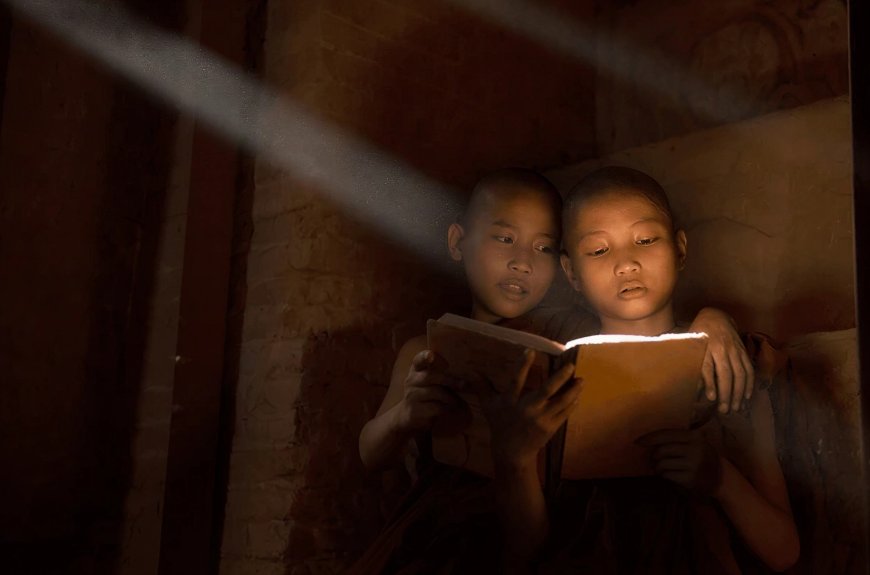
At a recent summer barbecue our host was nowhere to be found. He arrived a few minutes later with a sharp new haircut, apologized to the guests with an amused grin: ‘I went to get my haircut and found my Vietnamese barber reading The Metamorphosis. I had to wait for him to finish the page.’
He just dropped the comment casually, the way someone mentions a rainy forecast.
The racial undertone was unmistakable, as it carried the distinct scent of elitism. It clearly pointed to who is allowed to claim ownership over high literature.
There was a sharp bitter irony in watching an educated expat using his Western academic credentials and high paying job to look down on a fellow outsider. It revealed a hollow triumph of status by putting himself above the man cutting his hair.
A subconscious blurb perhaps, but it hung in the backyard air, triggering subtle looks of disapproval among the guests. He became a singular example in ‘intellectual blindness’ against a backdrop of decent regular people who did not find his comment to be particularly funny.
The comment immediately exposed an unspoken boundary between the service class and the intellectual elite occupying the ivory tower, revealing a deep-seated bias against the working-class.
This mindset manifests as snobbery when a highly educated person views European philosophy and enduring literary masterpieces as the exclusive domain of the Westernized elites.
He simply sounded like a man who believed his privileged degree from a top-notch university gave him the right to pass judgement on another immigrant’s reading habit.
I wanted to say, “Oh, please -- let the barber read Kafka but decided to stay silent against a patronizing comment. In a social setting, speaking up or calling out someone’s casual elitism usually creates an immediate social tension and leads to defensiveness.
The host’s amazement didn’t just stem from a barber reading Kafka. It stemmed from a Vietnamese immigrant worker reading the 1912 novella written by Franz Kaka.
The comment further revealed an unspoken rule held by the self-appointed intelligentsia that complex literature is a luxury passport only for the educated.
An academic vanguard often confuses a person's lack of fluent English with a lack of intellectual capacity.
By expressing amazement that a barber could engage in literature, he essentially weaponized his intellectual pedigree to declare ownership over Kafka.
The credentialed class holds no monopoly over who is permitted to enjoy a centuries-old literary piece.
As if he was saying, those who perform manual labour -- especially brown or Asian immigrants are not supposed to read The Metamorphosis.
In doing that he reduced his fellow migrant worker to a flat stereotype incapable of complex philosophical thoughts and questioning his intellectual curiosity.
His surprise also explores a belief that Southeast and South Asian immigrants without a fancy Western degree only exist to provide labour (cutting hair, driving a taxi, washing dishes in an ethnic restaurant, cooking, cleaning houses and office spaces) lacking an intellectual dimension.
There is a distinct and disturbing way the academic elite/literati view the intellectual lives of the working-class.
It manifests not in loud insults but in a subtle raised-eyebrow amazement discovering a barber reading Kafka between customer appointments.
Most likely such highbrow types are in a blind spot. To them the service workers become one dimensional.
Literature belongs to everyone who reads, writes, or finds meaning in a story regardless of formal education and social status.
While academic institutions and educated circles act as gatekeepers, the true value of literature lies in the universal accessibility and human connection.
The core of literature relies on shared human experiences that anyone can access or relate to. A book speaks directly to a reader; literature including Greek classics belongs to readers.
It is not a private club reserved strictly for the academic circles and literary communities.
The ability to read great books requires an open mind; one doesn’t need a diploma to feel the weight of a story.
Literary fiction deals with universal thematic constants: grief, suffering, love and betrayal, duty to family, survival, and fear of death. These emotions do not need a Western degree to decode. They require life experience.
However, the arbiters of taste often exhibit socio-economic condescension toward everyday working people. Such an attitude actively discourages them from nurturing their intellectual pursuit.
Formal schooling helps analyze texts, but anyone can feel a story, understand human pain and suffering, and enjoy a great novel.
With his amused tone the host demonstrated that education has failed in fostering an open mind in him.
By treating the barber’s intellect as a quirky punchline our host inadvertently exposed the invisible border the high-brow society builds around them.
Such shallow concepts blind some people into believing that the high art belongs exclusively to the educated group.
A barber possesses a mind like everyone else. He is fully capable of pondering over existential thoughts while working behind the chair.
Being amazed by a working class person reading a masterful prose is also a form of prejudice because it treats someone’s intelligence tied to a paycheck, or a PhD diploma rather than an innate human curiosity and having passion for literature.
This reveals a tragic fracture between status and wisdom. It is a reminder how society prefers its labor force to remain as a silent aesthetic.
Anyone who has any understanding of literature knows that a Vietnamese barber reading Franz Kafka should not be viewed as an exotic hobby.
The expat host armed with many degrees treats Kafka as a badge of privilege. Yet, Kafka’s themes in The Metamorphosis are exact realities of an immigrant adapting in a foreign Western land.
But the illusion of intellectual spaces is an idea that the snobbish elites and cultural custodians highly guard. They reckon that a deep philosophical thought only belongs in universities, research foundations, who regularly host lectures and discussions about the luminaries of literature and social sciences.
Does any group truly hold the right to regulate an individual’s access to literature? Such a premise is entirely untenable.
Lately, a new trend in South Asia is: Book launches and readings are regularly held in bookstores, a foundation’s library, or in a posh café.
A barber with a passion for reading will likely never venture into an exclusive literary salon, high-brow cultural enclave, and an independent bookstore for discussions or book launches because of the social and psychological barriers built around such places.
Essentially, they are deterred by institutional elitism that literature belongs to the educated and cultural types rather than the working class.
This applies whether a barber working in Puran Dhaka or at a shop in a strip mall in Northern Virginia. They face the same systemic alienation Kafka wrote about.
A barber’s chair is typically viewed as a place of communicating and sharing diverse human stories. A community fixture like this traditionally relies on superficial topics like sports, weather or gasoline price hikes with their customers.
There is a common saying: ‘The barber is a working man’s therapist.’
A man opens up to a barber like no one else. Men even vent to their barbers about their wives because the barbershop acts as a unique psychological safe zone.
But a professor who teaches a seminar on Homer might avoid discussing his summer reading list or Christopher Nolan’s $1.1 billion new movie The Odyssey with his barber because of socio- cultural structures rather than a lack of shared interest.
He wouldn’t discuss the film since it touches on class base intellectual gatekeeping and exclusivity.
Franz Kafka most certainly did not write his novella for the tenure-track literature professors in mind. Again it brings the question: For whom did Kafka write?
He famously wrote: A book should act as an “axe for the frozen sea within us.”
Kafka, a German speaking Jew living in Prague did not fully belong either to the German or Czech identity. He even felt like a misfit in his own traditional family.
He penned the novella on universal themes-- alienation, identity shifting, anxiety, and feeling like an outsider. He wrote about the crushing weight of empires, hostile and alien bureaucracies.
At its core Kafaka uses a bizarre premise to mirror the raw existing reality of everyday people.
He wrote about the terrifying, confusing experience of a human being inside an indifferent system. For an immigrant that is a daily reality.
Like any ordinary person, a barber or someone working a late shift as a watchman, can read Kafka and connect with his work.
In fact, some might argue that he can relate better with Kafka as he is navigating modern economic realities about Kafka’s theme of systemic frustration better than an academic elite.
Reading is a personal choice, not an occupation, and requires no prerequisites.
This intense sentiment applies to all human beings regardless of how they spend their working hours. Reading the beautiful Kafka stories belongs to their private time and intellectual life.
Sometimes the educated classes, who achieve the distinct ‘elite’ status through intense and rigorous academic struggle, subconsciously adapt biases they fought to enter those institutions. After securing their degrees, they become the custodians of intellectualism to safeguard and validate their hard work.
Therefore, a barber making an educated person wait a few minutes seemed like a personal failure. It was signaling, “I am an intellectual immigrant, not like him.”
A passionate reader whether he is a university professor or a local barber brings a unique and entirely different perspective to a literary work.
A professor might dissect a text in a classroom but a barber with a passion for reading holds the soul of the work in the shop.
To an immigrant barber, Kafka isn't fiction but a realist who wrote the immigration experience for him. It is a comforting feeling to know that someone else understood what it feels like to exist in spaces between cultures.
By reading Kafka he recognizes a brother in him. He would choose to read Kafka over others because his stories perfectly capture the psychological reality of navigating an unfamiliar system in a new country.
A Kafkaesque character Gregor Samsa is a hard-working traveling salesman. His life is completely controlled by endless hard work and capitalist pressure.
One morning he wakes up and finds his body has completely changed and he has become an insect, and lost the ability to communicate with the world.
Gregor's primary concern is he can no longer work and support his ungrateful family. As long as he could provide financial support for his family before he turned into a bug, he was useful.
After the metamorphosis, his humanity is ignored by everyone around him.
Similarly, the host looks at the barber as a service worker, missing the inner light of the man holding the book.
The physical mutation of The Metamorphosis captures the exact alienation of an immigrant landing in a brand new country.
His history, academic degrees from home vanish, and they are viewed as a strange, unwelcome outsider to the locals.
This is a universal storyline that resonates across time and culture. Immigrant workers often carry this exact crushing pressure. They sacrifice their happiness, comfort and mental peace to send money home.
By reading Franz Kafka, the Vietnamese barber is reclaiming a text that speaks directly to the displaced and the working-class. It subverts the elite’s attempt to use European literature as a tool of class distinction exclusive to Western intellectuals and literary scholars.
In Vietnam, both Franz Kafka and Haruki Murakami are deeply loved. Their stories perfectly capture how it feels like to be overwhelmed by a rapidly changing world.
Their characters are primarily drawn from the ranks of ordinary, working-class individuals
Murakami’s novel Kafka on the Shore's stylistic pattern is based on that of Kafka.
In the novel, a character named Hoshino is a truck driver with no interest in formal education or high culture. He eventually goes through an intellectual and spiritual awakening and learns to appreciate Beethoven’s music and philosophical concepts.
Just like Gregor, an immigrant barber wears a mask where he constantly has to put on an engaging, polite face for his customers no matter how tired he feels. These parallels are striking.
He might see his life reflected in Gregor’s through several direct parallels. For example, he can resonate with the feeling of being trapped by economic demands and used as a machine for other people’s comfort.
The barber probably understands The Metamorphosis on a visceral level that an educated expat with fancy degrees will never do.
Besides, Kafka did not write this story as an intellectual puzzle for the academics, Ivy League degree holders, or literary reviewers.
So who is to say that an immigrant barber, sitting in a corner chair or on a stool between customers, cannot read The Metamorphosis?
There was a tragic irony to witness that someone who knows what it feels like to live outside his own native country revealed that a working-class immigrant shouldn’t have an appetite for complex surreal literature.
Literature resides in the public domain of human consciousness. It resists those who aim to claim an exclusive license over it.
After about an hour, I decided to slip out quietly thinking that the truest understanding of art and literature is missing in the person who is hosting the barbecue party.
As I walked outside into the summer night’s humidity, I recognized that true literature can be found anywhere. One can see it in a neon-lit shop down the street, held by an immigrant barber immersed in a timeless classic between hair clippings.
Zeenat Khan is a regular contributor to South Asia based journals and literary magazines.