










































































Bangladesh Amid Geopolitical Tempests
Bangladesh's geographical location -- standing at the intersection of South Asia, Southeast Asia, and vital maritime trade routes -- grants it immense strategic value. Washington understands this reality fully.


In the volatile geopolitical theatre of South and Southeast Asia, Bangladesh now appears to be approaching one of the most consequential strategic turning points since its birth in 1971.
Reports emerging from international defence circles suggest that Dhaka is nearing the final stages of signing two highly sensitive military agreements with the United States -- the Acquisition and Cross-Servicing Agreement (ACSA) and the General Security of Military Information Agreement (GSOMIA).
If realized, these agreements could fundamentally alter Bangladesh’s long-standing foreign policy doctrine of balanced diplomacy and strategic autonomy.
The central question therefore becomes unavoidable: Is Bangladesh slowly transforming from a sovereign regional actor into a military instrument within the wider strategic rivalry of global powers?
For years, Bangladesh maintained a cautious equilibrium between Washington, Beijing, New Delhi, and Moscow. Under the leadership of Sheikh Hasina, Dhaka repeatedly delayed or resisted entering such military frameworks despite intense diplomatic pressure.
The Awami League government understood that defence agreements involving logistical access, intelligence-sharing, and military interoperability could potentially compromise Bangladesh’s independent strategic posture. That hesitation was not accidental; it reflected a broader doctrine of avoiding entanglement within great-power confrontation.
Today, however, the political atmosphere appears markedly different because of the calculated wishes of a western superpower.
The BNP-led political alignment now seems considerably more inclined toward deepening strategic proximity with Washington.
Supporters of these agreements argue that Bangladesh requires stronger defence cooperation, advanced military technology, and expanded economic privileges, including possible restoration of trade incentives such as GSP facilities.
Yet critics fear that beneath these attractive diplomatic promises lies a far more dangerous geopolitical design.
ACSA and GSOMIA are not merely administrative defence arrangements. In strategic terms, they create the infrastructure for logistical coordination, intelligence exchange, military compatibility, and expanded operational access.
Such agreements, once signed, often become gateways toward deeper security dependency.
The fear among many observers is that Bangladeshi ports, airfields, and coastal facilities could gradually evolve into strategic nodes within the broader Indo-Pacific military architecture led by the United States.
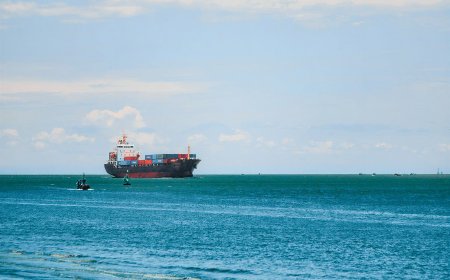
The Bay of Bengal has already become one of the world’s most contested maritime corridors.
From the South China Sea to the Indian Ocean, the rivalry between China and the United States intensifies with every passing year.
Bangladesh’s geographical location -- standing at the intersection of South Asia, Southeast Asia, and vital maritime trade routes -- grants it immense strategic value. Washington understands this reality fully.
This is why speculation surrounding Saint Martin’s Island and the Bay of Bengal continues to provoke national anxiety.
Strategic analysts increasingly discuss the possibility of surveillance infrastructure, naval logistics hubs, or so-called “lily pad” facilities emerging under the broader framework of Indo-Pacific security cooperation. Even if officially denied, the suspicion alone carries enormous political consequences.
Equally significant is the Myanmar dimension.
Myanmar possesses vast reserves of rare earth elements and critical minerals essential for advanced technologies and modern defence industries.
As instability deepens inside Myanmar and international pressure mounts upon the junta regime, Bangladesh risks becoming entangled within a larger geopolitical chessboard involving resource control, strategic corridors, refugee dynamics, and military positioning.
Washington may view Bangladesh not merely as a partner, but as a geographic bridge into the wider regional contest over resources and influence.
Such developments inevitably affect Bangladesh’s delicate relationships with both China and India.
China remains one of Bangladesh’s largest development and infrastructure partners, while India remains an indispensable neighbour bound by geography, history, water-sharing, and regional security concerns.
Entering overt military alignment with one global bloc risks generating strategic distrust from the others.
Bangladesh has historically benefited from maintaining diplomatic flexibility rather than ideological alignment. Once that neutrality erodes, recovering it becomes extraordinarily difficult.
The danger is not cooperation itself. Every sovereign nation has the right to maintain defence partnerships.
The real danger emerges when partnerships evolve into dependency, and dependency gradually erodes sovereign decision-making.
History offers painful lessons about smaller nations becoming theatres for proxy competition among superpowers. Foreign military entanglements rarely remain temporary or politically neutral.
Bangladesh was not born to become a subordinate frontier within another nation’s strategic doctrine. The Liberation War of 1971 was fought to establish dignity, sovereignty, and independent statehood -- not to transform the country into a geopolitical outpost serving competing global ambitions.
Therefore, the national debate surrounding ACSA and GSOMIA transcends only partisan politics of the Whitehouse administration.
This issue concerns the future character of the Bangladesh as a country itself. Citizens deserve transparency, parliamentary scrutiny, public consultation, and clear constitutional safeguards before any such agreements are finalised.
Bangladesh today stands before a defining historical crossroads. One path leads toward balanced diplomacy, sovereign autonomy, and regional equilibrium. The other risks drawing the nation into the dangerous gravitational pull of superpower militarization.
The choice Dhaka makes today may shape not merely its foreign policy, but the destiny of generations yet unborn.
Bangladesh now stands at sovereignty’s perilous crossroads, drifting from strategic neutrality into an ominous arena where contending superpowers relentlessly vie for dominance and influence.
Anwar A. Khan was a freedom fighter in 1971 to establish Bangladesh and is an independent political analyst based in Dhaka who writes on politics, political and human-centred figures, current and international affairs.