


















































How Dhaka’s Gig Workers are Getting Squeezed
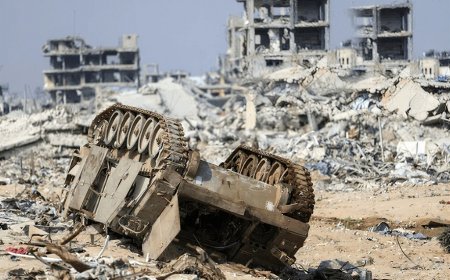
West Asia is burning again as the US-Iran conflict takes new turns. The heat of the conflict has reached the queues for fuel in Dhaka’s filling stations, where a new class of working poor is born in real time.

The first thing Mohammad Rifat Hossain did after driving all night last Friday was not go home to his family. Instead, Mohammad Rifat went to a petrol pump.
He had heard that Sonar Bangla filling station was dispensing octane, so he went there. When he got to Sonar Bangla, he saw a lot of bikes already in the queue in front of him.
As he waited, he remained stuck in a deadlock that was not moving. He pivoted to another pump near Paribag Masjid.
Another mass of idling riders, another dead wait. He went back to Sonar Bangla. After two hours of circuit riding on fumes, he finally purchased one-thousand-taka worth of fuel at 12 in the noon. Not a full tank. Just enough to last, at most, a day and a half of ride-sharing.
Days later he was standing in another line outside Meghna Petroleum station. "That's it, today's trip is done for." Driving for four years, Mohammad Rifat Hossain has never seen such a persistent fuel shortage like this before.
The Invisible Transmission Belt
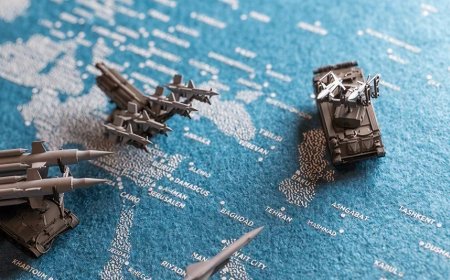
The war between Iran and the US-Israel axis has expanded into a wider regional conflict, sending crude oil prices to levels not seen in recent years.
According to the World Bank's Commodities Price Data (Pink Sheet) for April 2026, crude oil surged by 55%, averaging in the range of $95–100 per barrel -- up from $66–68 in January. Dubai crude moved from $63.9 to $91.9 over the same period.
Bangladesh is acutely exposed to these movements. Domestic crude production meets only 15% of total need; the remaining 85% is imported.
Oil accounts for 26% of total energy supply, and natural gas supplies 48%, with domestic production covering only 79.8% of domestic gas demand as of 2023.
The country's refining infrastructure has been built specifically to process Middle Eastern crude, which makes diversification a technical challenge as much as a logistical one.
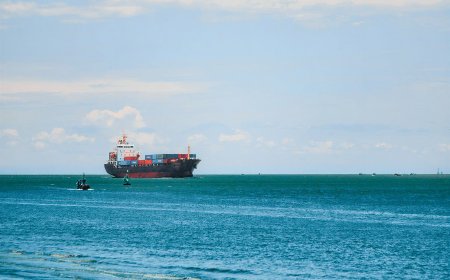
Qatar and the UAE together supply 72% of Bangladesh's LNG. Approximately 22 LNG cargoes were scheduled between March and May 2026, of which 18 were planned to transit the Strait of Hormuz. As the Energy Minister confirmed to The Daily Star, 20-23% of Bangladesh's imported fuel passes through the Hormuz Strait.
When Iran's Islamic Revolutionary Guard Corps formally declared the Strait of Hormuz closed on 2 March 2026, the architecture of Bangladesh's entire energy import model collapsed simultaneously across its two principal contracted sources.
QatarEnergy suspended deliveries after Iranian strikes targeted infrastructure at Ras Laffan. OQ Trading of Oman followed with its own Force Majeure declaration.
Bangladesh was forced into a spot market under conditions of extreme volatility, without the pricing leverage or hedging instruments that a more diversified procurement strategy would have provided.
In January 2026, Bangladesh secured spot LNG at approximately $10 per MMBtu. By early March, a first emergency tender drew no bids as traders declined to quote under conditions of acute uncertainty.
A second tender attracted offers at $28.28 and $23.08 per MMBtu -- a rise of between 130 and 183% in under two months, per Bangladesh Petroleum Corporation import records and daira's April 2026 policy brief on the macroeconomic impact of the US-Iran conflict.
The LPG market tells the story even more starkly. Saudi Aramco's Contract Price for propane, which BERC uses monthly to set Bangladesh's domestic LPG tariff, rose from $525 per metric tonne in January to $750 in April. Butane went from $520 to $800.
The Bangladesh Energy Regulatory Commission's April 2 price order (BERC Order 2026/05) translated these numbers into consumer prices: The retail price of bottled LPG was set at Tk 144.04 per kg, up from Tk 111.74 in March -- a 29% increase in a single month.
Auto gas moved from Tk 61.83 to Tk 79.77 per litre. Furnace oil, on which Bangladesh's power sector runs, jumped from Tk 86 to Tk 94.69 per litre following BERC Order 2026/07 on April 12.
Effective April 19, as reported by The Daily Star, domestic fuel prices were raised to record highs: diesel at Tk 115 per litre, octane at Tk 140 per litre, petrol at Tk 135 per litre, and kerosene at Tk 130 per litre.
Octane is a different and in some ways, more chaotic story. Unlike furnace oil or LPG, the retail price of octane has not been adjusted monthly. What has changed instead is its availability, which has approached near-total disappearance from Dhaka's pump forecourts during peak demand periods.
The riders waiting at Meghna Petroleum's Paribag station were not there because octane had become unaffordable in the formal sense. They were there because there was simply not enough of it, at any given moment, at any given pump, to go around.
The Arithmetic of Ruin
To understand what the fuel crisis is doing to Dhaka's ride-sharing workforce, one needs to do the arithmetic that the apps do not do for them.
Jewel has been riding since the early months of the COVID-19 pandemic. He used to earn around Tk 30,000 a month before the crisis. Farid, another rider who has been in this gig for over two years, used to clear 28 to 30,000 in monthly income.
Both figures represent the practical floor for a working-class family in Dhaka: Enough for rent, food, a child's school fees, perhaps a small remittance to parents in the village.
Now the income has dried up due to long queues and fuel shortages, as Jewel put it: "Less than half. Below half."
The mechanism of this collapse is not mysterious, even if it is invisible to the platforms and to policymakers. Let's take a hypothetical trip from Paribag to Moakhali. The app might show a fare of Tk120. Of that, Pathao takes 15%, roughly Tk25. The cost of fuel for that trip at current octane prices runs to approximately thirty taka or more depending on traffic. The figure that a rider actually pockets for that trip is closer to one hundred taka — before accounting for wear on the bike's tyre and chain.
However, this algorithmic calculation assumes fuel is available. When it is not -- when a rider must spend five to six hours in a queue, if not ten hours, to purchase five hundred taka worth of octane -- that time is dead time. There are no rides being completed. There is no income. There is only a line. As Rifat Hossain said: "I entered the queue at nine in the morning. Now it's quarter past twelve. Today's trips are finished."
Mohammad Murshid, a part-time rider who works days at the Ministry of Foreign Affairs and rides in the gaps, had spent a previous attempt at a pump in vain. He waited five or six hours and the pump closed before his turn. He tried again another day. Three hours. Same result. "This is how it has been going," he said, with the flat resignation of someone who has stopped expecting otherwise.
The compounded effect is that riders can now only run their bikes for roughly 15 out of 30 days a month. Fuel acquisition eats the other 15. Monthly earnings have been cut by more than half, while the cost of the fuel they do manage to obtain has risen sharply. Higher prices on one side. Fewer working days on the other. It is a pincer movement.
What the App Owes, and Does Not Pay
The riders at the Paribag queue were not merely frustrated with petrol pumps. They were frustrated with a system in which the full weight of the energy crisis falls entirely on them, while the platforms that depend on their labour absorb none of it.
"The apps are fine," said Rifat Hossain. "But for the riders, there's no advantage here."
The fare structure of Bangladesh's ride-sharing platforms has not been systematically adjusted to reflect the fuel cost increases of the past months.
When fares have moved at all, they have moved incrementally and incompletely. The riders described a situation where the app-displayed fare for a given journey bears almost no rational relationship to the actual cost of fuel, time, and maintenance required to complete it.
Farid had reached a logical endpoint. He had switched off his app entirely. One full month offline. "The fare shows too low. And then the fuel.
Three hours in the queue right now, may take another two-three hours. It doesn't balance." His companion Jewel, who operates informally without platform registration, has the flexibility to price his own rides but noted that this too has limits. "If the passenger doesn't want to pay more, what can I do? You can't force them."
Riders across the queue have urged the authorities to raise the minimum per-kilometre fare and set a floor of three hundred taka for ride-sharing trips. Whether this demand will be heard remains to be seen.
The Pump as Site of Injustice
If the riders are angry at the platforms, they are incandescent about the fuel distribution system itself.
Jewel came close to raising his voice when he described what he believes is happening at petrol pumps across Dhaka. "Every pump is giving short measure. When you buy five hundred taka of petrol, you are getting half a litre less than you should. Take a separate bottle. Go to any pump. Buy five hundred taka. Measure it.
You will see. Half a litre short." Bangladesh's modern bikes have digital fuel gauges; riders who have tracked their consumption carefully say the discrepancy is consistent and significant.
The riders also alleged that car drivers -- many of whom use CNG as their primary fuel and only need octane to start the engine -- are occupying queue slots, purchasing octane, and reselling it in plastic bottles at Tk300 per litre or more. "The private cars get priority," said Farid. "And they're taking our octane."
One rider described waiting all night at a pump in Rampura, standing from 11pm, sleeping on the footpath, waking to mosquitoes, reaching near the front of the queue by 9:30am, only to have the gate closed in front of him. His tyre was half inside the forecourt when the gate swung shut.
What remains most striking is not the hardship itself but the riders' complete awareness that no one is watching. "Who will look at this? Who is responsible?" Jewel demanded. "The government has deployed thousands of people on salary. What is their job? Why are they not observing this?"
Official Response. Speaking in a parliamentary session on April 19, Energy Minister Iqbal Hassan Mahmood stated -- as reported by TBS News and the Dhaka Tribune -- that there is no actual fuel shortage in the country, alleging that unscrupulous traders are creating an "artificial crisis" through hoarding and black-market sales.
He noted that 3,510 cases have been filed and over 5.42 lakh litres of fuel seized to date. Commerce Minister Khandaker Abdul Muktadir, following a task force meeting on April 21 covered by Business in Bangladesh, reiterated that the government will not tolerate market manipulation.
Prime Minister Tarique Rahman, speaking in parliament on April 22 per RTV Online and The Daily Star, acknowledged the crisis as a global reality and expressed openness to an opposition-proposed joint committee to tackle the energy crunch.
On the same date, The Daily Star reported that the government approved the direct purchase of 1.75 lakh tonnes of diesel and octane from US and Dubai-based suppliers at approximately Tk 1,700 crore, aiming to bypass disrupted Hormuz shipping routes.
The Human Cost, Up Close
Jewel's wife called him two days before we spoke to him. "She asked if I had gotten married again," he said, with a laugh that carried something beneath it. "She's educated. She said, the money used to come. Now it doesn't. You can't even support yourself. How is this possible?"
He told her he hadn't gotten married. He simply hadn't earned anything.
Rifat Hossain described what it feels like to pass a young man pushing his bike down the road, fuel gauge on empty, and be unable to spare half a litre to help. Before the crisis, he had given half a litre of his own fuel to a stranded rider near Agargaon. "Now I can't. I want to. But there's no way."
The social solidarity of the street -- the casual, informal mutual aid that has always characterised how low-income workers in Dhaka navigate emergencies -- is drying up at the same moment that the emergency has become most acute. It is one of the crisis's least visible costs.
Farid comes from Gaibandha. He lives in Khilgaon. He came to Paribag that morning having already circled through Motijheel and Hajipara and found nothing. He waited from ten in the morning. When we spoke to him, it was already half past twelve. He told us it would take at least another two hours to reach the filling station in the queue. His rides were already over for that day.
What the Crisis Reveals
According to daira's April 2026 policy brief on the macroeconomic impact of the US-Iran conflict, Bangladesh entered the current crisis in a state of partial recovery yet structural fragility. Real GDP growth had decelerated to 3.03% in Q2 FY2025–26, the weakest quarterly performance in a decade. Consumer price inflation stood at 8.71% in March 2026. Bangladesh Bank had spent two years executing an aggressive tightening cycle, raising the repo rate by 375 basis points to 10% , which had led private sector credit growth to near zero.
The shock itself was simultaneous and multi-commodity. The World Bank's Pink Sheet for April 2026 records that Brent crude surged 45.8% to $103.69 per barrel in March, and urea fertilizer spiked 74.7% to $725.63 per metric ton. Foreign exchange reserves fell $993 million in a single month.
At current oil price levels, daira's brief projects that Bangladesh's FX reserves could fall to $28–30 billion within six to nine months, approaching the IMF's three-month critical import cover threshold.
The deeper structural picture is that Bangladesh did not stumble into this crisis by accident. It arrived here through years of deferred decisions on domestic gas exploration, strategic reserve building, renewable energy investment, and supply diversification.
Bangladesh currently holds no formal strategic petroleum reserve -- a stark contrast with countries like Australia, Japan and South Korea, which maintain reserves covering more than 200 days.
Bangladesh removed fuel subsidies in 2022, causing prices to spike by as much as 50 percent almost overnight. With the IMF's dynamic pricing condition now in effect, there is no longer a fiscal buffer standing between global price movements and Bangladeshi consumers.
The gig economy rider sits at the precise intersection of all these vulnerabilities. No subsidy shield. No union. No algorithm adjustment. No compensation.
The riders at the Paribag pump were not asking for subsidies. They were not asking for revolution. They were asking for petrol to be available at the pump when they arrive.
"Make the pumps available. The way it used to be normally. That's all. Everything will go back to normal," said Rifat Hossain. It is a modest demand. It is also, at this moment, very challenging to meet.
A Closing Observation
Near the end of our conversation with Jewel, after he had described the short-measure allegation, after he had talked about his wife's call, after he had gone through the arithmetic of a working day reduced to nothing by a five-hour queue, he said something worth sitting with.
"You're here asking questions and I'm here giving answers. If no one asks, who do I answer? That's the situation."
He is not wrong. The two hundred thousand or more app-based bike riders in Dhaka exist in a kind of bureaucratic blind spot. They are not employees, so they have no employer to complain to. They are not formally organized, so they have no union to file a grievance with.
They are not poor enough to qualify for safety net programs designed for the destitute. And they are not rich enough to absorb the losses.
They are instead standing in a line in the April heat, waiting for a pump that may or may not open, for fuel that may or may not arrive, in a tank that may or may not be full when they finally reach the front.
Somewhere in the Middle East, a war continues. In Paribag, the queue moves slowly, incompletely, and unfairly forward.
Suborna Akther Laboni and Jahid Hossain, Researchers, Dacca Institute of Research and Analytics (Daira).