






































































How Iran Won the War
The strategic balance of the world has changed because from this point onwards. Future crises will be shaped by deterrence from multiple directions. The lesson from Iran’s victory is nothing short of a paradigm shift

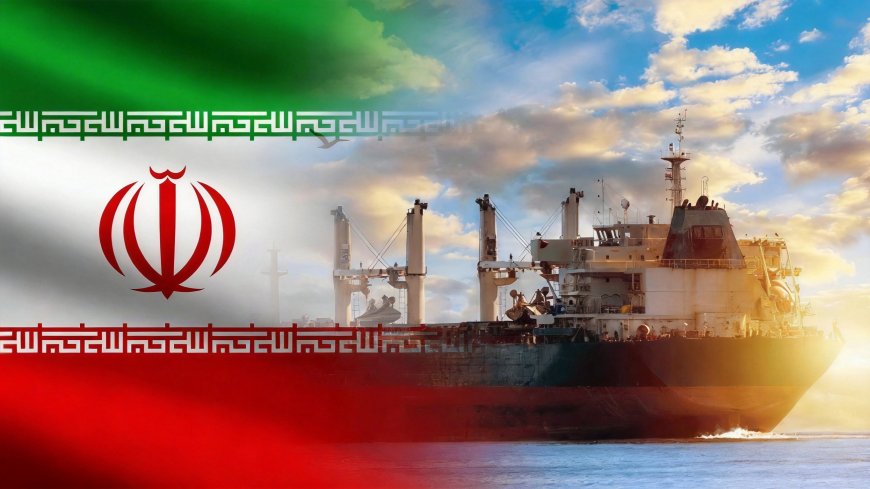
Threat from Washington
Donald Trump’s desperate threat to obliterate the Iranian civilization in a single night was the barely veiled, extreme threat of an imminent nuclear holocaust to be executed by the only nation in the word that had actually done it before.
The imminent threat was not about a group of facilities in the overarching battlefield. Instead, it was about a possible chain reaction that would surely have mass murdered millions of Iranians, and force the world to confront a darkness beyond the darkest.
In retrospect, behind this criminal threat and Iran’s subsequent victory was a private collapse that led the United States into an elegant trap set by Russia, China, and of course, the revolutionary Islamic Republic of Iran. The speed at which Trump’s threat unraveled and dissolves into was hardly surprising for anyone familiar with his turbulent personality and borderline malignant narcissism.
Decisive Failure at the UN Security Council
The attempted set-up was through the United Nations Security Council where Bahrain, acting as a proxy voice for broader Gulf interests, submitted a resolution designed to quickly tighten to clear the path for Trump the carry out his threat.
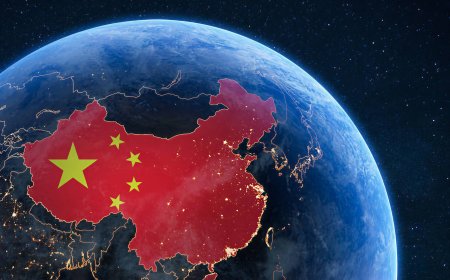
Russia and China vetoed the resolution, not as a procedural stop but an unmistakable signal that the world's most militarily capable rival powers will not allow Washington control the final outcome. The veto was followed by private communications that reportedly carried an even clearer message that Moscow and Beijing will not ignore any nuclear strike on Iran.
By adding North Korea into the mix as the third factor, and the United States faced three separate clocks ticking at once, with each one reminding its decision makers that escalation is not an abstract theory when the arsenals are real.
This was the inflection point where the entire structure of the crisis began to bend because the threat of nuclear retaliation was being communicated as a real consequence rather than another scenario simulated in theory.
The White Flag of Surrender
Simply put, once this nuclear deterrence entered the picture, the calculus and balance of power changed instantly. The new math forced Trump to immediately find an exit that he could attempt to sell to what remains of his supporters as strength rather than not the surrender it clearly is.
By meticulous strategic design, Iran had already laid out the framework for that exit weeks earlier, waiting for the moment when the pressure became too expensive to set aside. That is precisely how the same framework that had been laughingly dismissed in Washington, suddenly shape-shifted into a serious basis for talks in a tone that changed from criminal ultimatums to negotiation rebranded as the path forward.
Regardless of the outcome of the negotiations, this strategic retreat is nothing short of a de facto American defeat dressed in political language and incremental phases -- especially after severely testing Iran’s resolve to defend its popular sovereignty for 40 days of death and devastation, and then failing to meet any of its objectives.
The first major concession was one of Washington's most aggressive demands: Iran's uranium enrichment issue. instead of remaining a hard precondition, it began to fade from the center of the talks.
The second major concession was the recognition of Iran’s former influence, the degree of it subject to negotiations, over transit operations across the Strait of Hormuz -- elevating Iran from a resilient and heroic survivor to a Global South victor whose successful asymmetric strategy and tactics has been successfully synergized to turn geography into leverage.
A decisive leverage that not forced the United States into de facto defeat, but is also forcing it to consider eventually abandoning its Zionist bosses in Tel Aviv to fend for itself against a formidable Axis of Revolutionary Resistance as hopefully the world’s last supremacist settler colony.
The Rise of a New World Order
Russia and China also sent a sharp message that will etch the major inflection point in the history of the multipolar world to come. They showed that their combined deterrence is now strong enough to constrain American action even at the most extreme level. That is a loud, clear, and deeply resonant signal to every government watching from the sidelines because it tells them the world is no longer moving under a single center of power.
This is likely to lead to major recalibration and reorientation of security and security-economic ontology and architecture worldwide, not just in amongst the post-colonies of the Global South such as Bangladesh.
Israel now finds itself in a very difficult position because the decisive strike on Iran's nuclear capability it desired, now looks further away than ever. France and Britain also reportedly signaled privately that they would not support a nuclear strike on Iran, strongly suggesting serious fissures and fractures inside the Western Alliance at the exact moment unity would have mattered most.
Inside the United States, the alarming sublimation of Trump’s volatile pathology is driving serious discussions around the 25th amendment, signaling instability across the American political spectrum. This further announces that the crisis has moved beyond foreign policy and into domestic legitimacy.
Markets reacted in real time. And that reaction alone signals that confidence had been drastically shaken because investors are never comfortable when nuclear brinkmanship becomes part of public policy. For everyday American families, workers, and businesses, the idea that a presidential ultimatum moves markets, raises energy costs, and threatens long-term stability has transformed from academic abstraction to direct economic fear.
The global consequence of this Iranian victory decisively reveals that the old era of total American freedom to act without meaningful counter pressure is fading quickly. Not because the United States is weak -- but because Iran and Russia's hypersonic and anti-stealth progress, China's growing expeditionary capabilities, and North Korea's unpredictable posture is likely to accelerate the generation and rise of multipolar power blocks.
The strategic balance of the world has changed because from this point onwards. Future crises will be shaped by deterrence from multiple directions.
The lesson from Iran’s victory is nothing short of a paradigm shift, because it signifies that the world is no longer built around the exercise of unilateral power making threats without consequence.
Sohel Nadeem Rahman is the Managing Partner of Asian Tiger Capital Holdings based in Dhaka.