


































































Bangladesh’s Solar Transition Needs Public Trust
If we want households to become participants in a more flexible electricity system, we need to show how that participation can fit into ordinary life and who will support it.

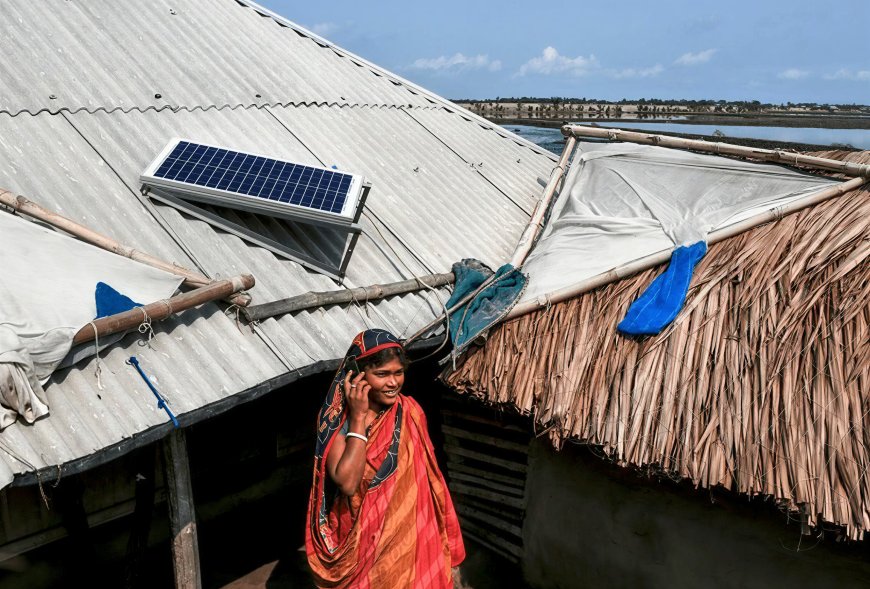
We pay the bill, switch on the fan and expect electricity to be there. When it is not, we expect the utility to restore it. For a household accustomed to this arrangement, installing solar means taking on something that previously belonged to someone else's job.
That is a difficult change to sell through promises about clean energy alone. A family may support solar and still wonder why it should spend its savings, arrange maintenance and become more involved in managing electricity when a utility connection already exists.
This attachment to conventional supply deserves more attention in Bangladesh's energy transition. Where the grid meets a household's needs, solar has to offer a convincing reason to change.
Even where supply disappoints, the familiar arrangement can remain easier to live with than an alternative whose responsibilities are uncertain. Dependence on the utility becomes part of everyday life.
Our own solar history helps explain this. Bangladesh's solar home systems programme reached about 20 million people by 2018. Yet a World Bank review found that its market declined sharply after 2014 as grid electrification accelerated and rural grid service became more reliable. The prospect of a grid connection itself weakened demand, with consumers preferring access to more electricity at subsidised prices.
People who had already used solar still wanted the grid. That should make us think carefully about what encourages adoption and what sustains it once another option becomes available.
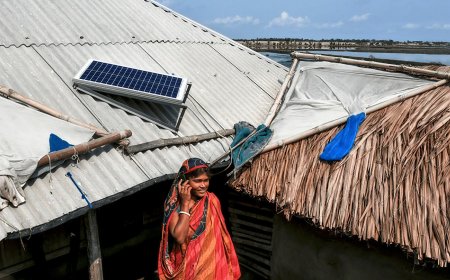
Today's grid-connected rooftop solar offers a different possibility. Households can generate electricity while retaining their utility connection. But the question remains: How does solar fit into a life already organized around buying electricity?
Answering it requires us to understand people's expectations of reliability, convenience and responsibility.
This is where I believe solar literacy belongs in our national discussion. It should help people become comfortable with a changing relationship with electricity. Basic knowledge about system size, batteries, maintenance and tariffs matters because it helps a family judge that relationship. Technical explanations alone will not make the change feel worthwhile.
Nor does familiarity automatically create trust. A 2023 study by the Institute for Energy Economics and Financial Analysis found that poor-quality rooftop installations had damaged building owners' confidence in solar in Bangladesh.
Someone who has seen a neighbour struggle with a system may reasonably trust the utility more. Another awareness campaign will achieve little unless that experience is addressed.
Research from Australia's Bruny Island offers a warning about how persistent established arrangements can be. A successful trial used household solar and batteries to support the local network.
Yet when an undersea electricity cable was damaged after the trial, the utility chose to replace it. Researchers found that the demands of supporting participating households had contributed to its reluctance to expand the alternative.
Households also brought their existing routines into the trial. Some resisted changing tariffs or reorganising electricity use; others faced conflicting advice or administrative delays.
The researchers described these interacting forms of resistance as "obduracy". Their findings show how innovation encounters habits and institutional practices that do not disappear when equipment is installed.
A 2026 study of Western Australia's Project Symphony found another difficulty. Participants who expected greater use of their own solar encountered outside control over their systems that they did not adequately understand. The project coordinated household devices through a virtual power plant, but its objectives did not always match what households thought they had joined.
For Bangladesh, the lesson is to begin the conversation before asking people to participate. As Bangladesh develops a smarter grid capable of coordinating household generation and storage, consumers may be asked to accept new arrangements over how their equipment is used. We cannot assume that installing the technology will create acceptance of those arrangements.
Public preparation should start with questions that families actually ask. Why should I add solar if I already have electricity? How much attention will it demand? Who remains responsible when something goes wrong?
The answers must make sense within household routines and budgets. A working family cannot be expected to organize its day around an energy project simply because that suits the project's design.
SREDA and distribution utilities should make these discussions part of solar expansion from the beginning. Local demonstrations and conversations with existing users could show how solar works alongside grid supply.
Families should be able to hear about maintenance problems and disappointing results as well as savings. Familiarity built through honest experience is more useful than reassurance that everything will work.
The institutions asking people to change must also earn their confidence. Installers need to provide dependable service, and utilities need staff who can explain billing and resolve problems.
Schools and colleges can introduce everyday energy choices early, while public engagement should include the family members managing electricity use, not only the person signing the purchase agreement.
Finance, technical capability and bankability will remain major constraints. Solar literacy cannot remove them. It can, however, help prevent a workable technology from arriving as an unfamiliar obligation, with households left to understand its consequences after installation. This preparation should advance alongside investment in the grid.
Bangladesh should take its existing dependence on utility electricity seriously when planning what comes next. If we want households to become participants in a more flexible electricity system, we need to show how that participation can fit into ordinary life and who will support it. That work should begin while the transition is being designed, with people having a say in what they are being asked to accept.
Md. Sajid Hasan is a researcher, Energy Intelligence Associate at Lontana Consultancy, and intern at King's College London. An EEE graduate, his work focuses on renewable energy systems, decarbonisation, and energy policy. Contact: [email protected].