
















































Who Owns July?
October 17, 2026, Dhaka. A year has passed since 33 political parties signed the July National Charter 2025. This piece attempts to map the aftermath of the Monsoon Uprising almost two years after it happened.
Chapter One: The Uprising
Almost no one in Bangladesh slept that night. August 5, 2024, arrived the way monumental moments do -- not as an idea but almost as a physical fact, a crowd filling a street that had, for fifteen years, belonged to someone else. People who had lived in a kind of internal exile -- watched, informed on, made small by a regime that specialized in making its citizens small -- found themselves suddenly, collectively large.
We learned things later, in pieces. That hundreds of the regime’s key accomplices had allegedly found shelter with the army -- a number never confirmed, repeated until it hardened into common knowledge.
That others had slipped across the 4,096-kilometre border into India, a border too long and too porous to seal a compromised elite inside a country. That for nearly a fortnight the nation had no functioning police, and ordinary citizens kept vigil in their own neighborhoods anyway.
Traffic got directed. Property got protected. Nobody asked them to, and it worked. That proof of a civic capacity nobody had granted them permission to have is, I will argue, the most important and most quickly buried fact of the uprising.
On the 8th, Professor Yunus returned from Paris, and the student heroes received him at the airport the way a Bangladeshi family would typically receive a grandfather -- with a trust that probably deserved more interrogation than it got. A government was in the making.
And beneath the euphoria, a very well-planned strategic game had begun: the opening moves of what I call, without much subtlety, Chapter Two of the revolution playbook -- how to contain a mass uprising once you can no longer prevent one.
The Ones Shown the Exit
Here is a detail that, once noticed, cannot be un-noticed. Students of Dhaka’s private universities were there in their thousands -- at the Airport, at Mirpur, around Gulshan, Tejgoan, Rampura, and almost in all the neighbourhoods of the northern belt of the capital -- and on August 5 they were among those who were facing the bullets while marching toward Ganabhaban, the dreaded residence of the soon to flee Prime Minister Sheikh Hasina, while the public-university coordinators and activists, most associated with the anti-discrimination movement remained, understandably but consequentially, anchored to Shaheed Minar, Dhaka University, and Shahbagh: The symbolic epicenter of the uprising, physically situated to the southern edge of the city, but incidentally not the place where the regime’s fall was being forced.
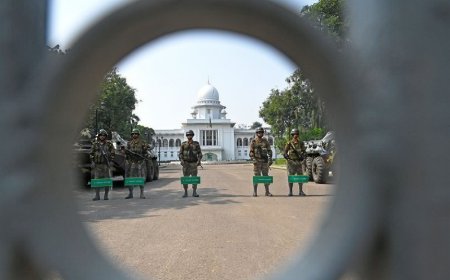
The regime fell partly because the army declined to fire on the marchers heading toward Ganobhavan. And then, when the despot fled, without anyone drafting a memo, the private-university cohort was shown the exit doors of the state. Not attacked. Not blamed. Simply not included.
They were present at the uprising but not legible to whoever assembled its aftermath. Credentials, institutional connections, prior recognition by embassies and NGOs and multilateral bodies -- legibility matters more in the negotiating room than what you risked in the street.
This is not a uniquely Bangladeshi mechanism. A leaderless, horizontal uprising is beautiful and structurally undefended: It has no way of choosing who negotiates its transition, and someone fills the vacuum. It is almost never the people who bleed on the streets.
Who Owns July?
Everything in this essay is one question in different clothes: Who gets to own July, and for what?
Politicians own it as a mandate -- ownership as legitimating asset. For the National Citizen Party, July is a founding myth, the thing that lets a party with no history demand a seat at the table. For Jamaat, it is a rehabilitation: A chance to be reintroduced not as the party that opposed 1971 but as one that stood with the students in 2024. For BNP, it is an inheritance to be claimed and curated carefully, since it led them to the gateway to power.
Commoners own it differently -- not as an asset to spend but as a debt to honor; ownership as lived fact. The private-university students own it in the un-grantable fact of having marched toward Ganabhaban while the negotiating rooms filled with people who hadn’t.
A 17-year-old owns it in the shape of a website nobody commissioned. And Shajib, like many of the wounded warriors, owns it physically inside his skull, literally, in the form of pellets too risky to remove. I will return to him soon.
Can the two ownerships converge? Not automatically, but Sri Lanka and Nepal suggest it is not impossible. Where it has happened, the commoners’ claim found an institutional channel narrow enough to survive the journey from street to state -- in the form of an election fought on terms the movement helped set.
Bangladesh has so far seen the two ownerships talk past each other: The political class narrating July as its own vindication, the people who lived it still waiting for an apology or a payment, whichever arrives first.
The Coalition that Broke All Boundaries
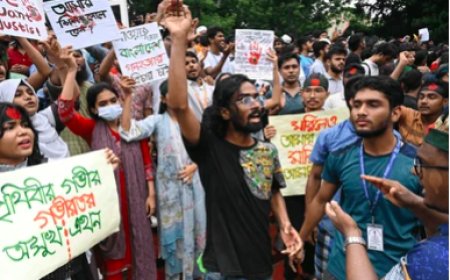
It was also, unmistakably, a young uprising, and its youth showed as a new kind of imagination. Women in niqabs and burkhas marched beside women in jeans and open hair, and for a moment neither treated the other as a rival claim on what Bangladesh should be.
It was a genuinely plural coalition, the kind an active delta, built from many co-existing ways of flowing is supposed to produce by its default nature. It is often interesting to see how the imagination of the politicians almost invariably fails to contain such diversity. Is this the outcome of the legacy of the colonial era “divide and rule” tactic?
Did the July Uprising survive its own victory?
The National Citizen Party, formed that February by Nahid Islam and others from the movement’s core, arrived carrying the square’s pluralist promise and has not kept it. The interim government’s Women’s Affairs Reform Commission was sidelined; the party fielded only a handful of women among dozens of candidates; senior women resigned, publicly and angrily, over an electoral alliance with Jamaat-e-Islami.
A vocabulary of insaaf and warnings against appeasement -- the furniture of a consolidating far right -- crept into public argument quite loudly.
Yet, close to a hundred Sufi shrines were attacked, vandalized or burned, aimed at precisely the layered ethos the pluralistic delta nation depends on. 2024 began to be called the second independence, which let Jamaat, whose 1971 record was one of opposition, re-litigate the Liberation War itself.
Anti-India sentiment duly peaked, fed by the acts of the mighty neighbour, especially in giving shelter given to its fleeing loyalists, and a smaller neighbor’s old resentment of a larger one. Much of that grievance was not wrong, which is exactly what made it effective.
Chapter Two: Hope versus a Messy Containment
The behind-the-scenes chain of events of any uprising similar to the July Uprising especially the funding and narrative-scaffolding of dissent by outside interests is difficult to prove in black and white for anyone without the resources of an investigative journalist or political historian.
The aftermath of the uprising which is the topic of this chapter is less complex. It happened in daylight, and its moves are recognizable once named.
Some people, including myself, expected in the immediate wake of August 5, that a national all-party government would form. Later it was rumoured that the Army Chief wanted the same. The political parties declined, when it came to them.
I even was tempted, in those days, to imagine it differently: All the students coalescing as a single body, marching to Bangabhaban, asking the president to step down, handing power to Professor Yunus as president, forming a revolutionary government outright -- given the sheer magnitude of the people's unity at that moment, it did not feel like an unreasonable thing to imagine.
But obviously, as the events that followed made explicit, that possibility was not allowed to happen, as I try to map further.
I say "not allowed" carefully, because the honest version of this sentence resists naming a single author. What is true, and does not require naming one, is that the temptation to consolidate around a single protagonist is close to universal in the aftermath of any successful uprising -- and so is the machinery, internal and external both, that either channels that temptation into one party's hands or fractures it before it can consolidate at all.
Bangladesh has lived this before. In 1971, the war was fought by supporters and opponents of the Awami League alike, a genuinely national effort. By 1973, that plurality had been folded into a single party's claim on the state, and the people who had fought without being AL were, in effect, forgotten -- a famine in '74 whose causes remain contested but whose political cost the ruling party bore, fairly or not, while the promise of an all-party government that Mujib could have formed on his return never materialized.
2024 did not repeat that pattern exactly, because no single protagonist won cleanly enough to consolidate the way Mujib did -- the coordinators themselves split between the Shahbagh axis and the private university cohort, and Yunus, however trusted at the airport, had not led the fighting.
What happened instead was messier: Not one-party consolidating, but several actors -- NCP, Jamaat, BNP -- too weak individually to consolidate alone, each needing the others' legibility to hold power at all.
Whether that makes the resulting containment more fragile than Mujib's, or merely different in shape, is the question the rest of this essay is asking. As for the July Uprising, the events followed the following trajectory.
The energy gets fragmented and redirected. A felt injustice becomes a procedural demand; “revolution” becomes “reform”; the street’s anger is channeled into commissions and the language of process, which can absorb years without touching who holds what.
The legible are elevated, the illegible thanked and dismissed. Those already known to the “right” rooms are co-opted; Professor Yunus works the diplomatic and fiscal magic he alone can; Jamaat-aligned figures find seats in the rooms of power; BNP slowly reclaims its political clout through turf battles. None of this needed a conspiracy, only machinery built over decades that knows whom to recognize was necessary.
The vacuum gets narrated as chaos, not capacity. The fortnight of citizen self-government is retroactively almost forgotten, recast as the problem the new arrangement solved.
The old order reasserts through its most credible face. In June 2025, almost 11 months after the uprising, Professor Yunus flew to London allegedly to ask Tarique Rahman to come home; the Army Chief set the election date; Tarique emerged as the one candidate every stakeholder could accept.
The fact that prior to the Army Chief’s statement, the date of the election was not being declared had fed endless rumours of behind the scenes politicking by key actors.
The fifth move needs no institutions at all, only the story: The smear. The movement called heroic days earlier is recast as foreign-funded, infiltrated, used by a party, not really students or commoners’ feat. It barely matters who the accused puppeteer is -- India, the West, a rival party, “vested quarters” -- because the function is the same: It makes the crowd’s agency someone else’s plot, and a plot does not need a seat at the table.
For the private-university students the label curdled quickly from hero to “privileged” and “apolitical.” The smear need not be believed by everyone; it only needs to make solidarity feel naive.
By these means the aftermath was contained as much as possible. Those who kept the vigil, who marched on Ganabhaban, who were never asked how the new government should be composed, are back in exile -- not the exile of a border crossing, but the other kind: Being politically homeless in the state they rebuilt.
Elsewhere, the Same Game
Bangladesh did not invent this containment mechanism. The tyrant falls; the tyranny, understood as a structure, does not.
Georgia shows containment as patience. The 2003 Rose Revolution ousted Shevardnadze in the name of the same anti-corruption, pro-Western energy this essay keeps describing. Two decades on, the country is run by Georgian Dream, steered since 2012 by a single oligarch who made his fortune in 1990s Moscow, who has captured courts, media and state institutions, and who in 2024 pushed through a Russian-style “foreign agents” law to strangle the civil society that made 2003 possible. Tens of thousands protested in Tbilisi.
The law passed anyway.
Sri Lanka’s Aragalaya is the case closest to Dhaka’s. In 2022 a leaderless, cross-class uprising forced Gotabaya Rajapaksa to flee in four months. Within days parliament elected Ranil Wickremesinghe -- six-time prime minister, whose party held a single national-list seat -- using the votes of the very party the uprising had repudiated, and within a week his government sent troops to clear the protest camps. Containment worked, for two years.
Then, in 2024, voters handed a landslide to Anura Kumara Dissanayake’s once-marginal left coalition. Containment bought Wickremesinghe two years.
India is a partial case, and a quieter one. The 2011 anti-corruption movement around Anna Hazare filled Delhi’s grounds with a national mood, and then its energy divided: Part became a new party, part fed the opposition campaign that carried the BJP to power in 2014, and the central demand, an independent Lokpal, became an Act in 2013 that sat largely unused until the first Lokpal was appointed in 2019.
Nobody was shot. The movement was simply processed. The current events in India are certainly not at a point where a distinctive outcome can be predicted.
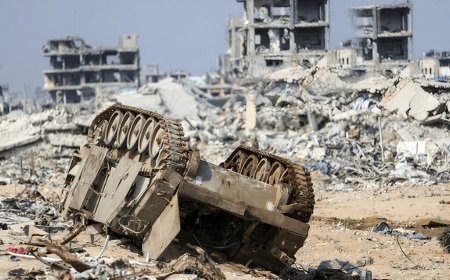
Libya shows the game played openly. Gaddafi fell in 2011 under NATO air cover, and the liberation produced a vacuum that USA, Russia, Turkey, the UAE and Egypt have contested through local proxies ever since. There, the great game barely troubled to disguise itself.
Nepal is where containment did not quite work. After the September 2025 uprising, in which at least 77 people died, the movement helped choose an interim prime minister, the former chief justice Sushila Karki, and on 5 March the youth-aligned RSP won the election; its leader, Balendra Shah, became prime minister on 27 March. It is not yet a revolution, and the institutions are fragile.
But the vacuum was filled by people the uprising itself threw up, not by whoever was already legible to power. That is the comparison worth sitting with: Georgia, Sri Lanka, India and Libya show how containment runs; Nepal shows what happens when the movement reaches the vacuum first.
Hadi, The Name They Would Rather You Forgot
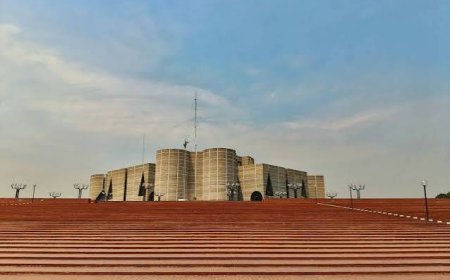
If the playbook has a hard edge, it was shown on 12 December 2025. Sharif Osman Hadi, spokesman of Inqilab Mancha and an independent aspirant in the Dhaka-8 parliamentary seat, was shot in the head from a motorbike as he rode a rickshaw through Paltan. He died in Singapore six days later. Hundreds of thousands attended his funeral at the South Plaza of Parliament, and he was buried at Dhaka University beside the national Poet Kazi Nazrul Islam.
While I mourn him deeply. I would also confess that I did not admire his language: His profanities and speech after Gopalganj, demanding that a district be dissolved, was not the voice of Islam as I understand it.
But bad manners are not a license to kill a man, and no reason to let his name go. He stubbornly stood closer to the Bhashani tradition -- Islam as a politics of social justice and rububiyat -- than to any party machine, and that made him hard to place, hard to buy and hard to co-opt by the older parties.
I believe he was feared across the oligarchy for exactly that reason. While I cannot prove it, what can be set down is how the case has behaved.
Who ordered the shot is for a court, and the court has not finished. The police charge-sheet of 6 January names 17 people, including the alleged shooter, Faisal Karim Masud, a former Chhatra League activist, and describes political vengeance meant to disrupt the election.
Police said two of the accused had fled to India. Inqilab Mancha rejected the charge-sheet as omitting the planners, and the court ordered a further investigation. Since then, the CID has missed its deadline so often that by late September the court had granted its twentieth extension, setting 3 November as the next date. Delay has become the story. A point is to be made here: Hadi’s brother accused the BNP and Jamaat for this gruesome murder.
Whoever ordered it, a killing like this does what a containment move does: It tells every free-standing July voice -- no party, no patron -- what independence costs. And the slow, unremarked aftermath finishes the job as the smear does, by letting a name fade.
Hadi kept his distance from the mainstream political parties. In May 2025 he called for a national government of all anti-Awami forces, Jamaat, BNP and Islami Andolan included, while refusing to become anyone’s wing. He quarreled bitterly with the NCP over Gopalganj and thought it compromised; he thought Jamaat was weighed down by institutional baggage. Yet when he was shot, Jamaat’s Ameer came to his hospital bed and later prayed at his grave.
The factions that fight over July’s ownership found themselves in one grief. A nation that is habitually almost amnesiac whenever it is convenient should not be allowed that convenience here.
The July National Charter at One Year
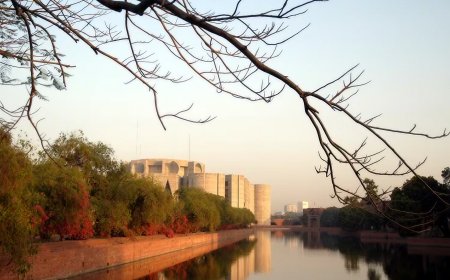
Exactly a year ago, on October 17, 2025, twenty-five parties, BNP and Jamaat among them, signed the July National Charter on the South Plaza of the Jatiya Sangsad Bhavan, with Professor Yunus presiding. Young July protesters stood outside, unconvinced.
The charter had no implementation roadmap, and BNP signed with notes of dissent -- nine of the eleven filed. A referendum and an implementation order followed, creating a Constitution Reform Council to be formed from the next parliament’s members.
On February 12, BNP won, with two-thirds of the house. Its MPs took only the parliamentary oath, not the council oath; the opposition took both. On 31 March the home minister, Salahuddin Ahmed, told parliament the implementation order was void from the beginning. In July BNP formed a twelve-member parliamentary committee to draft amendments by year-end; Jamaat, the NCP and others refused to join.
Jamaat’s alliance has been marching through divisional cities since September, and on Sunday its Ameer called the government’s stance a betrayal. BNP’s line is that it will implement every provision of the charter -- through the existing constitution, in Parliament.
BNP has a legal argument: QA sovereign parliament cannot be bound by a council it did not create, and its members took one oath because the constitution offers one only.
But does the refusal to even sit in the council read as an insult to the signatories and to the July Uprising at large?
One may view this unbecoming act fueled by the sheer force of having two- thirds majority in parliament, the intention to express that the BNP needs nobody’s consent and behaves accordingly, and it sees itself as the author of reform -- it brought back parliamentary government and enacted the caretaker system, as its secretary-general likes to recall -- and resents a lecture on reform from newcomers and a rival it regards as a junior partner at best. But could it be fear, the least advertised, and probably the most important.
A council born of a referendum, outside Parliament’s control, is a rival source of authority, and a party that has waited years to govern does not want its first term supervised by anyone. Adding the street legitimacy of Jamaat and the NCP, which BNP cannot match with a majority alone, nonchalance is probably how fear dresses when it holds the votes.
The irony is that this is Chapter One again, now run by the winners: The energy redirected into process, the committee substituted for the council, procedure turned into a shield.
July’s People, Making Trouble
July’s people have been making trouble for the old order and the new.
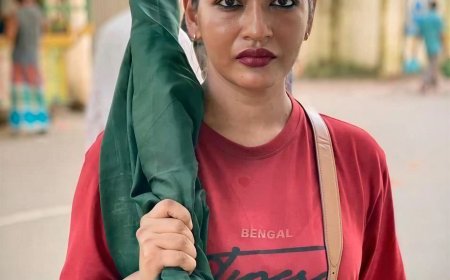
On the night of September 7, in a park in Mestre near Venice, the actress Azmeri Haque Badhon, in Italy for the festival premiere of The Difficult Bride, was surrounded, she says, by men who identified themselves as Awami League and Chhatra League supporters.
Videos show her being called a “July militant.” She says water, soft drinks and eggs were thrown at her and her phone was knocked from her hand. She filed a police complaint. To its credit, the government took her side, and a state minister said Dhaka had raised the matter with Rome.
Two things stand out. Badhon is no party worker and no Islamist; a liberal actress who stood with the street was enough. The label “July militant” does not distinguish the niqab from the jeans: To the old order, the plural coalition is still one enemy.
And the incident is a reminder that the old regime’s remnants have not gone away. They have regrouped abroad. If the containment story is about the new settlement shutting July’s people out, Badhon’s is about the old one hitting back. Caught between the two, ignored by one and hunted by the other, July’s people stand exactly where the injured and the unlisted have been standing all along.
While Badhon survived the traumatic experience, the less fortunate daughter of a July Uprising martyr, who lived in Patuakhali, was allegedly raped by Awami League leaders, later committed suicide.
Her mother had come to Dhaka to testify in the International Crimes Tribunal. This incident was published in the press in September 2026.
Hope versus the Containment of a Monsoon Uprising
The fortnight without police happened; it cannot be un-happened. A population that has shown it can govern its own streets carries that knowledge forward whether the post uprising settlement acknowledges it or not. Jamaat and BNP both must say something about 2024 -- in their language, their candidates, their alliances -- and that reluctant acknowledgment is leverage the uprising’s participants still hold, even from exile.
The real danger is quieter than repression: A slow, depoliticizing drift that teaches the young that none of it was worth it. Things will look up to the degree that tide is resisted, by people who keep building, publicly and stubbornly, small infrastructures of accountability that the old machinery cannot co-opt because they were never legible to it.
What a movement can do differently is not mysterious: Decide in advance who negotiates; name the reform-for-revolution swap as it happens; treat the vigil fortnight as infrastructure, not emergency; keep the memory on the record, Hadi’s name included; and answer the smear with detail rather than outrage.
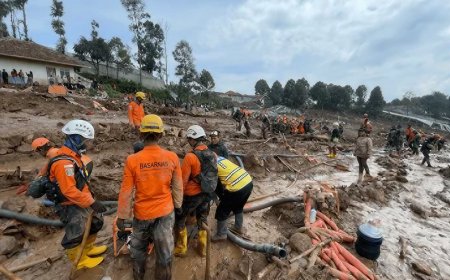
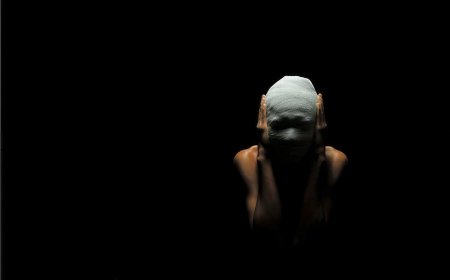
Somewhere in Jatrabari, a 24-year-old named Sharmin runs a small shop to keep her family afloat: Two minor children, an ailing mother-in-law, and a husband, Shajib, who lost an eye to pellets fired by law enforcement on 3 August 2024. Some of the pellets remain in his skull; removing them is too risky.
Some days he is on the brink of losing his mind, violent enough that he has to be locked in for everyone’s safety. He is on the government’s list of the injured, and the payments meant to sustain his family often do not arrive for months. Most of the injured July Warriors come from the underprivileged class that never had much cushion and now has even less. Will the nation ignore what they gave it, simply because the machinery has moved on to other business?
I want to end on someone else. A 17-year-old built ghush.site, a simple website where citizens can report, plainly and without ceremony, the moments when an official demands a bribe. No party, no cabinet seat, no coordinator anointed by anyone: A teenager deciding that the ordinary, humiliating tax every citizen knew about and no institution made easy to name could be made visible, searchable, undeniable.
That is what an uprising’s dream looks like when it survives its containment. Their dream for a better country is what drove 2024, however contained the affair now appears. That, for this author and many others, is the spirit of July.
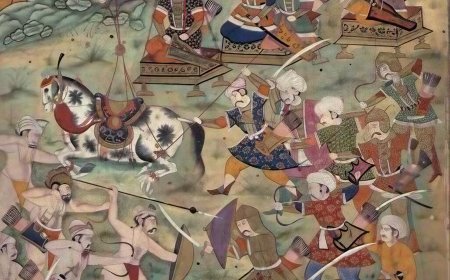
This spirit of rebellion is not something new at all to a nation with a long history of struggle.
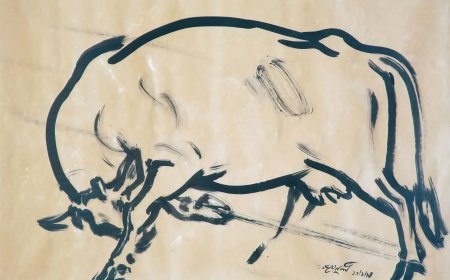
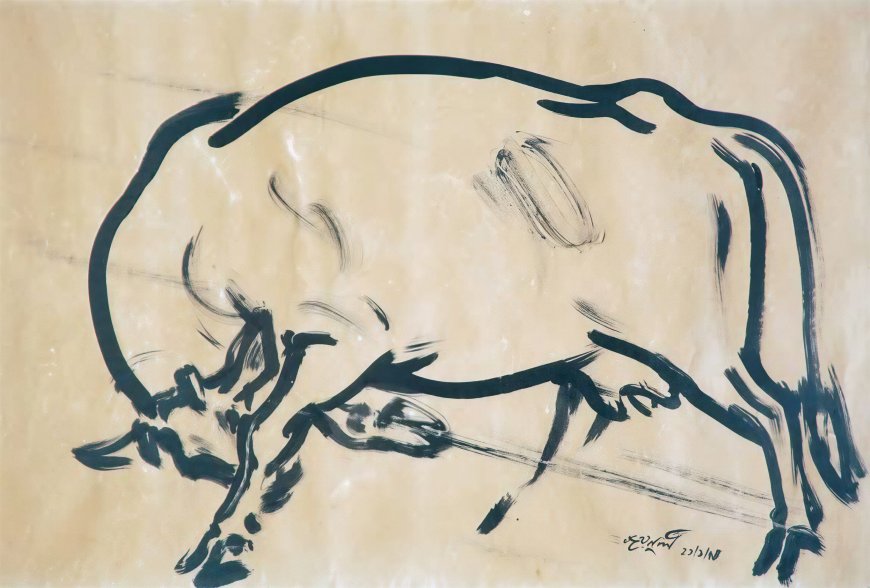
Zainul Abedin, the most famous artist of the country captured the rebel soul of a captive nation in 1974, three years after the brutal Liberation War, in his painting “Untitled”. The rage is certainly still real and will assume forms we are yet to imagine, some containable by the machinations of power and others which will not be so.
Sujaul Khan is an Assistant Professor at North South University.