








































































Should Public Stewardship Replace Good Governance
The state will no longer wait for citizens to spill blood on the asphalt to acknowledge their legitimate demands; instead, a responsive, stewardship-driven administration will proactively open its doors to welcome the sovereign citizen home.


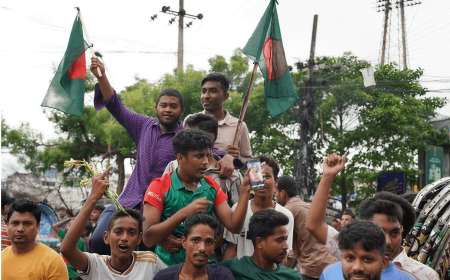
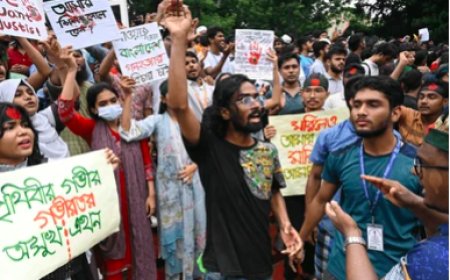
From the storming of the Bastille in 1789 to the epochal July-August student-led uprising in Bangladesh, human emancipation has followed a single, unyielding aspiration: The arduous transition from subjecthood to sovereign citizenship.
Yet, revolutions routinely dismantle barricades long before they dismantle the grammar of power.
Across the post-colonial developing world, as we endeavour to measure state efficacy, evaluate administrative reform, and diagnose institutional decay, one catchphrase has achieved near-liturgical status in policy circles, academic symposia, and prime-time talk shows: "Good Governance."
To the casual observer, the term appears irreproachable -- an objective, modern benchmark of institutional health. But language is never a neutral vehicle of communication; it shapes human cognition.
Under rigorous socio-legal and political-theoretic scrutiny, the very notion of "governance" -- rooted etymologically and culturally in shashon (to rule, chastise, or command) -- betrays a deep-seated authoritarian pedigree.
It presupposes an ontological hierarchy in which the state is an omnipotent ruler and the citizenry are recalcitrant subjects requiring perpetual policing, discipline, and containment.
A democratic polity does not exist to "govern" its people; its fundamental raison d'être is to meticulously steward administrative machinery, public wealth, and legal frameworks to safeguard and expand human liberty. This dichotomy between governance and public stewardship is not mere semantic hair-splitting.
It represents an irreconcilable chasm in political philosophy regarding the very nature of the social contract.
For socio-legal researchers and political scientists willing to interrogate the orthodoxies of international development, the uncritical worship of "good governance" has become a Trojan horse, smuggling colonial mentalities into twenty-first-century democracies.
How Language Imprisons Democracy
To understand why our state structures remain impervious to genuine reform, we must interrogate the semantic architecture of our political vocabulary. In South Asia's linguistic genealogy, the word shashon carries the heavy baggage of punitive authority.
It evokes the shashon-dondo -- the rod of correction, the monarchical sceptre, the penal writ. Under this paradigm, power flows downward from an exalted apex where the ruler commands and the subject complies.
In stark contrast, the stewardship framework (or parichalona) is grounded in fiduciary responsibility, coordination, and service.
Consider an orchestral conductor harmonising disparate instruments, or a master mariner navigating a vessel through tempestuous seas. A conductor does not dominate the violinists; a captain does not coerce the crew.
Rather, they orchestrate, facilitate, and protect. Their legitimacy is derived entirely from their fidelity to the mission and the well-being of those aboard.
From an international legal perspective, Article 21 of the Universal Declaration of Human Rights (UDHR) and the International Covenant on Civil and Political Rights (ICCPR) explicitly establish that governments are merely trustees of the people's rights. Governments possess no moral or legal sovereign authority to "rule" over citizens.
Furthermore, as renowned political scientist Francis Fukuyama underscores in his seminal work State-Building: Governance and World Order in the 21st Century, a modern state's success must be measured by its administrative competence and service-delivery capacity, not by the degree of control or restriction it imposes on the populace.
When we adopt the lexicon of "public stewardship," the centre of gravity shifts automatically from the state back to its rightful owner: The citizen.
Ghost of the Viceroy
Why does a citizen seeking a basic birth registration, a land record (porcha), or a passport in contemporary Dhaka continue to face labyrinthine delays, institutional condescension, and administrative hostility, despite progressive statutes like the Right to Information Act 2009, the National Integrity Strategy, and institutional "Citizens' Charters"?
The answer lies in the enduring psychological fossil of the colonial administrative apparatus. Our bureaucracy's internal operational culture persists in viewing itself as a ruling elite rather than a public service.
MIT economist Daron Acemoglu and Harvard economist James Robinson powerfully reinforce this diagnosis in their groundbreaking treatise, Why Nations Fail.
They show that nations that maintain extractive institutions inevitably decay, while nations that ensure inclusive institutions and public stewardship achieve sustainable prosperity. Traditional governance models sustain extractive mentalities, whereas public stewardship builds genuinely inclusive societies.
This existential disconnect is starkly visible when measured against our own constitutional text. Article 7(1) of the Constitution of Bangladesh explicitly proclaims that all power in the Republic belongs to the people.
In contrast, Article 21(2) establishes that every person in the service of the Republic has a bounden duty to serve the people at all times. Yet, bureaucratic behaviour routinely mirrors colonial proconsuls rather than constitutional servants.
Ritual of Red Tape
The governance paradigm's operational failure is nowhere more vividly illustrated than in the daily confrontation between citizens and public institutions.
Consider a public hospital. Under the rigid, orthodox framework of "good governance," institutions measure performance through bureaucratic proxy metrics: Is the attendance register signed? Are the master rolls duly stamped? Are CCTV cameras maintaining strict surveillance? These are measures rooted purely in control and punishment.
Yet a paradigm rooted in public stewardship asks a different set of foundational questions: Are patients receiving timely, dignified care without bureaucratic harassment? Are essential pharmaceuticals distributed equitably, or do corrupt syndicates siphon them off? Is real-time logistical data transparently accessible to the public via digital dashboards?
Good governance worships the process -- the file movement, the committee meeting, the bureaucratic ritual. Public stewardship values outcomes -- the tangible enhancement of human dignity and societal well-being.
As Nobel laureate Amartya Sen argued in Development as Freedom, development cannot be reduced to mechanical checklists; its primary objective is expanding human freedom. Governance binds the citizen in procedural fetters, while stewardship expands the horizons of human liberty.
Rabindranath Tagore captured this psychological entrapment in his Naivedya poetry collection, where he reflected on the boundaries imposed on human dignity, noting how societal conditioning forces individuals to remain perpetually vigilant and submissive at every step. Unless we shatter these mental boundaries, our citizenship will remain permanently compromised.
Furthermore, consider how the three pillars of administrative life diverge under these two frameworks: In governance, transparency means posting notices on dusty boards or publishing compliance reports for donor agencies. In stewardship, it means open digital data platforms where citizens can track every unit of public expenditure in real time.
In governance, participation is reduced to tokenistic post-facto public hearings. In stewardship, it means seating citizens at the policymaking table from its inception.
In governance, accountability is strictly vertical and punitive -- subordinates answer to superiors. In stewardship, it is horizontal and direct -- public institutions answering directly to the citizens they serve.
Reclaiming Constitutional Sovereignty
This structural transformation is not a superficial vocabulary exercise; it requires an overhaul of our administrative philosophy.
When state agencies abandon the urge to police and patronise, and instead re-engineer themselves as modern, humane service providers, the entire dynamic of state-society relations heals.
Fukuyama’s insights on institutional capacity remind us that robust states derive their strength from institutional responsiveness rather than coercive dominance.
By redefining public officials as fiduciary stewards rather than colonial-style masters, we align administrative reality with our supreme constitutional mandate.
The Urgent Awakening
This profound transition ultimately depends upon a cultural and cognitive awakening among the citizenry. For decades, citizens have been conditioned to accept bureaucratic delay, administrative humiliation, and obsequious deference as the inevitable cost of interacting with the state.
The time has come to cast off this internalized subject mentality. We must recognise that elected representatives and public officials are not our rulers; they are managers funded by our tax revenues.
Citizens must proactively utilize instruments like the Right to Information Act, demand strict horizontal accountability, and insist that public service is an enforceable constitutional right rather than an act of benevolent state patronage.
When public stewardship becomes the republic's foundational operating system, the historical cycle of grievance and confrontation will finally break.
The state will no longer wait for citizens to spill blood on the asphalt to acknowledge their legitimate demands; instead, a responsive, stewardship-driven administration will proactively open its doors to welcome the sovereign citizen home.
Fayazuddin Ahmad is a development professional.