






































































The Limits of Legacy Politics
Parties must therefore distinguish between loyalty and indulgence. Genuine loyalty involves correcting a colleague before misconduct becomes a public embarrassment. It requires transparent disciplinary procedures, consistent standards and a willingness to place institutional credibility above personal relationships.

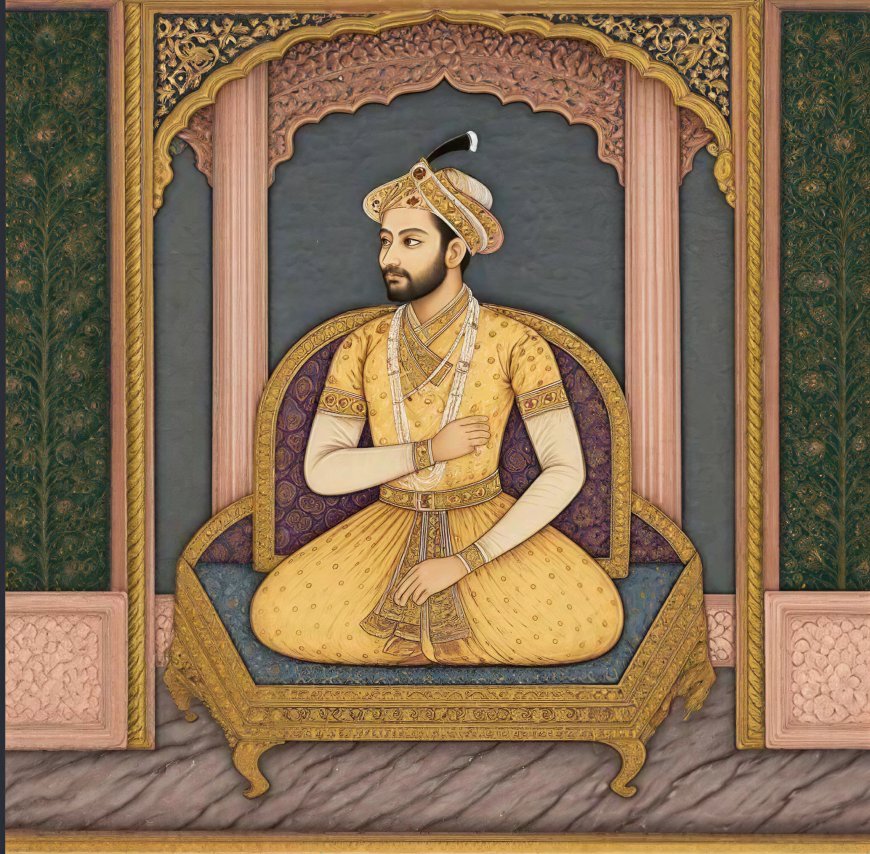
Political inheritance is a curious arrangement. It can give someone a name that commands attention, a platform that others spend decades trying to build, and access to corridors of power before they have acquired the wisdom to navigate them.
Yet inheritance cannot transfer judgment, just as wealth cannot guarantee generosity, and education cannot automatically produce intelligence. The distinction between possessing power and understanding its responsibilities is fundamental to politics.
But it is frequently overlooked in political cultures where family names function as credentials and proximity to influential figures is mistaken for proof of competence. The problem is not that politicians emerge from established political families.
Political experience can be inherited in meaningful ways. Growing up around public affairs may provide an early understanding of political organization, negotiation, sacrifice and the demands of public life.
Family legacies can also preserve democratic movements, historical struggles and commitments to social change. The danger begins when inherited recognition becomes a substitute for earned credibility.
When a famous surname is treated as evidence of sound judgment, and when political loyalty becomes more important than the ability to exercise restraint.
Max Weber, the German sociologist, distinguished traditional authority, rooted in established customs and inherited status, from authority grounded in legal rules and impersonal institutions. Modern democratic politics is supposed to move towards the latter.
Citizens elect representatives to exercise public responsibilities within constitutional boundaries, not to reproduce the privileges of a political household. When personal lineage becomes more influential than institutional accountability, democracy begins to resemble a hereditary establishment wearing electoral clothing.
This confusion between inheritance and competence has repeatedly altered the course of history. Alexander the Great built an empire stretching across vast territories, but his death in 323 BCE exposed the fragility of a political order centred on one extraordinary individual.
His successors, the Diadochi, fought prolonged wars and divided the conquered territories among themselves. The empire did not collapse simply because Alexander’s successors lacked his military brilliance.
It disintegrated because conquest had produced no durable, agreed mechanism for transferring supreme authority. Personal greatness had not created an institution capable of surviving its creator.
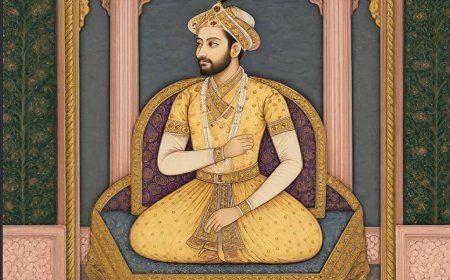
The Mughal Empire offers another instructive example. Akbar consolidated an empire through administrative reforms, military organisation and political accommodation. His successors inherited immense resources, but the dynasty’s eventual decline demonstrated that imperial grandeur could not indefinitely compensate for political mismanagement, factional conflict and institutional weakness.
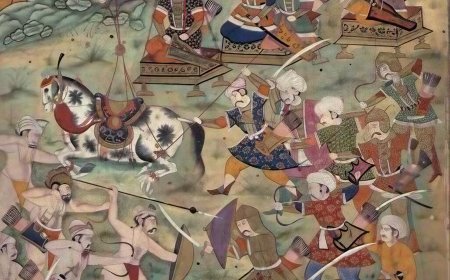
Aurangzeb’s death in 1707 was followed by struggles among successors, the growing independence of provincial powers, and the erosion of central authority. Nader Shah’s devastating sack of Delhi in 1739 exposed how far imperial prestige had deteriorated.
The Mughal decline was a complex historical process, not merely a story of foolish descendants. Nevertheless, it illustrates a central truth: inheriting an established order is easier than possessing the judgment required to sustain it.
Shakespeare understood the psychological dimensions of this problem long before modern political science developed its vocabulary. In King Lear, authority becomes a destructive instrument when the desire for recognition overwhelms the capacity for judgment. Lear possesses the authority of a king but makes decisions that undermine the very order he hopes to preserve.
His tragedy is not simply that he trusts the wrong people. It is that he confuses the performance of loyalty with its substance and public authority with personal entitlement. The lesson extends beyond hereditary monarchy to any political culture in which leaders mistake applause for legitimacy.
Political maturity, therefore, requires something more difficult than ambition or confidence. It requires the ability to recognise limits. A mature politician understands that not every perceived injustice authorises personal intervention, that not every opponent is an enemy of the state, and that not every public problem can be solved through displays of personal courage.
In a democracy, restraint is not cowardice. It is recognition that the authority of an elected representative remains bounded by law, procedure, and the rights of others.
This distinction becomes particularly important when political actors seek to perform the role of the decisive leader. Public displays of toughness can be politically rewarding because they offer a simple narrative: Here is someone willing to do what others are supposedly afraid to do.
The narrative is emotionally attractive, especially where citizens have lost faith in law enforcement or become frustrated with institutional failure. But the appearance of decisive action can conceal a more fundamental question: Does the action strengthen the institution responsible for solving the problem, or does it encourage the public to place its faith in an individual?
Consider the implications for the rule of law. A political representative may have legitimate reasons to draw attention to criminal activity, demand effective policing or mobilise public support against illegal practices. Yet the responsibility to address wrongdoing does not automatically confer investigative or enforcement powers beyond those established by law.
If public office becomes a licence for personalised intervention, the distinction between legitimate authority and individual discretion begins to blur. The danger is not limited to the possibility of immediate harm. It lies in the precedent that political influence can justify exceptional conduct.
The same principle applies to political dynasties. A successor may enter public life with considerable advantages, including name recognition, financial resources, established networks and an audience already prepared to interpret their actions favourably.
These advantages can create an illusion of competence before competence has been demonstrated. Worse, political organisations may become reluctant to correct the behaviour of influential figures because criticism appears to threaten family prestige, party unity or electoral prospects. What begins as protection of a political legacy can gradually become protection from accountability.
Niccolò Machiavelli’s The Prince remains relevant because it examines the difference between possessing authority and maintaining it under difficult circumstances. Although Machiavelli is often reduced to a theorist of manipulation, his deeper concern was with political judgment, necessity, and the consequences of decisions.
Leadership requires an understanding of how actions affect the durability of political authority. A gesture that produces immediate popularity may create long-term instability; an impulsive confrontation may satisfy supporters while weakening public confidence in institutions.
The politician who cannot distinguish between personal gratification and public interest risks becoming the author of their own political difficulties.
There is also a moral dimension. George Orwell’s political writing repeatedly warned against the corruption of language when it becomes an instrument for disguising reality. Political actors often describe questionable conduct through flattering vocabulary, presenting recklessness as courage, aggression as strength, and personal ambition as public service.
Such rhetorical transformations are dangerous because they make self-criticism appear unnecessary. Once supposedly noble intentions justify every action, the consequences become secondary.
For Bangladesh, the question is particularly significant because democratic renewal cannot depend solely on the replacement of one set of political personalities with another. It requires a change in the relationship between public office, party discipline and institutional accountability.
A political generation may inherit the language of sacrifice and democratic struggle, but it must demonstrate that inheritance through its conduct. Historical credentials deserve recognition, not exemption from scrutiny.
Indeed, those who benefit most from political legacies should arguably face greater expectations because their actions influence how the public judges the movements and institutions they represent.
Parties must therefore distinguish between loyalty and indulgence. Genuine loyalty involves correcting a colleague before misconduct becomes a public embarrassment. It requires transparent disciplinary procedures, consistent standards and a willingness to place institutional credibility above personal relationships.
Similarly, political families must understand that protecting a legacy does not mean defending every action undertaken in its name. Sometimes, the most responsible way to preserve a legacy is to reject the entitlement associated with it.
H. M. Nazmul Alam is an Academic, Journalist, and Political Analyst based in Dhaka, Bangladesh. Currently, he teaches at IUBAT. He can be reached at [email protected].