






































![A Ledger of the Soul: Navigating the Allah-Bhagavant Nexus in a 19th-Century Puruṣākāra Jñāna Caupara [Gyan Chauper]](https://counterpointbd.com/uploads/images/202608/image_430x256_6a93baa3b09a7.jpg)


















What Happens After We Tear Institutions Down?
The most dangerous question remains unasked: What norms, procedures, and moral commitments should replace what we are dismantling?

We are living in a time when institutions across much of the world are being dismantled with remarkable speed.
Parliaments are weakened, courts questioned, universities politicized, administrative procedures bypassed, and long-standing civic norms steadily eroded.
What is striking, however, is not merely the scale or velocity of this dismantling, but the dominant emotion propelling it: anger -- often justified, deeply felt, historically accumulated -- yet rarely accompanied by sustained reflection on what should replace what is being torn down.
This unsettling observation emerged from a recent exchange with Professor Prasanta Kumar Pattanaik of the University of California, Riverside -- one of the foremost authorities in social choice theory and welfare economics.
Reflecting on contemporary global politics, he noted how, in country after country, established norms and institutions are being rejected by movements driven more by rage and resentment than by carefully reasoned visions of alternative arrangements.
His comment carried a sobering implication: anger may reveal injustice, but it cannot by itself design a just order.
This tension -- between dismantling and rebuilding -- lies at the heart of today’s political crisis.
Yet the difficulty we face is not entirely new. The failure to imagine institutions beyond those we inherit has long haunted political life, particularly in post-colonial societies like ours.
Independence Without Institutional Imagination
For much of the twentieth century, political emancipation was narrowly understood as a transfer of power -- from colonial rulers to indigenous elites.
In the aftermath of the Second World War, the global wave of decolonization was infused with immense optimism. Independence was widely imagined as a panacea, capable -- by itself -- of resolving poverty, inequality, injustice, and humiliation.
The departure of foreign rulers was expected to automatically usher in freedom, dignity, and prosperity.
What remained insufficiently confronted, however, was the harder question: independence for what kind of institutional order? Political attention focused overwhelmingly on who governs, rather than on how governance should be organized, restrained, and made accountable.
As a result, colonial administrative structures were often inherited rather than reimagined, authoritarian habits survived beneath nationalist rhetoric, and institutions meant to serve citizens gradually became instruments of control.
As political scientist Rounaq Jahan observed decades ago, Asian nationalist leaders largely fought Western imperialism without fundamentally rejecting the ideological and institutional frameworks left behind by colonial rule.
Independence changed rulers, not governing logics.
More than four decades after her insight -- and over five decades after independence in Bangladesh -- we have yet to articulate a genuinely home-grown political ideology or institutional architecture capable of replacing borrowed frameworks with morally grounded alternatives.
Anger as a Political Paradox
The unresolved legacy of this institutional deficit is visible today. When institutions fail to deliver justice, people grow angry -- and rightly so. Anger becomes a moral response to humiliation, exclusion, inequality, and abuse of power. It gives voice to those long ignored. It disrupts complacency. It forces recognition.
Yet anger also contains a paradox. It is morally intelligible, but politically insufficient. Without institutional imagination, anger risks becoming destructive rather than transformative. We tear down what exists without articulating what ought to stand in its place. Protest replaces proposal.
Denunciation Substitutes for Design
Across societies -- from Bangladesh to the United States, from Europe to South Asia -- we increasingly witness the same pattern: institutions are delegitimized, norms rejected, procedures bypassed, but little sustained effort is invested in designing alternatives capable of securing freedom, dignity, and fairness.
The most dangerous question remains unasked: What norms, procedures, and moral commitments should replace what we are dismantling?
Anger can delegitimize the old, but it cannot legitimate the new. Rage can collapse walls; it cannot draw blueprints.
Bangladesh and the Rise of a New Leviathan
In Bangladesh, this crisis has taken an especially acute form. Years of political polarization, weakened accountability, and eroded trust have created a vacuum where informal power increasingly substitutes for rule-based governance.
Legal processes are doubted, administrative authority is contested, and public reason struggles to assert itself amid noise, suspicion, and performative outrage.
I have elsewhere described this condition as the rise of a new Leviathan -- not a strong, rights-protecting state in the Hobbesian sense, but a fragmented and unpredictable form of power that governs through uncertainty rather than authority, and through fear rather than legitimacy. This Leviathan is neither fully institutional nor fully anarchic; it thrives precisely in the absence of credible norms.
What emerges in such conditions is not freedom, but vulnerability. When institutions collapse without replacement, the space is quickly filled by coercion, arbitrariness, and mob logic. The loudest voice, not the most reasoned argument, prevails.
Lessons from the World Democracy Congress
These concerns surfaced repeatedly during discussions at the World Democracy Congress, held in Dhaka in late December. Across panels on civil society, citizenship, human rights, gender, and social inclusion, a recurring theme emerged: democracy today is threatened less by the absence of elections than by the erosion of institutions capable of mediating conflict, protecting minorities, and sustaining disagreement without violence.
Participants noted that democratic fatigue sets in when citizens lose faith not only in leaders, but in the procedures through which claims are heard, contested, and revised.
The challenge is no longer simply how to resist authoritarianism, but how to rebuild institutional credibility in deeply polarized societies.
Democracy cannot survive on moral outrage alone; it requires durable structures that translate dissent into deliberation and disagreement into reform.
A Crisis of Imagination
At its core, what we are witnessing is not merely a political crisis, but a crisis of imagination. We have become adept at criticizing what exists, yet deeply unprepared to think institutionally, morally, and incrementally about what should come next.
Designing institutions is hard work. It requires patience, moral discipline, and a willingness to accept gradual progress rather than dramatic rupture. It demands public reasoning, constitutional humility, and an acceptance that no arrangement will perfectly embody justice -- but that some are far better than rule by fear or impulse.
This does not mean defending unjust institutions or silencing protest. On the contrary, critique is essential. But critique must be paired with construction. Without an institutional horizon, anger becomes self-consuming, destroying the very conditions that make freedom, dignity, and accountability possible.
From Protest to Proposal
More than five decades after independence, no foreign rulers govern Bangladesh. Yet the promise of self-rule remains fragile. The problem is no longer colonial domination, but the persistent failure to align power with justice, authority with accountability, and governance with freedom.
The task before us is therefore not merely to resist unjust power, but to recover the moral and institutional imagination required to build something better. Independence without institutional design was the tragedy of the past.
Anger without reconstruction may become the tragedy of our present.
A wise observer once reminded me during a moment of political darkness: “Even this will pass.” It will -- but not automatically. It will pass only if anger learns to walk alongside reason, and protest learns to give birth to institutions rather than ashes.
What happens after we tear institutions down will define not only our politics, but our moral future.
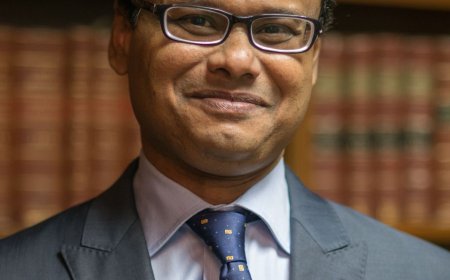
Ahmed Javed Chowdhury (Ronie) is an educator, economist and public intellectual.